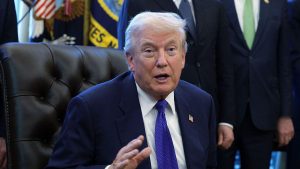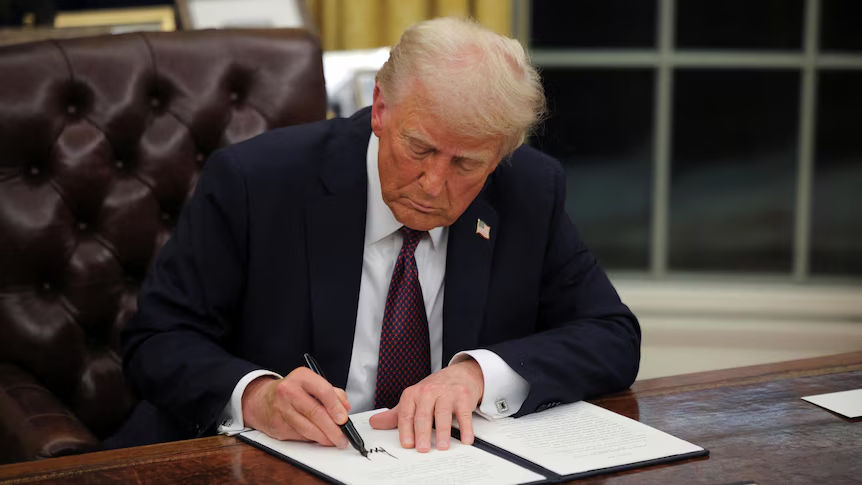
President Donald Trump signed an executive order on February 6 imposing tariffs of up to 25 percent on products imported into the United States from any country doing business with Iran. The order, which takes effect at midnight Saturday, cites national security concerns as the justification for the sweeping economic measure.
According to the executive order, the tariffs will apply to any nation that “directly or indirectly purchases, imports, or otherwise acquires any goods or services from Iran.” Administration officials, including Secretary of State Marco Rubio, Treasury Secretary Scott Bessent, and Commerce Secretary Howard Lutnick, will be responsible for identifying which countries are trading with Iran and determining the appropriate levels of tariffs.
In conjunction with the tariffs, State Department officials issued new sanctions targeting Iranian oil on February 6, naming dozens of entities affected by the regulations. The sanctions are intended to limit Iran’s ability to fund proxy groups and support terrorist activities abroad.
Trump emphasized that the measures are necessary because “the actions and policies of the Government of Iran continue to pose an unusual and extraordinary threat, which has its source in whole or substantial part outside the United States, to the national security, foreign policy, and economy of the United States.”
The president had previously threatened the tariffs in a January post on Truth Social, signaling a hardline approach toward Tehran that builds on actions taken during his previous administration. During his first term, Trump reimposed and intensified sanctions on Iran and restricted its access to international markets, continuing a pattern of using executive authority to influence Iranian economic activity.
Tensions in Iran have escalated in recent months amid widespread anti-government protests. In January, Trump publicly expressed support for demonstrators calling for democratic reforms and issued repeated warnings to Iranian leaders. On January 13, he wrote on Truth Social: “Iranian Patriots, KEEP PROTESTING – TAKE OVER YOUR INSTITUTIONS!!! Save the names of the killers and abusers. They will pay a big price.” Trump also adapted his signature slogan, Make America Great Again (MAGA), to “Make Iran Great Again (MIGA)” in reference to the pro-democracy movement.
The president’s rhetoric has resonated with Iranian Americans attending rallies in the United States. At a January 27 rally in Iowa, a group of Iranian Americans wore homemade MIGA shirts in support of protesters back home. “People in Iran are being killed and massacred,” said Sara Hazinia. “Iranians are fighting with their bare hands against the terrorist regime.”
Iranian authorities, in response to the protests and international attention, have threatened attacks on U.S. military installations. In a State Department post written in Persian, Trump warned that any such attacks would be met with “very, very powerful force.” He added: “We have said this before, and we say it again: do not play games with President Trump.”
The tariffs and sanctions follow a broader U.S. strategy toward Iran, which includes previous military actions. In June 2025, Trump authorized Operation Midnight Hammer, targeting Iran’s nuclear facilities with B-2 stealth bombers and Tomahawk missiles launched from submarines. The president later declared that Iran’s nuclear enrichment programs had been “completely obliterated,” marking a decisive escalation in his approach to limiting Iran’s nuclear capabilities.
Analysts note that the combination of economic penalties, military actions, and public statements is designed to pressure Iran both diplomatically and financially. The imposition of 25 percent tariffs on countries doing business with Tehran represents a novel use of economic coercion, extending the reach of U.S. sanctions to third-party nations.
While some critics have questioned whether the tariffs could trigger retaliatory measures or impact global trade, administration officials argue that the approach is necessary to protect U.S. national security. “These tariffs will more effectively deal with the Iranian regime,” the president wrote in his executive order, signaling his intent to hold both Iran and its international partners accountable.
The new measures come as the administration continues to monitor the Iranian economy, identify trade partners, and coordinate enforcement across federal agencies. Officials have indicated that the list of affected nations and the specific tariff rates will be released in the coming weeks, and they warned that penalties could be adjusted based on compliance.
Trump’s latest actions reflect a continuation of his longstanding foreign policy toward Iran: a combination of economic pressure, public messaging to Iranian citizens, and the use of military force when deemed necessary. The president has repeatedly highlighted the importance of supporting pro-democracy movements in Iran and warned Iranian leaders that violence against protesters will not go unnoticed.
The international response to the tariffs is likely to be closely watched, particularly by nations that maintain commercial relationships with Tehran. U.S. trade experts suggest that countries with significant Iranian imports may face difficult decisions about compliance, potentially reshaping economic ties in the Middle East.
With the executive order now in effect, Trump has signaled that U.S. policy toward Iran will remain aggressive, blending economic sanctions, military readiness, and public diplomacy to exert maximum pressure on Tehran and its allies. The full impact of the new tariffs and sanctions is yet to be seen, but the administration has made clear that enforcement will be swift and comprehensive, emphasizing national security as the overriding priority.

Emily Johnson is a critically acclaimed essayist and novelist known for her thought-provoking works centered on feminism, women’s rights, and modern relationships. Born and raised in Portland, Oregon, Emily grew up with a deep love of books, often spending her afternoons at her local library. She went on to study literature and gender studies at UCLA, where she became deeply involved in activism and began publishing essays in campus journals. Her debut essay collection, Voices Unbound, struck a chord with readers nationwide for its fearless exploration of gender dynamics, identity, and the challenges faced by women in contemporary society. Emily later transitioned into fiction, writing novels that balance compelling storytelling with social commentary. Her protagonists are often strong, multidimensional women navigating love, ambition, and the struggles of everyday life, making her a favorite among readers who crave authentic, relatable narratives. Critics praise her ability to merge personal intimacy with universal themes. Off the page, Emily is an advocate for women in publishing, leading workshops that encourage young female writers to embrace their voices. She lives in Seattle with her partner and two rescue cats, where she continues to write, teach, and inspire a new generation of storytellers.