


Donald Trump has expressed that it “bothers” him that members of his own party are pursuing an investigation into former President Bill Clinton over his connections to Jeffrey Epstein, drawing both attention and ridicule from political commentators.
In an interview with NBC Nightly News anchor Tom Llamas, Trump weighed in on House Republicans’ efforts to compel both Bill and Hillary Clinton to testify publicly about their ties to Epstein. The comments came as the Department of Justice released another tranche of documents related to Epstein’s activities, further stoking bipartisan controversy.
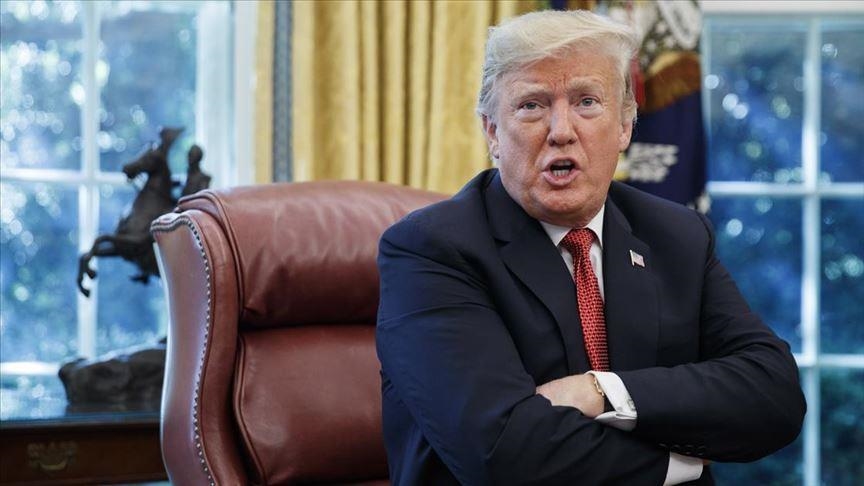
“It bothers me that somebody is going after Bill Clinton,” Trump said. “I like Bill Clinton. I still like Bill Clinton.”
The former president also elaborated on what he valued about Clinton personally, telling Llamas: “I liked his behavior toward me. I thought he got me, he understood me.”
A surprising defense amid political tension
Trump’s statements mark a striking departure from his past confrontations with the Clintons, particularly during the 2016 presidential campaign. While he now expresses personal admiration, his earlier attacks were sharp and public. During the campaign, the Trump campaign famously highlighted alleged victims of Bill Clinton’s sexual misconduct at debate events and repeatedly criticized Hillary Clinton over what he framed as her toleration of sexist behavior.
Before entering politics, however, Trump maintained a relatively cordial relationship with the Clintons. Both couples moved in overlapping social circles in New York and Washington, D.C., and Hillary Clinton attended Trump’s 2005 wedding to Melania Knauss. Trump himself had frequently spoken positively of the Clintons in interviews before he launched his presidential bid, often noting their social and business acumen.
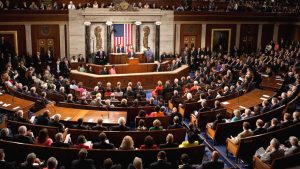
The contrast between Trump’s past criticism and his current expressions of goodwill is notable, particularly because it comes as congressional scrutiny intensifies on multiple fronts. House Republicans, led by Oversight Committee Chair Rep. James Comer, have pushed to compel the Clintons’ testimony regarding their association with Epstein. Meanwhile, Democrats have signaled they may retaliate by investigating Trump’s own relationship with Epstein, escalating the potential for a politically charged, bipartisan confrontation.
Congressional backdrop
The renewed push to question the Clintons follows months of stalemate in the House Oversight Committee. Recently, several House Democrats joined Republicans in supporting a vote to compel testimony, ending a protracted deadlock. A lawyer for the Clintons has accused Comer of acting in bad faith to secure appearances, suggesting the committee’s efforts are politically motivated rather than purely investigatory.
The House resolution has fueled criticism and debate across the political spectrum. Many Democrats have framed it as a partisan effort to embarrass the former president, while Republicans argue that public accountability is essential in light of Epstein’s extensive criminal network.
Trump’s defense of Clinton has drawn irony and mockery from both sides of the aisle. “Well well well. Someone tell Comer that Donald Trump is upset he’s going after Bill Clinton,” Democratic strategist Adam Parkhomenko wrote on X, the platform formerly known as Twitter, highlighting the unusual alignment between the two former presidents’ interests.
Trump and Clinton: a complicated history
Trump’s relationship with the Clintons has long been defined by a mix of personal familiarity and political hostility. Before running for office, Trump praised the former president on multiple occasions, describing him as capable and charismatic. However, once he entered the political arena, Trump’s rhetoric shifted dramatically, with frequent and often vitriolic attacks directed at both Bill and Hillary Clinton.
During the 2016 campaign, Trump labeled Bill Clinton as “one of the great abusers of the world,” a comment aimed at linking him to a broader narrative of moral failings. Hillary Clinton, meanwhile, became a primary target of Trump’s campaign messaging, which included critiques of her handling of her husband’s alleged misconduct and pointed attacks on her political record.
Even after Trump won the presidency, interactions between the two remained fraught. Bill Clinton confirmed that he called Trump to congratulate him after the 2016 election, but public appearances and statements from both sides continued to reflect tension and skepticism.
The Epstein investigation resurfaces
The latest DOJ document releases have reignited interest in Epstein’s sprawling network, which has implicated multiple high-profile figures across politics, finance, and entertainment. Congressional investigations are examining the scope of Epstein’s contacts and the actions of those who may have facilitated his operations or had knowledge of illicit activity.
House Republicans’ focus on the Clintons reflects a broader GOP strategy to scrutinize prominent Democrats tied to Epstein. At the same time, Democrats are increasingly vocal about their willingness to investigate Trump’s own connections to Epstein, creating a politically charged atmosphere in Washington.
Trump’s personal defense of Clinton has added an unexpected dimension to this already complex situation. Analysts note that his comments may serve multiple purposes: reinforcing his image as a leader capable of separating personal sentiment from political rivalry, or strategically positioning himself in anticipation of the broader bipartisan investigation that could target him as well.
Public and media reactions
Trump’s remarks were met with a mix of amusement, skepticism, and criticism. Political commentators have pointed out the contrast between his previous attacks and his current expressions of affinity, with some suggesting the statements are calculated to appear magnanimous while others view them as genuine.
Media outlets have emphasized the irony of Trump defending Clinton at the very moment Republicans are pushing to compel testimony from the former president. Social media reactions have ranged from mockery to strategic analysis, with political operatives debating the implications for both Trump and the ongoing congressional inquiries.
Implications for politics and public perception
The situation underscores the enduring complexity of relationships among high-profile political figures. Despite years of intense rivalry, Trump’s comments suggest that personal respect and political competition can coexist in nuanced ways. However, the public response also highlights how actions and statements are often interpreted through partisan lenses, with potential consequences for credibility and support.
The ongoing investigations into Epstein’s network, coupled with partisan maneuvering in Congress, may continue to shape Trump’s public narrative and his political alliances. Analysts note that defending a former rival in such a high-profile context is unusual and could have both strategic advantages and risks, depending on how the broader electorate perceives the gesture.
Looking ahead
As congressional investigations unfold, Trump, the Clintons, and other high-profile figures implicated in Epstein’s network are likely to remain under intense scrutiny. Republicans continue to emphasize transparency and accountability, while Democrats stress the political motivations behind selective inquiries.
Trump’s insistence that he “likes Bill Clinton” adds an unexpected twist to this dynamic. Whether it signals a broader political strategy, personal reflection, or a combination of both, the statement will be remembered as one of the more unusual reconciliatory remarks in a long-standing history of political rivalry.
Observers will be watching closely as House Republicans push forward with their efforts to compel testimony from the Clintons, while Democrats signal potential countermeasures that could bring Trump under congressional scrutiny. In this evolving scenario, personal relationships, political strategy, and accountability intersect in ways that highlight the complexities of contemporary American politics.

Emily Johnson is a critically acclaimed essayist and novelist known for her thought-provoking works centered on feminism, women’s rights, and modern relationships. Born and raised in Portland, Oregon, Emily grew up with a deep love of books, often spending her afternoons at her local library. She went on to study literature and gender studies at UCLA, where she became deeply involved in activism and began publishing essays in campus journals. Her debut essay collection, Voices Unbound, struck a chord with readers nationwide for its fearless exploration of gender dynamics, identity, and the challenges faced by women in contemporary society. Emily later transitioned into fiction, writing novels that balance compelling storytelling with social commentary. Her protagonists are often strong, multidimensional women navigating love, ambition, and the struggles of everyday life, making her a favorite among readers who crave authentic, relatable narratives. Critics praise her ability to merge personal intimacy with universal themes. Off the page, Emily is an advocate for women in publishing, leading workshops that encourage young female writers to embrace their voices. She lives in Seattle with her partner and two rescue cats, where she continues to write, teach, and inspire a new generation of storytellers.