


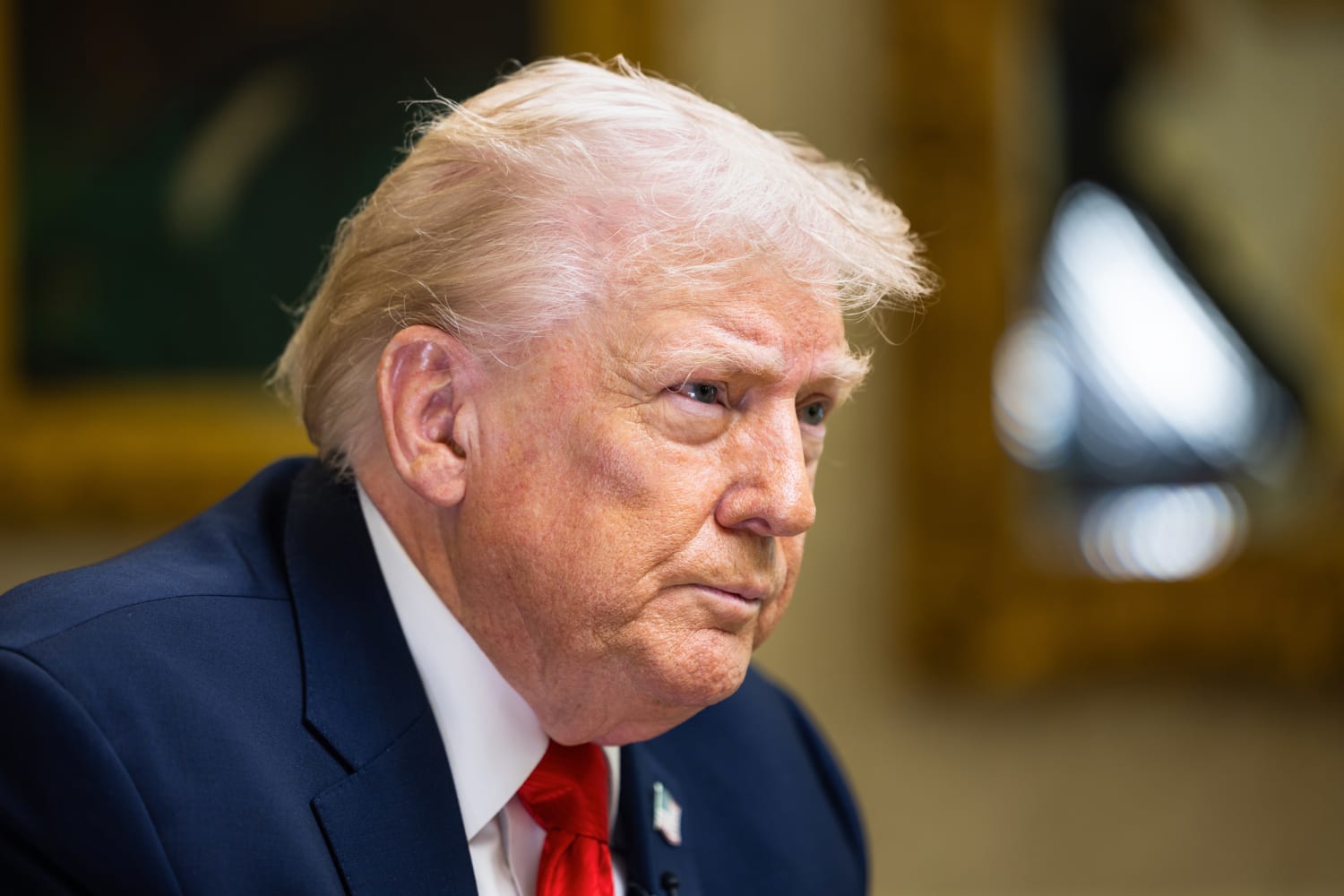
Donald Trump, currently the oldest person ever elected to the U.S. presidency, has prompted renewed discussion about what would happen should he die while serving his second term. At 79 years old when inaugurated for a second term in January 2025, Trump surpassed even Joe Biden, who holds the record as the oldest individual to occupy the White House at any point in history.
Given his age, lifestyle, and the health considerations that naturally accompany being a 79-year-old man of larger stature, experts and political observers alike acknowledge that planning for the possibility of a presidential death in office is essential. While Trump’s wealth and access to top-tier healthcare provide him a distinct advantage in longevity, certain biological realities remain unavoidable.
Fortunately, the United States has a well-established constitutional framework for such a scenario. As history has shown, presidential succession in times of death or incapacity is a process that has been codified and repeatedly tested.
The Constitutional Line of Succession
The U.S. Constitution clearly outlines the chain of command in the event of a president’s death, resignation, removal, or incapacity. Article II, Section 1 states:
“In Case of the Removal of the President from Office, or of his Death, Resignation, or Inability to discharge the Powers and Duties of the said Office, the Same shall devolve on the Vice President, and the Congress may by law provide for the Case of Removal, Death, Resignation or Inability, both of the President and Vice President, declaring what Officer shall then act as President, and such Officer shall act accordingly, until the Disability be removed, or a President shall be elected.”
In practice, this means that if President Trump were to die while in office, Vice President JD Vance would immediately assume the presidency. This protocol has historical precedent: eight U.S. presidents have died while in office, four of them from natural causes and four due to assassination. In each instance, the vice president assumed the role of president, ensuring continuity of governance.
JD Vance: The Youngest U.S. President if Trump Dies
JD Vance, Trump’s vice president, would become president immediately if the worst were to occur. Vance, currently 41, would also set a record as the youngest individual ever to serve as U.S. president, surpassing Theodore Roosevelt, who became president at 42 following the assassination of William McKinley in 1901.
Once sworn in, Vance would gain full presidential authority, including the power to appoint or retain cabinet members. He could choose to maintain the existing Trump-era team or replace them with individuals aligned with his policy priorities. The vice presidency would then become vacant, allowing the new president to nominate a successor subject to confirmation by both houses of Congress.
Impact on Presidential Elections
A key consideration is how a presidential succession might affect subsequent elections. The 22nd Amendment of the U.S. Constitution limits presidential terms:
“No person shall be elected to the office of the President more than twice, and no person who has held the office of President, or acted as President, for more than two years of a term to which some other person was elected President shall be elected to the office of the President more than once.”
In practical terms, if Vance were to take over with more than two years remaining in Trump’s term, he would only be eligible to stand for election once. If he assumed the presidency with less than two years left, he could potentially run for two full terms on his own.
This framework ensures continuity while preventing indefinite extensions of presidential authority beyond the limits established by voters. Historically, vice presidents who have succeeded deceased presidents have generally been allowed to run for full terms without disruption to the established election cycle.
Historical Precedent for Presidential Succession
The U.S. has seen several vice presidents assume the presidency due to death or assassination. Among them:
-
Theodore Roosevelt succeeded William McKinley in 1901 after McKinley’s assassination, becoming the youngest U.S. president at the time.
-
Calvin Coolidge assumed office in 1923 following the death of Warren G. Harding.
-
Harry S. Truman became president in 1945 after Franklin D. Roosevelt passed away during his fourth term.
-
Lyndon B. Johnson succeeded John F. Kennedy following his assassination in 1963.
These examples highlight the robustness of the U.S. constitutional framework for presidential succession, ensuring that the executive branch continues to function smoothly even in times of crisis.
Continuity of Government and Cabinet Selection
Once Vance becomes president, he would immediately acquire the constitutional authority to make key administrative decisions, including forming his cabinet. He could retain the previous cabinet, remove certain members, or install new officials aligned with his policy priorities. Simultaneously, he would nominate a new vice president, who would require approval by both the House of Representatives and the Senate.
This process ensures that the executive branch continues to operate effectively while maintaining adherence to constitutional checks and balances. It also allows the new president to set a legislative and administrative agenda reflective of his leadership style and policy goals.
Health Considerations and National Security Implications
The discussion surrounding Trump’s health is not merely hypothetical; it intersects with issues of national security, governance stability, and continuity of government. While Trump’s age and medical condition may raise concerns, federal agencies, the Secret Service, and White House staff maintain contingency plans to ensure seamless transitions if a president becomes incapacitated.
These plans encompass secure communication channels, immediate transfer of authority, and coordination with Congress, ensuring that policy decisions, military commands, and diplomatic responsibilities continue without disruption. Public awareness of these procedures helps maintain confidence in the resilience of the executive branch.
Conclusion
Donald Trump’s status as the oldest elected U.S. president places increased focus on the constitutional mechanisms for presidential succession. Should he die or become incapacitated while serving his second term, Vice President JD Vance would immediately assume the presidency, selecting a new cabinet and nominating a vice president for congressional approval.
Vance’s ascension would also set the stage for potential electoral considerations governed by the 22nd Amendment, with limits on how many times he could seek election based on the remaining length of Trump’s term. Historical precedent demonstrates that the system has been tested repeatedly, with vice presidents successfully assuming office and maintaining continuity of government.
Ultimately, the constitutional provisions, combined with established federal protocols, ensure that even in the event of a presidential death, the United States maintains stable governance and a clear line of succession. While Trump’s continued health remains a critical factor, the legal and procedural framework guarantees that the office of the presidency—and the broader machinery of government—remains resilient in times of uncertainty.

Emily Johnson is a critically acclaimed essayist and novelist known for her thought-provoking works centered on feminism, women’s rights, and modern relationships. Born and raised in Portland, Oregon, Emily grew up with a deep love of books, often spending her afternoons at her local library. She went on to study literature and gender studies at UCLA, where she became deeply involved in activism and began publishing essays in campus journals. Her debut essay collection, Voices Unbound, struck a chord with readers nationwide for its fearless exploration of gender dynamics, identity, and the challenges faced by women in contemporary society. Emily later transitioned into fiction, writing novels that balance compelling storytelling with social commentary. Her protagonists are often strong, multidimensional women navigating love, ambition, and the struggles of everyday life, making her a favorite among readers who crave authentic, relatable narratives. Critics praise her ability to merge personal intimacy with universal themes. Off the page, Emily is an advocate for women in publishing, leading workshops that encourage young female writers to embrace their voices. She lives in Seattle with her partner and two rescue cats, where she continues to write, teach, and inspire a new generation of storytellers.