


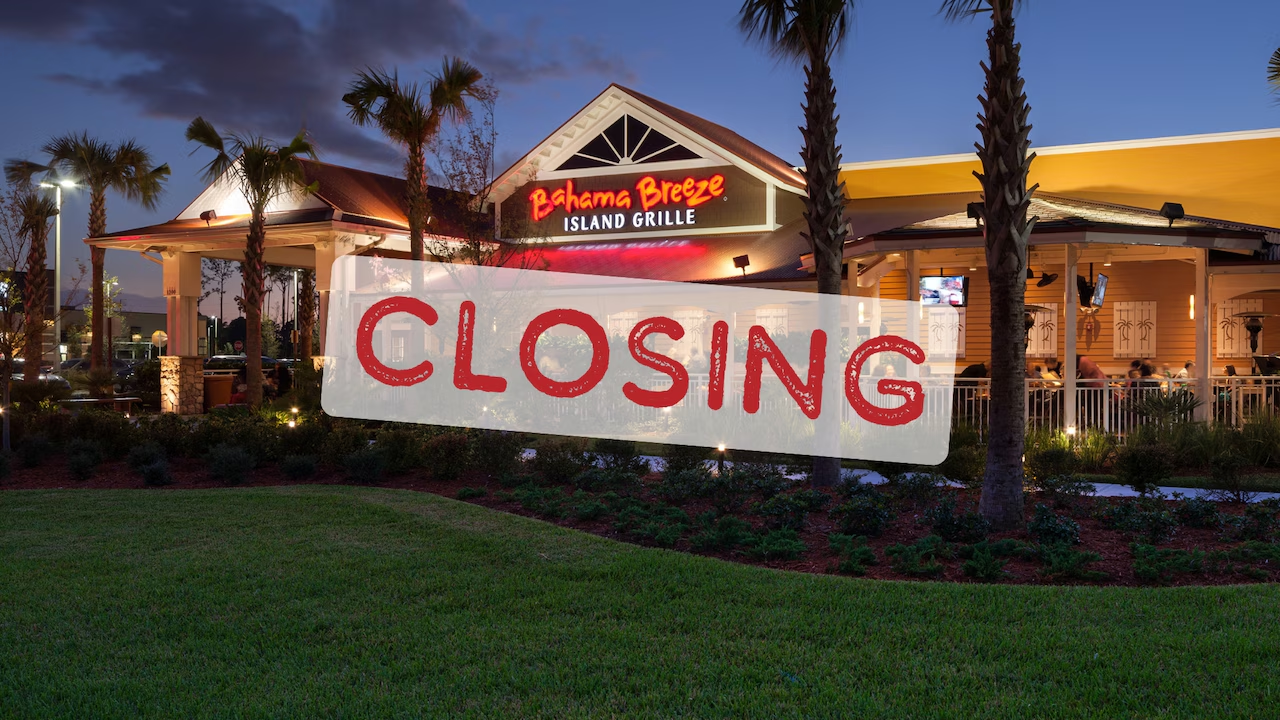
A familiar Caribbean-themed restaurant chain is set to undergo a dramatic transformation, as its parent company prepares to shutter several locations and convert others into different concepts. The Orlando-based brand, known for its tropical cocktails, seafood dishes, and relaxed, island-inspired atmosphere, has faced mounting challenges in recent years due to declining earnings and shifts in consumer dining habits.
Darden Restaurants announced that 14 of the chain’s 28 restaurants will close permanently, while the remaining 14 locations will be converted into other brands within the company’s portfolio. The closures will take place through April 5, 2026, providing a window for staff and customers to adjust. Rebranding efforts for the remaining locations are expected to take 12 to 18 months, with restaurants largely remaining open except for brief shutdowns necessary for the transition.
Darden’s Portfolio and Strategic Initiative
Darden Restaurants oversees an extensive collection of brands, including Olive Garden, LongHorn Steakhouse, Seasons 52, Yard House, Cheddar’s Scratch Kitchen, and Chuy’s, as well as fine dining chains such as Ruth’s Chris Steak House, Eddie V’s Prime Seafood, and The Capital Grille. This latest decision is part of a broader effort by Darden to optimize its restaurant portfolio, concentrating resources on high-performing concepts while scaling back underperforming units.
The 14 locations slated for permanent closure are spread across Delaware, Georgia, Michigan, New Jersey, North Carolina, Pennsylvania, Virginia, and Washington. Meanwhile, the locations targeted for conversion are primarily in Florida, with additional sites in Georgia, North Carolina, South Carolina, and Virginia. Darden emphasized that these conversion sites are strategically selected to maximize operational efficiency and benefit multiple brands within its portfolio, while aiming to maintain employment continuity for affected staff.
Bahama Breeze, the Caribbean-inspired sister chain of Olive Garden, is the focus of this closure and rebranding effort. Founded in 1996 in Orlando, the brand became known for bringing tropical flavors, vibrant décor, and a casual island-dining experience to multiple states. At its peak, the chain operated approximately 43 locations, offering seafood, rum-based cocktails, and a laid-back environment that appealed to both tourists and locals.
Impact on Staff and Operations
Darden has committed to assisting employees affected by the closures, offering opportunities for placement at other company-owned restaurants wherever possible. Staff unable to transfer will receive severance packages. The company applied similar measures during previous challenges; in May 2025, it abruptly closed 15 locations after significant earnings declines, providing displaced staff with reemployment options or severance.
Andy Wiederhorn, CEO of Darden, expressed confidence in the company’s approach, stating that the focus remains on supporting team members and ensuring long-term stability. Darden’s stock has seen a rise of more than 14 percent in early 2026, signaling investor optimism regarding the strategic adjustments and the expected benefits from optimizing its portfolio.
A Legacy of Expansion and Challenges
The chain grew steadily across the United States, establishing itself as a destination for casual Caribbean dining. Its menu, which featured seafood, tropical cocktails, and island-inspired entrees, combined with its lively ambiance, allowed it to carve a niche within the competitive casual dining sector.
However, over the past decade, the brand has confronted significant challenges. Foot traffic has declined as consumers increasingly favor fast-casual dining, delivery services, and smaller, locally-focused restaurants. Rising operational costs, economic uncertainty, and shifting consumer preferences have placed additional pressure on mid-tier dining chains. Bahama Breeze’s closures reflect these broader trends, which have affected a wide range of national and regional restaurant brands.
Industry Context
The chain is not alone in navigating these challenges. Across the United States, many restaurant operators are scaling back operations or restructuring portfolios. Noodles & Company recently announced plans to shutter 30 to 35 additional locations in 2026, following similar closures in previous years. West Coast establishments such as Kasper’s Hot Dogs and Lemonade have also closed their remaining locations, illustrating the growing difficulties faced by casual and mid-tier dining chains.
Analysts note that casual dining brands are increasingly adapting to a post-pandemic landscape that favors convenience, delivery, and fast-casual formats. Chains that once relied on expansive dining spaces and elaborate menus are now recalibrating operations, either through closures, conversions, or rebranding initiatives. For Darden, converting select locations of its Caribbean-themed brand into stronger-performing concepts is part of a strategy to maintain market relevance and enhance profitability.
Customer Response and Brand Legacy
The Caribbean-inspired chain cultivated a loyal following over its nearly 30-year history. Patrons appreciated its tropical-inspired cuisine, signature cocktails, and casual, festive environment. Social media reactions to the announcement have reflected a mix of nostalgia and concern. Many longtime customers expressed sadness at the permanent closures, while others highlighted optimism regarding the reemployment opportunities offered to staff and the potential of new concepts in the converted locations.
Though the chain will disappear from certain markets, its nearly three-decade legacy will remain a notable chapter in American casual dining history. The closures serve as a reminder of the competitive pressures facing themed and mid-tier casual dining brands in an evolving market.
Looking Ahead
The closure and rebranding initiative underscores Darden’s focus on efficiency, portfolio optimization, and profitability. By consolidating underperforming units and reallocating resources to high-traffic, high-performing locations, the company aims to strengthen its position in the casual dining landscape. Industry experts suggest that such strategic realignment is becoming increasingly common as restaurant operators adapt to changing consumer habits, labor shortages, and economic pressures.
For customers, the immediate impact is clear: 14 restaurants will close permanently, while the remaining sites will undergo gradual conversion into other Darden concepts over the next year or more. Employees affected by the closures are being guided through transition plans, reemployment options, or severance arrangements, reflecting Darden’s commitment to mitigating the effects of these structural changes.
As the Caribbean-themed chain fades from the U.S. dining scene, it joins a growing list of brands reshaping their operations to remain competitive. While its tropical flavors and island-inspired dishes will no longer be widely available, the legacy of the nearly 30-year-old chain will endure in the memories of its loyal patrons and in the history of American casual dining. The coming months will reveal how successfully Darden navigates this rebranding effort and whether lessons from the closures inform the company’s broader strategy for sustainable growth.

Emily Johnson is a critically acclaimed essayist and novelist known for her thought-provoking works centered on feminism, women’s rights, and modern relationships. Born and raised in Portland, Oregon, Emily grew up with a deep love of books, often spending her afternoons at her local library. She went on to study literature and gender studies at UCLA, where she became deeply involved in activism and began publishing essays in campus journals. Her debut essay collection, Voices Unbound, struck a chord with readers nationwide for its fearless exploration of gender dynamics, identity, and the challenges faced by women in contemporary society. Emily later transitioned into fiction, writing novels that balance compelling storytelling with social commentary. Her protagonists are often strong, multidimensional women navigating love, ambition, and the struggles of everyday life, making her a favorite among readers who crave authentic, relatable narratives. Critics praise her ability to merge personal intimacy with universal themes. Off the page, Emily is an advocate for women in publishing, leading workshops that encourage young female writers to embrace their voices. She lives in Seattle with her partner and two rescue cats, where she continues to write, teach, and inspire a new generation of storytellers.