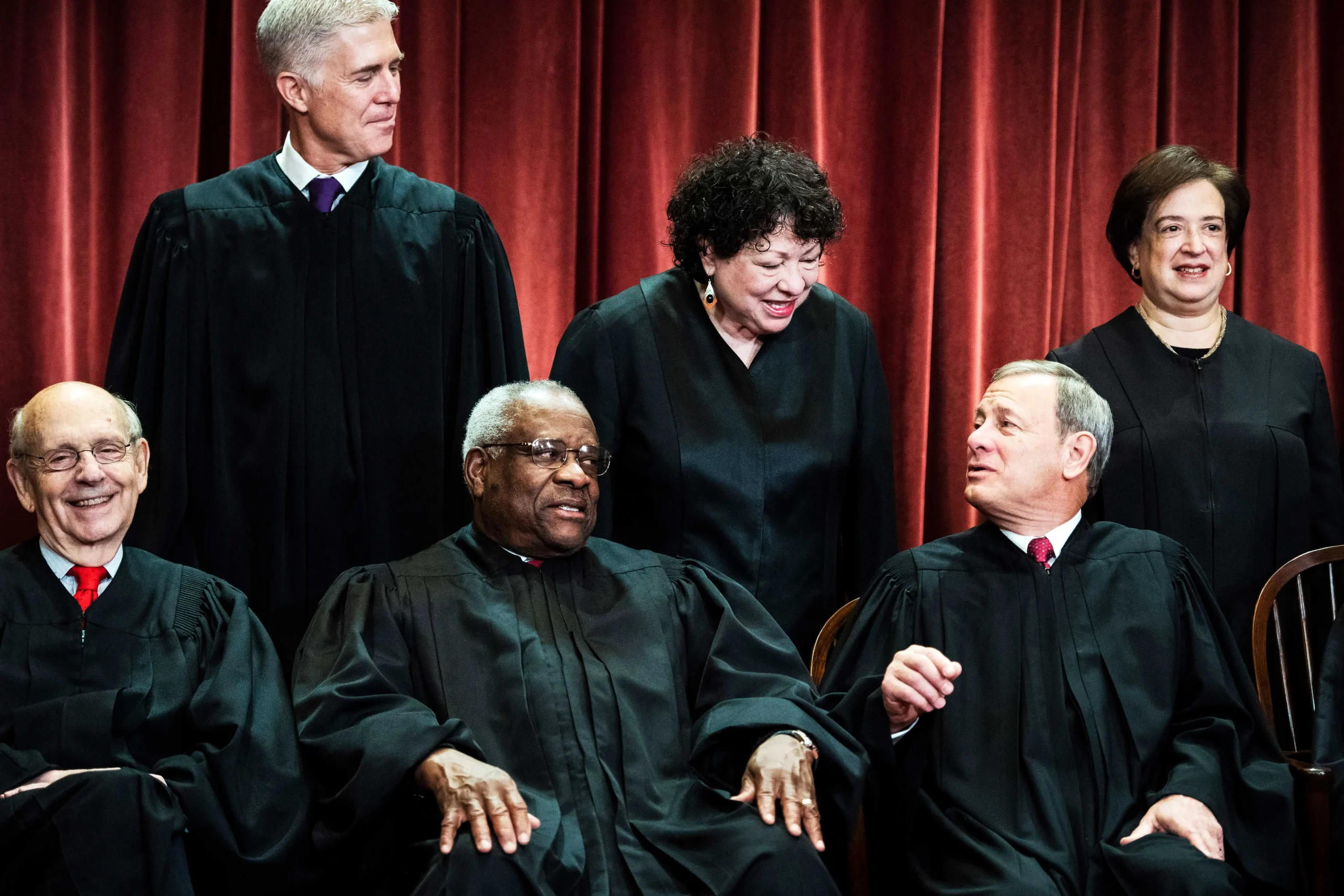
The U.S. Supreme Court on Wednesday cleared the way for California to use a newly redrawn congressional map designed to give Democrats an advantage in upcoming elections, denying a request from the California Republican Party to block the measure. The decision, issued without explanation in a one-sentence order, comes as states across the country are navigating the politically charged process of redistricting, with midterm elections looming in November.
The new California map, approved by voters last year, is expected to flip up to five congressional districts currently held by Republicans, potentially strengthening Democratic prospects in the U.S. House of Representatives. California, the most populous state in the country, holds 52 seats in the House, and the changes could have a decisive impact on the balance of power in Congress.
The Supreme Court’s order aligns with a precedent set in December 2025 when it allowed Texas to implement a similarly contentious redistricting map. That map, which was designed to give Republicans five additional House seats, drew criticism from Democrats and civil rights advocates for allegedly using race as a key factor in drawing district lines. California’s Democratic-led efforts were, in part, a response to Texas, seeking to ensure that partisan advantages were counterbalanced in favor of Democrats.
Legal Challenges and Partisan Tensions
The Republican Party, backed by the Trump administration, challenged California’s map in federal court, arguing that state officials had used race as the predominant factor in redistricting. They claimed this violated the 14th Amendment’s equal protection clause, the 15th Amendment’s protections against racial discrimination in voting, and provisions of the federal Voting Rights Act. Specifically, they alleged that the map sought to consolidate Latino voters into certain districts to benefit Democratic candidates, amounting to a racial gerrymander.
A federal court in Los Angeles rejected the challenge on January 14, 2026, concluding that evidence of racial motivation in California’s redistricting was “exceptionally weak” and that the evidence of partisan motivation was far stronger. The 2-1 decision emphasized that, given the partisan nature of the map, preliminary relief was not warranted. The case was then brought to the Supreme Court for emergency consideration, which declined to block the map.
California Attorney General Rob Bonta’s office argued in filings that the Supreme Court should not intervene in what is fundamentally a partisan dispute. “The obvious reason that the Republican Party is a plaintiff here, and the reason that the current federal administration intervened to challenge California’s new map while supporting Texas’s defense of its new map, is that Republicans want to retain their House majority for the remainder of President Trump’s term,” Bonta’s filing stated. “The court should not step into the political fray, granting one political party a sizeable advantage by enjoining California’s partisan gerrymander after having allowed Texas’s to take effect.”
Governor Gavin Newsom, a Democrat, welcomed the Supreme Court decision, framing it as a validation of California voters’ intent. In a social media post, he said, “Donald Trump said he was ‘entitled’ to five more congressional seats in Texas. He started this redistricting war. He lost, and he’ll lose again in November.” Newsom’s comments highlight the stakes of this decision: control of the U.S. House of Representatives is narrow, and ceding even a few districts could shift the legislative balance, affecting Trump’s legislative agenda and oversight exposure.
Redistricting in Context
Redistricting—the process of redrawing electoral district boundaries—occurs every decade following the U.S. Census to account for population changes. While traditionally intended to reflect demographic shifts, recent rounds of redistricting have increasingly been driven by partisan objectives, a practice known as partisan gerrymandering. Critics argue that such efforts distort representation and undermine the principle of fair elections.
The Supreme Court has gradually narrowed avenues for challenging partisan gerrymandering at the federal level. In a landmark 2019 ruling, the Court declared that claims of partisan gerrymandering cannot be addressed by federal courts, leaving challenges to state courts and legislation. This decision has contributed to increasingly strategic and politically motivated redistricting, with states like Texas and California acting to protect or expand party control.
In the California case, justices offered no dissent and provided no rationale in their emergency order, following standard procedure for expedited requests. The decision effectively allows California elections to proceed under the new map, with minimal delay, preserving the timeline for voter registration, candidate filing, and campaign planning ahead of the November midterms.
Implications for November Midterms
The newly approved map could be pivotal in determining control of the House. Republicans currently hold slim majorities in both chambers of Congress. Losing even a handful of seats in California could tip the balance in favor of Democrats, enabling oversight investigations and legislative initiatives that could challenge the Trump administration’s agenda. Conversely, the Texas map—favored by Republicans—aims to secure additional seats for the party, demonstrating the high-stakes interplay of state-level redistricting in national politics.
The California map is likely to affect several key districts, particularly suburban and rapidly growing areas with diverse populations. Analysts note that flipping five Republican-held seats could significantly alter fundraising strategies, campaign messaging, and candidate recruitment in both parties. National attention is expected to remain high, with both parties pouring resources into competitive districts.
Constitutional and Racial Considerations
Although race was cited as a factor in the legal challenge, courts have historically struggled to balance the Voting Rights Act’s protections with the realities of partisan politics. Critics of California’s map argue that while the intent may be political, the concentration of Latino voters into certain districts raises questions about minority representation. Supporters contend that the map reflects California’s demographic realities and ensures communities of interest are adequately represented, consistent with the state’s voter-approved measure from last year.
Legal experts also note the irony of the Supreme Court allowing California’s map while previously endorsing Texas’s map, suggesting a tacit acknowledgment of the political nature of redistricting nationwide. Conservative Justice Samuel Alito, in a concurring opinion on the Texas case, acknowledged that partisan advantage was the primary motivation behind both maps, describing it as “partisan advantage pure and simple.”
Moving Forward
With the Supreme Court’s clearance, California election officials can move forward with finalizing ballots, voter notifications, and candidate filings under the new districts. Campaigns are already adjusting strategies to the revised landscape, targeting newly competitive districts and reallocating resources to areas likely to be pivotal in November.
For voters, the decision underscores the influence of state legislatures and ballot initiatives in shaping federal representation. California’s experience reflects broader trends across the country, where partisan considerations increasingly intersect with demographic and geographic realities, shaping the political map in ways that have lasting national consequences.
As November approaches, both parties will be closely monitoring California’s districts, preparing for intense campaigns that could determine control of the U.S. House and influence the remaining years of President Trump’s term. The Supreme Court’s ruling, though brief and unexplained, has set the stage for a high-stakes electoral battle in one of the nation’s most populous and politically significant states.

Emily Johnson is a critically acclaimed essayist and novelist known for her thought-provoking works centered on feminism, women’s rights, and modern relationships. Born and raised in Portland, Oregon, Emily grew up with a deep love of books, often spending her afternoons at her local library. She went on to study literature and gender studies at UCLA, where she became deeply involved in activism and began publishing essays in campus journals. Her debut essay collection, Voices Unbound, struck a chord with readers nationwide for its fearless exploration of gender dynamics, identity, and the challenges faced by women in contemporary society. Emily later transitioned into fiction, writing novels that balance compelling storytelling with social commentary. Her protagonists are often strong, multidimensional women navigating love, ambition, and the struggles of everyday life, making her a favorite among readers who crave authentic, relatable narratives. Critics praise her ability to merge personal intimacy with universal themes. Off the page, Emily is an advocate for women in publishing, leading workshops that encourage young female writers to embrace their voices. She lives in Seattle with her partner and two rescue cats, where she continues to write, teach, and inspire a new generation of storytellers.