

The sound of metal scraping against metal pulled me from sleep at 10:47 on a Tuesday morning. Not a bang or a crash—something slower, more deliberate. The grinding screech of my garage door being manually opened by someone who knew they shouldn’t be doing it but was doing it anyway.
I’d been a light sleeper for years, an occupational hazard that followed me home from work and never quite left. Even on my rare days off, my brain stayed partially alert, cataloging sounds and categorizing threats in that automatic way that comes from too many years in law enforcement. This sound didn’t belong to my morning. It didn’t belong in my house at all.
I stood in my hallway, barefoot on the hardwood floor I’d refinished myself six months ago when I first moved in, trying to make sense of what I was hearing. The house was supposed to be empty except for me. My truck was in the driveway where I’d left it last night. The front door was locked. The windows were closed. And yet someone was definitely, unmistakably, inside my garage.
I live in one of those HOA neighborhoods where nothing ever happens—or at least, where nothing is supposed to happen. Perfect lawns maintained to exact specifications. Identical mailboxes positioned at precisely measured intervals. The kind of place where neighbors smile when you pass but you know they’re watching through their blinds the moment you pull away, cataloging your comings and goings like amateur surveillance operatives. I’d moved here after twenty years of chaos, looking for something quiet, something predictable, something safe.
For a while, I thought I’d found it. That illusion lasted about three months, right up until the day she decided my garage was her business.
Her name was Linda Carshaw, though everyone in the neighborhood just called her “Linda from the HOA,” spoken with the particular mixture of exasperation and resignation usually reserved for natural disasters or tax audits. She was the Homeowners Association’s self-appointed enforcement officer, the kind of woman who’d memorized the community bylaws like scripture and wielded them like weapons. You could always spot her coming from three houses away: clipboard clutched against her chest like armor, oversized sunglasses that belonged on a 1950s movie star, smile stretched so tight across her face it looked painful.
She’d already “visited” me twice in my first six months here. The first time was about my trash can, which she claimed had been visible from the street for longer than the permitted four-hour window on collection day. Never mind that I’d put it out at 6 a.m. and she’d photographed it at 6:45—apparently forty-five minutes was enough to constitute a violation worth documenting. The second time was about my truck, which she insisted was “excessively loud” and disturbing the peace of the neighborhood. The truck was parked. The engine was off. She claimed the very presence of a vehicle that size was auditory pollution.
I’d kept my head down after that, followed every ridiculous rule to the letter, and hoped she’d move on to terrorize someone else. Apparently, I’d hoped wrong.
That morning was supposed to be mine—a rare Wednesday off after pulling a double shift over the weekend. No briefings, no court appearances, no emergencies. Just coffee, silence, and maybe finally hanging the pictures that had been leaning against my living room wall since move-in day. I’d made it as far as the coffee part when the sound of my garage door being violated shattered the quiet.
I moved down the hallway toward the door that connected my house to the garage, my heart rate climbing but my breathing staying controlled. Years of training took over, the automatic assessment process: threat level, escape routes, tactical options. I tried to convince myself it was nothing—maybe the wind had caught the door, maybe a neighbor needed something and had gotten confused about which house was which.
Then I heard her voice, and all those rationalizations evaporated.
“I just need to make sure this area is compliant with current fire safety standards,” she was saying, not to me but apparently to herself, her words carrying that particular quality of false authority people adopt when they’re doing something they know they shouldn’t. “The HOA has received multiple concerns about improper storage, and it’s my responsibility to verify—”
I froze in my hallway, one hand on the door handle, trying to process what I was hearing. That was definitely Linda. And my garage door was definitely open—I could hear the unmistakable sound of the metal track settling, the way it always did when the door reached its halfway point.
She had opened my garage door. She was inside my garage. She was in my house.
I didn’t rush in. I didn’t start yelling. Something about the situation felt so surreal that my brain needed proof before reacting, needed to see it with my own eyes before I could accept that this was actually happening. I stepped back from the door, pulled my phone from my pocket, opened the camera app, and hit record. Then, with my phone held low and unobtrusive, I walked into the garage.
Linda was fully inside, not hovering near the entrance like someone who’d accidentally wandered in. She was deep in my space, walking around my workbench like she was browsing a showroom, peering into cabinets I’d installed myself, running her finger along my tool pegboard, writing notes on her ever-present clipboard. She was wearing khaki pants and a white polo shirt with the HOA logo embroidered on the chest—the unofficial uniform she’d adopted to make herself look more official than she actually was.
The sight of her casually violating my property like it was her right sent a flash of pure anger through my chest, the kind that makes your vision sharpen and your hands curl into fists. But I held it, channeled it, used it to keep my voice level when I spoke.
“What the hell do you think you’re doing?”
She turned toward me without a trace of surprise or embarrassment, like I was the one who’d walked into her space instead of the other way around. “Oh, good. You’re home,” she said, her tone implying my presence was convenient rather than required. “This will only take a minute. I’m conducting routine safety inspections of garage spaces in accordance with HOA emergency access provisions.”
“Emergency access,” I repeated slowly, trying to keep my voice from rising. “What emergency?”
She gestured vaguely at my perfectly organized garage—tools arranged on pegboards, seasonal items in labeled plastic bins, a small refrigerator in the corner containing nothing more dangerous than beer and last night’s leftover pizza. “We’ve received concerns about homeowners using garages for improper storage. Chemical hazards, fire risks, that sort of thing. The HOA has authority under Section 7.3 of the community bylaws to inspect common-area-adjacent spaces when safety is a concern.”
“This isn’t a common area. This is my private property.”
“Attached structures fall under community oversight when—”
“You’re trespassing,” I said, cutting through her rehearsed explanation. “You don’t have permission to be here. You don’t have a warrant. You don’t have any legal authority whatsoever. Get out of my garage.”
Her smile didn’t waver. If anything, it got tighter, more condescending. “Refusing to cooperate with a legitimate HOA inspection could result in significant fines, Mr. Torrens. I’d hate to see that happen. If you’ll just let me finish documenting—”
That’s when something clicked in my head. Not anger anymore—something colder, more calculated. I’d spent two decades dealing with people who thought they were above the law, people who believed authority came from loudness and clipboard rather than actual legal standing. I knew exactly what I was looking at, and I knew exactly what to do about it.
I stepped backward out of the garage, back into my house, keeping my eyes on Linda the entire time. She kept talking, kept writing, kept acting like she had every right to be there. Her confidence was absolute. Her assumption that I would back down was written all over her face.
I reached over to the wall panel just inside the door and pressed the button.
The garage door began to descend with its familiar mechanical whir. Slowly, smoothly, inevitably.
Linda’s head snapped up from her clipboard. “What are you doing?” she asked, confusion finally cracking through her authoritative facade.
I said nothing. Just watched the door descend inch by inch, cutting off the sunlight, enclosing the space, sealing her inside.
“Mr. Torrens, stop that right now. You can’t—this is—” Her voice climbed higher as the door approached the concrete floor. “You’re obstructing an HOA official! This is against community bylaws!”
The door settled into place with a solid thunk. I turned the deadbolt on the interior door that connected the garage to my house, the metallic click echoing in my hallway.
Silence. Then pounding.
Linda’s fists hammered against the door from the other side, the sound sharp and panicked. “Let me out! You can’t do this! I’m going to report you to the board! You’re going to be fined! You’re going to be—”
I stood in my hallway, phone still in my hand, still recording every word. My heart rate had settled now, the initial spike of adrenaline fading into something steadier, more focused. Because here’s the thing Linda didn’t know about me, the detail she’d never bothered to learn despite her obsessive cataloging of everyone else’s business.
I wasn’t just some homeowner she could bully.
I picked up my phone and dialed the non-emergency number for the county sheriff’s office. Not 911—this wasn’t that kind of emergency. Just the direct line to dispatch, the number I’d called hundreds of times before from the other side of the job.
“Sheriff’s office, this is Dispatch.”
“Hey, Sandra. It’s Torrens.”
“Derek? You’re not on shift today. What’s up?”
“I need to report a trespassing incident at my residence. There’s a woman unlawfully inside my locked garage who entered without permission and is refusing to leave.”
There was a brief pause on the other end. I could practically hear Sandra’s eyebrows rising. “You want me to send a unit to your house?”
“That would be appreciated. Subject is unarmed and contained, no immediate threat, but she’s escalating verbally and I’d like an official response for documentation purposes.”
“Copy that. I’ll have someone there in about ten minutes. You okay?”
“I’m fine. Just standing outside watching the show.”
As I ended the call and stepped out onto my driveway, Linda’s yelling grew louder, echoing from behind the closed garage door. Her words were hard to make out now, muffled by the insulated door, but the tone was clear enough: indignation mixed with rising panic.
Neighbors started appearing. Mrs. Chen from two houses down stepped onto her porch, coffee mug in hand. The Patel family’s teenage son appeared in their driveway, phone already out and recording. Across the street, Mr. Kovac—a retired postal worker who’d lived in the neighborhood for thirty years—stood on his lawn with his arms crossed, shaking his head slowly with an expression that suggested he’d been waiting years for something like this to happen.
Curtains moved in windows. Garage doors opened slightly. Phones appeared from pockets. The neighborhood’s unofficial surveillance network activated in real time, everyone suddenly very interested in the drama unfolding at the Torrens residence.
And for the first time since I’d moved into this cookie-cutter subdivision, I smiled. Because Linda thought she had all the power, thought her clipboard and her bylaws and her self-appointed authority made her untouchable.
She had no idea who she’d just locked herself in with.
Linda’s voice shifted through several distinct phases in the eight minutes it took for the first sheriff’s unit to arrive. Phase one was pure authority—shouting about violations and consequences, threatening me with fines and board action, declaring that I was making the biggest mistake of my life. Phase two was negotiation, her tone softening as she tried to bargain her way out, suggesting we could “work something out” if I just opened the door and let her finish her inspection. Phase three was victimhood, complete with theatrical sobbing about feeling “unsafe” in the dark garage, claiming she might have a panic attack, saying she was going to call the police herself if I didn’t release her immediately.
I stayed on my driveway, leaning against my truck with my phone in my hand and my face completely neutral. When she got to the panic attack threat, I called through the door loud enough for the growing crowd of neighbors to hear: “The garage door will open when law enforcement arrives. For your safety and mine, we’re going to let the authorities handle this situation.”
That’s when her story started changing.
“I had permission!” she shouted suddenly. “Your wife told me I could inspect the garage when I spoke with her last week!”
I almost laughed. I’m not married. Haven’t been for six years.
“The HOA president personally authorized this inspection! I have it in writing! I have—”
I’d spoken to the HOA president two days ago about a mailbox placement question. There was no inspection scheduled. There was no authorization. The president, a mild-mannered accountant named Raj who clearly regretted volunteering for the position, had actually seemed embarrassed when I mentioned Linda’s previous visits.
Each new excuse came faster than the last, each one sloppier and more desperate. The small crowd on the street was growing now. Someone was definitely filming from across the street. Mrs. Chen had been joined by her husband. The teenage Patel boy’s parents had come out to see what their son was recording.
Linda noticed the attention and completely lost whatever remaining composure she’d been clinging to.
“He’s holding me hostage!” she screamed, loud enough that people three houses away probably heard. “I’m being illegally detained! This is false imprisonment! He’s—”
That word—hostage—echoed down the street. She repeated it, louder, more dramatic. “Hostage! I’m being held hostage in here! Someone call the police! He trapped me! My job will be over when I’m done with him! His life is over!”
I kept my face completely neutral, even though that last threat almost got a reaction out of me. Because while Linda was busy digging herself deeper, I was thinking about how many laws she’d just violated, how many witnesses were documenting her performance, and how spectacularly this was going to backfire on her.
Inside the garage, she tried the side door that led to my backyard—locked. Tried to manually lift the main garage door—locked from the inside. Rattled the handle connecting to my house like sheer force of will would open it. Then, apparently exhausted from her efforts, she sat down on the folding chair near my workbench and started fake crying. Loud, performative sobs clearly meant for the audience outside.
That’s when I heard the sirens.
Linda heard them too. The crying stopped instantly, cut off mid-sob like someone had flipped a switch. I heard her scramble to her feet, heard her moving around the garage. Then her voice came through the door again, completely different now—quieter, almost reasonable.
“Mr. Torrens, listen. We can work this out. There’s no need to involve the authorities over a simple misunderstanding. If you just open the door, we can forget this whole thing happened. I won’t file any violations. We’ll just—”
The sheriff’s cruiser turned onto Oak Street, light bar activated but no siren. Professional, controlled, exactly what I’d expected. The entire neighborhood was on their lawns now or standing in driveways, phones out, not even pretending to be subtle about their interest. This wasn’t just HOA drama anymore. This was the most exciting thing that had happened on this street in years.
Deputy Marcus Reeves stepped out of the cruiser, and I felt a small wave of relief. I knew Marcus—not well, since we worked different shifts in different divisions, but well enough to nod to in the parking lot at shift change. He was solid, professional, the kind of deputy who approached every call with the same methodical calm whether it was a noise complaint or an armed robbery.
He walked toward me with his hands relaxed at his sides, his expression neutral but alert. “Derek,” he said with a small nod. “Dispatch said you’ve got a trespassing situation?”
“Inside the garage,” I confirmed. “A woman named Linda Carshaw entered my property without permission approximately twenty minutes ago. When I asked her to leave, she refused and claimed HOA authority. I secured the space and called it in.”
Marcus glanced at the closed garage door, then at the growing crowd of neighbors. “She still in there?”
“Yes.”
“She armed?”
“No. Just loud.”
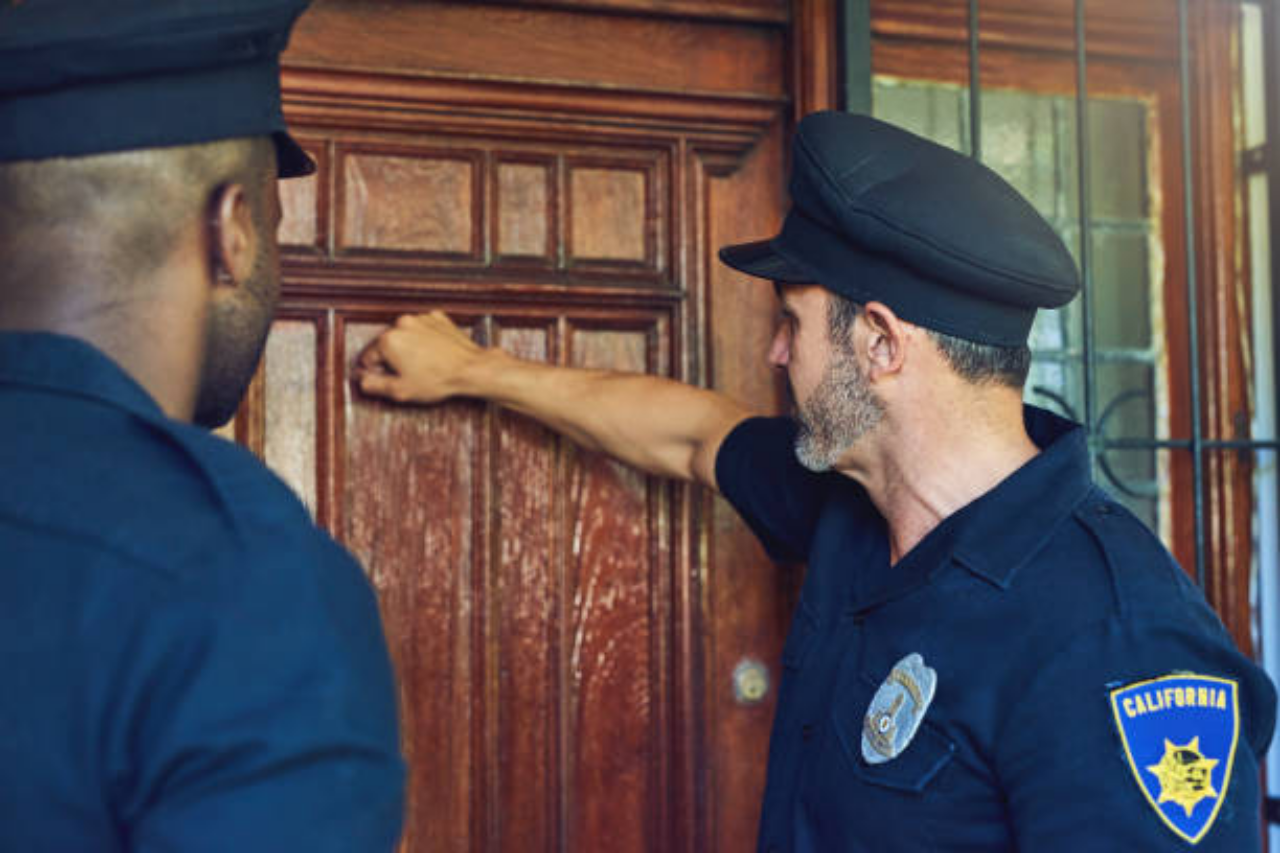
He almost smiled at that. “Okay. Let me make contact.” He walked up to the garage door and knocked firmly. “Ma’am, this is Deputy Reeves with the county sheriff’s office. Are you inside this garage?”
Linda’s response was immediate and explosive. “Yes! Thank god you’re here! This man has been holding me prisoner! He locked me in here against my will! I want him arrested immediately for false imprisonment, for assault, for—”
“Ma’am,” Marcus interrupted calmly, “I need you to slow down and answer some questions. Why are you inside this garage?”
There was a pause. I could practically hear Linda recalculating her approach. When she spoke again, her voice had shifted to what she probably thought was professional and reasonable. “I’m Linda Carshaw, compliance officer for the Willow Creek Homeowners Association. I was conducting a routine safety inspection when Mr. Torrens became hostile and trapped me inside. I was acting within my authority under the community bylaws, and he’s now obstructing an official inspection.”
A second cruiser pulled up, and Deputy Sarah Chen got out. She and Marcus exchanged a look—the kind of wordless communication that happens between partners who’ve worked together long enough to develop their own shorthand. She walked over to join us while Marcus continued his conversation with the garage door.
“Ma’am, did Mr. Torrens give you permission to enter his garage?”
Silence.
“Ma’am, I need a yes or no answer. Did you have explicit permission from the property owner to be inside his garage?”
“The HOA has authority to—”
“That’s not what I asked. Did this specific homeowner give you specific permission to be in this specific space?”
More silence.
“Was there an emergency situation that required immediate access?”
“Not an emergency per se, but safety concerns that—”
“So no emergency. Ma’am, do you have any law enforcement authority? Are you a peace officer, a building inspector, a fire marshal, or any other official with legal right of entry?”
“I’m an HOA compliance officer. I have—”
“That’s a no.” Marcus looked over at me. “Do you want to open this door?”
I pulled out my keys and unlocked the interior door, then hit the wall button. The garage door began to rise with its mechanical whir, revealing Linda standing in the center of my garage like an actress on a stage as the curtain lifted.
She looked terrible. Her sunglasses were gone, probably set down somewhere in the garage when she’d started her “inspection.” Her clipboard was clutched against her chest with both hands. Her hair, which had been perfect when she’d arrived, was disheveled from running her hands through it. Her carefully maintained mask of authority had completely crumbled, leaving behind someone who was just starting to understand how badly this had gone wrong.
She didn’t look at me. Didn’t look at the neighbors. Kept her eyes fixed on Marcus like he was her only lifeline.
“Ma’am, I’m going to need you to step out of the garage please.”
She walked out slowly, carefully, like she was navigating a crime scene. Marcus guided her toward the driveway while Sarah walked over to me.
“You okay?” she asked quietly.
“Fine. Just tired of being harassed.”
“You get it on video?”
I held up my phone. “Start to finish.”
She nodded. “Good. We’ll need that for the report.”
Marcus had separated Linda from me, walking her toward the street while he asked questions I couldn’t quite hear. I saw her gesturing, saw her pointing back at my garage, saw her trying to explain herself with increasing desperation. Then Marcus asked something that made her face go pale.
He walked back over to me while Sarah stayed with Linda. “She says she had implied permission from the HOA to conduct inspections.”
“She didn’t have my permission. I never gave anyone permission to enter my garage.”
“She also says this is the first time she’s been on your property.”
“That’s false. She’s been here twice before. Both times I asked her to leave, told her not to come back without being invited.”
Marcus pulled out his notebook. “Did you document those interactions?”
“I filed a written complaint with the HOA after the second visit. That was about four months ago.”
“You still have a copy of that complaint?”
“In my house. Email and hard copy.”
Marcus nodded slowly, then asked the question I’d been waiting for. “Linda says she didn’t realize you worked in law enforcement. Is that accurate?”
I looked past him at Linda, who was now staring at me with dawning horror. “I’ve never discussed my employment with her. But it’s not exactly a secret. My truck has an FOP sticker. My license plate frame says ‘Sheriff’s Office.’”
“What county?” Marcus asked, even though he already knew.
“Harrison County. I’m a detective in the Criminal Investigations Division.”
Linda’s face went from pale to white. The clipboard slipped from her hands and clattered on my driveway.
Marcus maintained his professional expression, but I saw something flicker in his eyes—satisfaction, maybe, or just appreciation for poetic justice. “Well,” he said. “That changes the context somewhat.”
Sarah had overheard the exchange. She walked Linda over to her cruiser and asked her to have a seat in the back—not under arrest, just separated for interview purposes. Linda went without resistance, all the fight drained out of her.
For the next forty-five minutes, my driveway became a crime scene processing area. Marcus took my statement. Sarah interviewed Linda. Deputy Chen photographed the garage door mechanism, the interior access door, the locks. I provided my phone video, which clearly showed Linda already inside the garage when I arrived, clearly showed her refusing to leave, clearly captured her changing stories and escalating threats.
Three neighbors volunteered their own video footage without being asked. Mrs. Chen had recorded the whole thing from her porch. The Patel teenager had it all from a different angle. A woman I’d never even spoken to from four houses down came over with her phone, showing footage of Linda opening my garage door before I’d even come outside.
“I saw her walking up your driveway with bolt cutters,” the woman said. “I thought maybe you’d asked her to help with something, but then she used them on your garage door lock and I knew something was wrong. So I started recording.”
Bolt cutters. Linda had brought tools to break into my garage. This wasn’t an impulsive decision or a misunderstanding. This was premeditated.
Marcus reviewed all the footage, took all the statements, and then pulled me aside. “Here’s where we are. Based on the evidence and her own statements, we have clear trespassing. We also have breaking and entering since she used tools to defeat your lock. The false statements to law enforcement could be additional charges, but that’s up to you.”
“What’s the DA going to do with this?”
“Probably offer a plea to trespassing, maybe with counseling or community service. Small claims court if she fights it. But Derek, between you and me? The real damage here isn’t legal. It’s reputational. She just humiliated herself in front of the entire neighborhood, on camera, while threatening a cop. That video is going to be all over the HOA Facebook group by tonight.”
He was right. I could already see neighbors huddled in small groups, phones out, sharing files and commentary. The story was spreading in real time.
Marcus issued Linda a criminal trespass warning, which meant if she ever set foot on my property again, it would be an automatic arrest. He cited her for breaking and entering. Then he helped her to her feet from where she sat in his cruiser and spoke to her quietly—I couldn’t hear the words, but I could see her nodding mechanically, all the earlier defiance completely gone.
As the deputies prepared to leave, Sarah walked over to me. “For what it’s worth, you handled this perfectly. You didn’t escalate, didn’t touch her, documented everything. Textbook.”
“I had a good teacher,” I said, thinking of my first training officer who’d drilled into me that the camera and the paperwork would save your ass more often than your badge.
After the cruisers pulled away, the neighbors didn’t disperse immediately. If anything, more people appeared, drawn by the aftermath. And to my surprise, they didn’t treat me like a pariah for getting the HOA enforcer in trouble. They treated me like a hero.
Mrs. Chen came over first, her husband trailing behind. “Thank you,” she said simply. “Linda fined us three hundred dollars last year because our daughter’s bicycle was visible from the street for twenty minutes. She claimed it violated the ‘recreational equipment storage’ bylaw. We paid it because we didn’t know we could fight it.”
Mr. Patel was next. “She walked into our backyard last summer. Said she was checking fence heights. Never asked, never knocked, just opened our gate and walked through. My wife was terrified.”
The woman with the bolt cutter footage introduced herself as Margaret. “She tried to fine me for having the wrong color mailbox flag. The flag, Derek. It was supposed to be black and mine was navy blue. When I told her I couldn’t see the difference, she said I was being deliberately obtuse and threatened to put a lien on my house.”
One by one, they came over with stories. Some were petty—fines for grass being a quarter inch too long, violations for Christmas decorations being up three days past the HOA deadline. Others were more serious—unwanted entries onto property, aggressive confrontations, threats of legal action that fell apart when people actually consulted lawyers.
By the time the sun started setting, I had a clearer picture of Linda’s reign of terror than I’d ever wanted. She’d been systematically bullying the neighborhood for at least three years, targeting people she perceived as weak or non-confrontational, building her power base through fear and manufactured compliance.
The HOA meeting three weeks later was standing room only. I didn’t particularly want to attend, but Raj, the president, had specifically asked me to be there. “People need to see you,” he said. “They need to know you’re not going anywhere.”
Linda wasn’t there. She’d submitted her resignation via email the day after the incident, citing “health reasons” and “hostile work environment.” The HOA board accepted it immediately.
What I didn’t expect was the prepared statement Raj read aloud, apparently drafted by the board’s attorney after reviewing the incident and conducting interviews. It turned out my case wasn’t the first complaint about Linda. It was the seventeenth. Seventeen documented incidents of her overstepping her authority, entering properties without permission, threatening homeowners with fabricated violations.
The board had been afraid to act because Linda had threatened to sue for wrongful termination if they tried to remove her. She claimed she was “just enforcing the rules” and any action against her would be retaliation. So they’d settled for written warnings that she’d signed and immediately ignored, comfortable in her belief that she was untouchable.
My incident had broken that stalemate. With video evidence, witness statements, and criminal charges filed, her position became indefensible. The board’s attorney had actually advised them that keeping her on after this incident would expose the HOA to massive liability.
The meeting ended with a formal apology to everyone Linda had fined or harassed, and a new policy requiring all inspections to have written authorization from both the board president and the homeowner in question. It wouldn’t prevent all abuses, but it was a start.
Six months later, my life had settled back into comfortable routine. The neighborhood was quieter now, less tense. People actually talked to each other instead of watching through blinds. The new compliance officer was a retired building inspector who treated the job like what it was: making sure people maintained their properties to a reasonable standard, not building a fiefdom.
I still see Linda occasionally, usually at the grocery store or the gas station. She doesn’t acknowledge me. Just keeps her head down and moves past as quickly as possible. I heard through the neighborhood gossip network that she moved to a condo across town, somewhere without an HOA.
My garage is still spotless. My truck still has the FOP sticker. The neighborhood is still quiet, though now it’s the good kind of quiet—the kind where people feel safe instead of watched.
And every time I pull into my driveway and see that garage door, solid and secure, I remember the look on Linda’s face when she realized she’d picked the wrong house to invade, the wrong person to underestimate.
Because power isn’t about clipboards and bylaws and self-appointed authority. Real power is knowing your rights, documenting everything, and having the patience to let people defeat themselves.
Linda learned that lesson the hard way.
I just provided the classroom.

Emily Johnson is a critically acclaimed essayist and novelist known for her thought-provoking works centered on feminism, women’s rights, and modern relationships. Born and raised in Portland, Oregon, Emily grew up with a deep love of books, often spending her afternoons at her local library. She went on to study literature and gender studies at UCLA, where she became deeply involved in activism and began publishing essays in campus journals. Her debut essay collection, Voices Unbound, struck a chord with readers nationwide for its fearless exploration of gender dynamics, identity, and the challenges faced by women in contemporary society. Emily later transitioned into fiction, writing novels that balance compelling storytelling with social commentary. Her protagonists are often strong, multidimensional women navigating love, ambition, and the struggles of everyday life, making her a favorite among readers who crave authentic, relatable narratives. Critics praise her ability to merge personal intimacy with universal themes. Off the page, Emily is an advocate for women in publishing, leading workshops that encourage young female writers to embrace their voices. She lives in Seattle with her partner and two rescue cats, where she continues to write, teach, and inspire a new generation of storytellers.