A major American news organization is preparing for another moment of internal reckoning as newly released federal documents ripple through media, political, and academic circles. At the center of the controversy is a well-known on-air contributor whose private email correspondence has resurfaced in the latest release of materials tied to the late financier Jeffrey Epstein.
The situation has placed network leadership in a difficult position. Executives are balancing reputational risk, internal standards, and public expectations at a time when trust in major institutions—including media organizations—remains fragile. While no criminal allegations have been made against the contributor, the volume and tone of the emails have triggered renewed scrutiny and prompted discussions about whether the professional relationship can continue.
According to reporting by industry outlets, the contributor’s name appeared repeatedly in a massive tranche of documents released by the U.S. Department of Justice late last week. The release—part of a broader transparency effort tied to long-running Epstein investigations—includes millions of emails, contacts, and attachments spanning years before Epstein’s death in 2019.
What has drawn attention is not a single message, but the cumulative nature of the correspondence. The emails reportedly depict a familiarity that goes beyond a one-time or incidental interaction, including exchanges that some observers have described as casual, joking, or ill-advised in hindsight. Media analysts say that even absent criminal conduct, such associations can pose serious challenges for public-facing figures whose credibility depends on public trust.
Internally, the network has been undergoing a broader restructuring, with executives emphasizing standards, accountability, and a renewed focus on institutional integrity. Against that backdrop, senior leadership is said to be assessing whether continued association with the contributor aligns with those goals. Sources familiar with the matter indicate that a final decision has not yet been formally announced, but discussions are active.
The contributor addressed the controversy publicly shortly after the emails became widely circulated. In a detailed social media statement, he acknowledged that he had met Epstein several times over a period of years, primarily in professional or social settings connected to academic and philanthropic circles. He denied any knowledge of Epstein’s criminal activities at the time of those interactions and stated unequivocally that he was never involved in or witness to illegal conduct.
He further clarified that he never traveled on Epstein’s private aircraft, never visited Epstein’s private island, and was not present at any events involving sexual activity. According to his account, conversations centered on topics such as scientific research, funding for medical initiatives, and introductions within elite professional networks—areas in which Epstein was, for years, an active participant.
Still, the contributor acknowledged that some of the emails now being scrutinized contain language and humor that he described as inappropriate, embarrassing, and indefensible. He said that while the messages did not reflect criminal behavior, they reflected poor judgment and a failure to appreciate how associations—even indirect ones—can carry moral and professional consequences.
At the midpoint of the controversy, the contributor at the center of the network’s deliberations is Peter Attia, a physician and health commentator who has appeared regularly on CBS News as a contributor focused on longevity, preventive medicine, and public health.
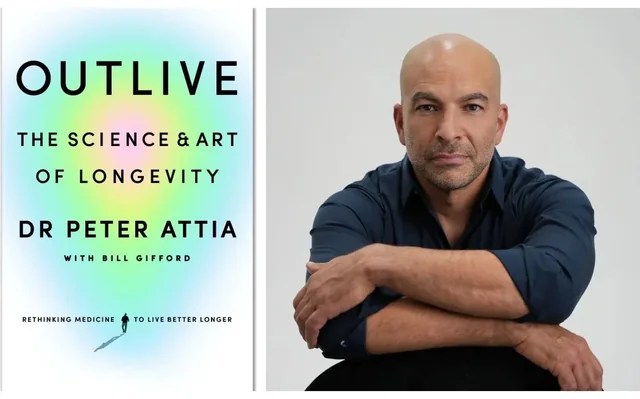
Attia’s name reportedly appeared more than 1,700 times across approximately three million emails included in the latest document release. Media reports characterized the tone of some exchanges as overly familiar, with jokes and references that, viewed in the context of Epstein’s later-exposed crimes, now appear deeply uncomfortable.
In his public response, Attia said that he was introduced to Epstein through academic and philanthropic channels where Epstein was widely regarded—at the time—as a financial supporter of scientific research. He acknowledged that Epstein’s 2008 conviction was known in those circles, but said Epstein minimized its severity when asked directly, a characterization Attia says he accepted too readily.
Attia stated that his perception changed significantly years later, after investigative reporting laid bare the scale and seriousness of Epstein’s abuse. He said that upon learning more, he distanced himself and confronted Epstein, though he now reflects critically on how he handled that moment and whether any engagement at all was appropriate.
One email exchange in particular has drawn public attention. Attia explained that a message he sent with an ambiguous subject line was related to a personal medical matter, and that a reply from Epstein escalated the exchange into crude humor. Attia admitted responding in kind and said that revisiting the exchange now fills him with shame.
“Those emails do not represent my values,” he wrote, adding that he takes responsibility for engaging in behavior that fell short of professional and personal standards. He emphasized that regret alone does not undo harm, but said he believes transparency is necessary.
The fallout has extended beyond the network itself. Attia’s name has reportedly been removed from at least one commercial website associated with a company in which he had invested, suggesting that other organizations are reassessing their ties as well. Such moves are increasingly common in an era when reputational risk can quickly cascade across professional relationships.
For CBS News, the episode underscores a broader challenge facing major media organizations: how to respond when contributors or commentators become entangled in controversies rooted not in proven crimes, but in judgment, association, and perception. Media ethicists note that while due process is essential, networks also operate under their own standards, which often place a premium on credibility and public confidence.
Neither CBS News nor Attia has announced a final decision regarding his status at the network. In his statement, Attia said he does not expect or ask for public defense from colleagues or institutions and expressed willingness to answer questions directly from those affected.
Professionally, Attia is best known as a physician and longevity expert whose work focuses on extending “healthspan”—the number of years a person remains in good health. Trained as a surgeon, he earned his medical degree from Stanford University and completed surgical training at Johns Hopkins before shifting toward preventive medicine. His approach, often referred to as “Medicine 3.0,” emphasizes early intervention to reduce the risk of chronic diseases such as heart disease, cancer, Alzheimer’s, and diabetes.
As the network weighs its next steps, the situation reflects a recurring theme in the post-Epstein era: the enduring consequences of proximity to power and influence, even when that proximity predates public reckoning. For institutions and individuals alike, the question is no longer only about legality, but about judgment—and how much of it the public is willing to forgive.