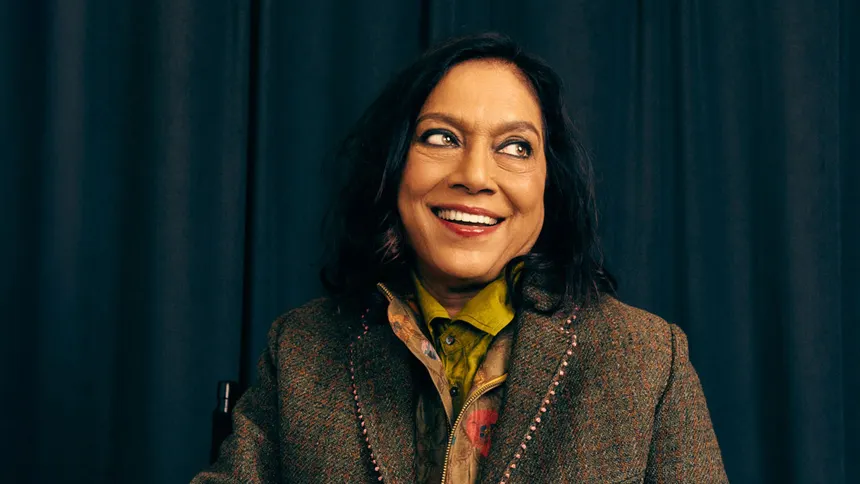
Recent public release of Department of Justice files linked to Jeffrey Epstein has once again stirred global headlines, this time involving acclaimed filmmaker Mira Nair. The director’s name surfaced in correspondence from 2009 that was included in the latest tranche of records, prompting widespread attention and debate over what such inclusion signifies.
While being named in the Epstein files has ignited strong reactions online, multiple major media reports emphasize that the documents do not allege misconduct by Nair or connect her to any criminal activity. Instead, her appearance reflects a reference in an email about a social event, a distinction that is critical to understanding the context.
What the Epstein Files Are
The Epstein files consist of more than three million pages of documents, emails, flight logs, and other material gathered by the U.S. Department of Justice over years of investigation into Epstein’s operations. The files were released under the Epstein Files Transparency Act, designed to give public access to documents that had been sealed for years.
However, DOJ officials and journalists have repeatedly warned that the presence of a person’s name in the files does not imply wrongdoing. Many documents are drafts, third-party notes, or records of routine communication.
What the Document Says About Mira Nair
According to multiple reports, the document referencing Nair appears to be an email sent on October 21, 2009, from publicist Peggy Siegal to an email account associated with Epstein. The message recounts a social gathering — described as an after-party at the Manhattan townhouse of Ghislaine Maxwell, Epstein’s longtime associate.
The email states, in part: “Just left Ghislaine’s townhouse…after party for film. Bill Clinton and Jeff Bezos were there…Jean Pigozzi, director Mira Nair….etc.”
Notably:
-
The message reads like casual social reporting rather than investigative evidence.
-
The subject line of the email is not publicly visible.
-
The message mentions multiple notable figures but did not allege criminal behavior.
-
There is no suggestion in the document of illegal acts, trafficking, or private misconduct by Nair or other attendees.
Journalists covering the files have pointed out that the party was likely connected to Nair’s 2009 film Amelia, a biographical drama, and that the email reflects standard social publicity chatter common in entertainment circles.
Public Reaction and Political Fallout
Since the files’ release, the reference to Nair has drawn attention beyond entertainment news, largely due to her son, New York City Mayor Zohran Mamdani. Viral social media posts and some news stories highlighted the email’s mention, which led to protests outside Gracie Mansion, the mayor’s official residence.
Videos circulated online showed a group of residents chanting “shame” and accusing the mayor of misleading voters about his family’s associations. Some protesters said they were upset by the mention of Nair’s name, even though the document did not include allegations of wrongdoing.
These reactions demonstrate how quickly mentions in the Epstein files can be interpreted politically or emotionally — often without regard to context or documented evidence.
Media Emphasis: Mention ≠ Accusation
Multiple professional news outlets reporting on the story have underscored a critical distinction: being named in the Epstein files is not equivalent to being accused of a crime.
Outlets such as The Economic Times, Outlook India, and NDTV Profit noted that while Nair’s name is included in the 2009 email, the documents do not allege wrongdoing, criminal links, or involvement in Epstein’s trafficking or abuse networks.
Reporters covering the release describe the files as a wider snapshot of Epstein’s social and professional network, rather than a definitive record of criminal associations. They caution that many names appear simply because of social events, publicist outreach, or routine communication.
Historical and Cultural Context
Mira Nair is a globally respected filmmaker whose work has focused on cultural stories and has earned numerous awards and nominations over decades. Her films Salaam Bombay!, Monsoon Wedding, and The Namesake are internationally acclaimed, and she was awarded India’s civilian honor Padma Bhushan.
At the time of the referenced event in 2009, Epstein and Maxwell were part of wealthy and influential social circles that included figures from politics, business, philanthropy, and entertainment. Many people who appear in the files from this era interacted with Epstein socially or professionally before his crimes became widely known or understood.
Experts warn against conflating attendance at a social gathering with complicity in criminal activity — a point that is particularly important given the volume of public interest in Epstein’s network.
Misinformation and Viral Reactions
The Nair mention in the Epstein files illustrates a broader challenge in the digital age: raw document releases can fuel misinformation and speculative leaps. In several media reports, outlets explicitly pointed out that screenshots of emails without context can be misleading, and that some viral posts have paired unverified images with claims that have no basis in the actual documents.
Fact-checking organizations have cautioned that viral photos purportedly showing Nair with Epstein are AI-generated or misattributed, and that there is no verified photo linking her to Epstein’s private island or criminal activities.
Legal and Ethical Clarifications
Legal commentators have noted that the Department of Justice’s release of the files does not imply that all named individuals are subjects of investigation or suspected of criminal conduct. Many references are to emails or contacts collected as part of broader investigations and include individuals with no connection to illegal behavior.
The DOJ has emphasized in its public statements that the presence of a name in the files should not be interpreted as evidence of guilt, and that journalists ought to provide context when reporting on sensitive links.
Conclusion: Context Is Key
The mention of Mira Nair in the Jeffrey Epstein files has generated news coverage and public reaction, in part due to the high profile of both Nair and her son, New York City Mayor Zohran Mamdani. But a careful review of media reporting and the actual documents shows that the reference is limited to a single email about a social event in 2009 and does not suggest criminal involvement.
Major news outlets reporting on the files consistently emphasize that being named in an email or document is not inherently meaningful evidence of wrongdoing. In the case of Nair, the email reflects a social network common to the entertainment industry at the time, not a link to Epstein’s crimes.
As the Epstein files continue to be reviewed and discussed in public forums, distinguishing between document mention and verified allegation is essential for accurate reporting and responsible public understanding. The example of Mira Nair underscores why context — rather than assumption — must guide interpretation of these complex and sensitive records.

Emily Johnson is a critically acclaimed essayist and novelist known for her thought-provoking works centered on feminism, women’s rights, and modern relationships. Born and raised in Portland, Oregon, Emily grew up with a deep love of books, often spending her afternoons at her local library. She went on to study literature and gender studies at UCLA, where she became deeply involved in activism and began publishing essays in campus journals. Her debut essay collection, Voices Unbound, struck a chord with readers nationwide for its fearless exploration of gender dynamics, identity, and the challenges faced by women in contemporary society. Emily later transitioned into fiction, writing novels that balance compelling storytelling with social commentary. Her protagonists are often strong, multidimensional women navigating love, ambition, and the struggles of everyday life, making her a favorite among readers who crave authentic, relatable narratives. Critics praise her ability to merge personal intimacy with universal themes. Off the page, Emily is an advocate for women in publishing, leading workshops that encourage young female writers to embrace their voices. She lives in Seattle with her partner and two rescue cats, where she continues to write, teach, and inspire a new generation of storytellers.