In late January 2026, multiple media outlets reported that a well-known television journalist had allegedly been taken into federal custody in Los Angeles following participation in a contentious protest at a church in Minnesota earlier that month. The incident has ignited a national conversation over the boundaries of protest, journalism, and the enforcement of federal statutes, while also highlighting how quickly allegations can spread in an era of polarized media.
According to reporting, the demonstration took place on January 18 at a church in St. Paul, Minnesota. Protesters targeted the church after learning that one of its pastors also held a leadership position within a regional Immigration and Customs Enforcement (ICE) office. Witnesses reported that demonstrators entered the church grounds during a service, confronted clergy, and directed chants at congregants while demanding accountability for the pastor’s federal role.
Video footage from the event circulated widely online, showing tense interactions between protesters and church leaders. Some observers criticized the disruption as a violation of religious freedoms, while others framed it as a form of political protest. Regardless of perspective, the incident quickly became a flashpoint in broader debates over immigration enforcement, public dissent, and religious liberty.
Alleged Federal Charges
Initial media reports suggested that a grand jury in Minnesota had returned indictments against multiple individuals connected to the protest. The alleged charges reportedly included conspiracy to deprive civil rights and potential violations of the Freedom of Access to Clinic Entrances (FACE) Act, a federal statute that also covers interference with religious worship.
At the time, publicly available court records did not confirm all the details reported by news organizations. Prosecutors had not released comprehensive documents listing all defendants or the specific counts, leaving analysts to rely on anonymous sources and secondary reporting. Legal experts cautioned that early accounts often blur the line between rumor and verified fact, underscoring the need for careful reporting.
What is known is that federal authorities were actively investigating the church protest for potential legal violations and that several protest organizers were questioned or temporarily detained in the days following the demonstration.
Journalism, Activism, or Both?
Central to the controversy is the distinction between journalistic activity and active participation in protests. The journalist involved, who had previously served as a cable news anchor for a major network and now operates independently, has maintained that his presence at the church was strictly in the capacity of reporting.
His legal counsel released a statement asserting that filming and questioning participants was constitutionally protected under the First Amendment. “Covering contentious events has been the core of his career for decades,” the statement said. “The Constitution does not require journalists to observe from a distance when they are documenting matters of public interest.”
Critics, however, argue that footage from the event shows the journalist engaging directly with church leaders during the service, potentially exacerbating tensions. Legal scholars note that First Amendment protections for journalists are broad, but do not extend to actions that might obstruct or disrupt private religious ceremonies.
The Church at the Center
The church involved in the demonstration, Cities Church in St. Paul, drew attention because one of its pastors simultaneously serves as acting director of the local ICE field office. Prior to the protest, the pastor had publicly discussed his role in immigration enforcement, drawing criticism from activists concerned about federal policies affecting immigrant communities.
Protest organizers cited this dual role as justification for targeting the church. In statements recorded during the demonstration, activists argued that the church was “harboring” a figure responsible for enforcement actions they opposed. Church officials, however, emphasized that the pastor’s government duties were separate from his religious responsibilities and that the protest disrupted worship services and posed safety concerns for congregants, including children.
Federal Oversight and Political Context
Reports of federal involvement in the case occurred amid heightened national scrutiny of immigration enforcement and protest activity. Some officials expressed concern that allowing disruptions of religious services to go unaddressed could set a precedent affecting churches, synagogues, mosques, and other houses of worship nationwide.
Civil liberties organizations, meanwhile, have warned against using federal statutes aggressively in contexts involving protest and journalism, noting that overreach could chill free speech and legitimate reporting.
Complicating the reporting, some early news accounts indicated that a magistrate judge had declined to approve charges against the journalist while allowing cases against other participants to proceed. This discrepancy highlights how fragmented or incomplete information can contribute to public confusion.
Public Reaction and Media Amplification
Reaction to the allegations has been swift and polarized. Supporters of the journalist framed the situation as retaliation for reporting on federal immigration policy, arguing that it represents an unprecedented threat to press freedom. Critics portrayed the event as an unlawful disruption of worship, asserting that journalists are not exempt from laws that apply to the general public.
Social media platforms magnified these reactions, often presenting commentary ahead of verified facts. Some users framed the story as evidence of government overreach, while others claimed it demonstrated accountability for protest-related disruptions. Images circulated showing the journalist attending entertainment industry events in Los Angeles shortly before the alleged arrest. While those photos were authentic, authorities have not confirmed exact timelines of custody.
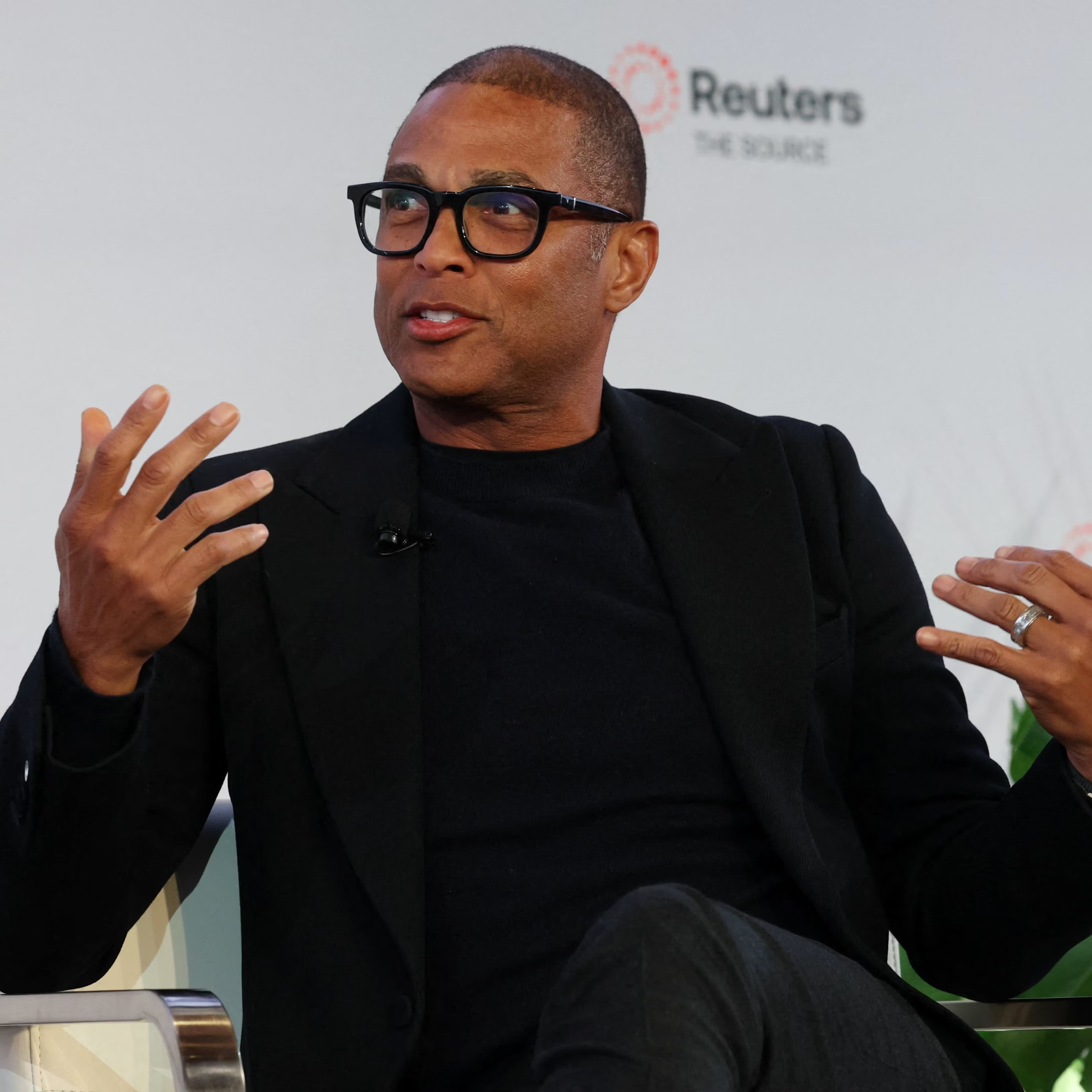
At the center of the controversy is Don Lemon, a former CNN anchor who left the network in April 2023 after nearly two decades in broadcasting. Since then, Lemon has positioned himself as an independent media figure, producing content online and engaging directly with political and social issues.
Lemon’s participation in the Minnesota protest, coupled with the federal scrutiny of the event, has drawn widespread attention. Supporters argue that his reporting constitutes protected journalistic activity, while critics maintain that his involvement may have crossed into active participation.
Legal Considerations
Federal authorities reportedly considered charges under statutes including the FACE Act, which prohibits interference with religious worship, and other civil rights statutes aimed at preventing intimidation or obstruction. Some reports also suggested that investigators explored provisions in broader civil rights laws to determine if conduct at the protest constituted a violation.
Legal experts note that such cases involve nuanced analysis of intent, action, and context. Courts typically weigh the rights of demonstrators against protections for religious practice and safety, and the presence of a journalist introduces additional layers of constitutional consideration.
Career Context
Don Lemon’s career has been marked by high-profile coverage of contentious social and political issues. His departure from CNN followed public backlash over prior on-air comments and internal disputes. Since leaving the network, Lemon has leveraged digital platforms to continue reporting, often focusing on immigration, civil rights, and national politics.
Observers point out that independent journalists operating outside large media organizations may face heightened legal scrutiny when reporting on protests or controversial events. At the same time, the visibility of figures like Lemon ensures that any enforcement action attracts immediate national attention.
Facts vs. Allegations
At present, several elements of the case remain uncertain:
-
Federal authorities are investigating the church protest and have interviewed or detained certain participants.
-
Don Lemon denies any wrongdoing and asserts that his actions were protected under the First Amendment.
-
Comprehensive charging documents for all defendants have not been publicly released.
-
The timing and nature of any arrest or federal custody remain unclear based on available verified records.
As with many high-profile cases, early reporting has blurred the lines between allegation, speculation, and confirmed legal action, emphasizing the need for cautious interpretation.
Broader Implications
The controversy raises questions about the intersection of journalism, protest, and law. How far can journalists go in covering civil unrest without themselves becoming subjects of legal action? What limits exist when reporting intersects with sensitive areas such as religious services and federal enforcement? These issues are likely to be examined more closely as the legal process unfolds.
At the same time, the situation highlights the speed at which media narratives solidify in a polarized environment. Even when facts are incomplete or contested, social platforms amplify partial accounts, making public perception a powerful force in shaping the story.
Conclusion
The incident underscores the delicate balance between press freedom and the enforcement of federal statutes. Whether the case evolves into a significant First Amendment precedent or fades as an overreported controversy will depend on court proceedings and the presentation of evidence, rather than social media commentary.
For now, the episode serves as a reminder of the importance of verifying details before drawing conclusions, especially when reporting intersects with highly charged political, social, and legal contexts. Observers on all sides are watching closely as events continue to unfold, highlighting the ongoing challenges in defining the boundaries of lawful protest, journalistic responsibility, and civil rights.

Emily Johnson is a critically acclaimed essayist and novelist known for her thought-provoking works centered on feminism, women’s rights, and modern relationships. Born and raised in Portland, Oregon, Emily grew up with a deep love of books, often spending her afternoons at her local library. She went on to study literature and gender studies at UCLA, where she became deeply involved in activism and began publishing essays in campus journals. Her debut essay collection, Voices Unbound, struck a chord with readers nationwide for its fearless exploration of gender dynamics, identity, and the challenges faced by women in contemporary society. Emily later transitioned into fiction, writing novels that balance compelling storytelling with social commentary. Her protagonists are often strong, multidimensional women navigating love, ambition, and the struggles of everyday life, making her a favorite among readers who crave authentic, relatable narratives. Critics praise her ability to merge personal intimacy with universal themes. Off the page, Emily is an advocate for women in publishing, leading workshops that encourage young female writers to embrace their voices. She lives in Seattle with her partner and two rescue cats, where she continues to write, teach, and inspire a new generation of storytellers.