


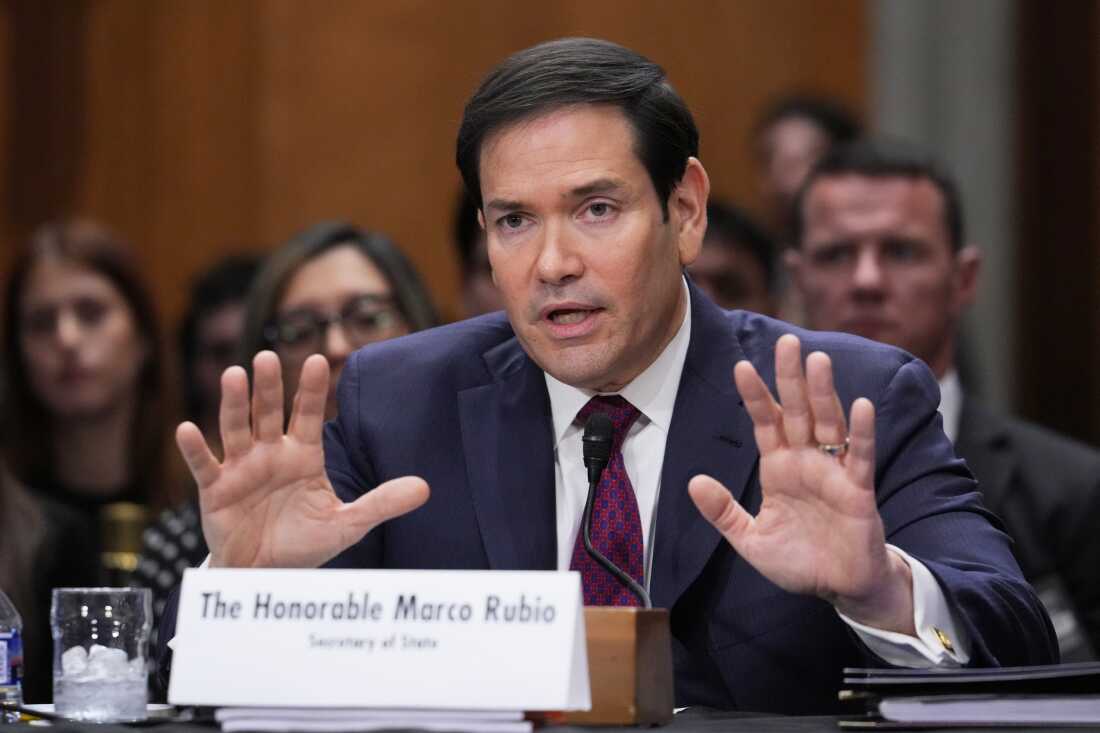
In a sharply contested Senate hearing that underscored the deep political divisions over national security policy, U.S. Secretary of State Marco Rubio faced sustained questioning from lawmakers on Wednesday over the Trump administration’s use of wartime powers and its approach to violent transnational gangs. The session, held by the Senate Foreign Relations Committee in Washington, D.C., quickly escalated from a foreign policy briefing into a fierce confrontation over the nature of contemporary threats and the legal boundaries of executive authority.
At the heart of the discussion was the administration’s controversial use of the Alien Enemies Act, an obscure wartime statute from 1798 that the Trump White House has invoked to accelerate the deportation of individuals it alleges are members of dangerous criminal organizations. The law, historically invoked only during major conflicts — including the War of 1812 and both World Wars — has drawn renewed attention and controversy for its modern application.
As the hearing unfolded, Rubio emphasized the administration’s view that certain narco-trafficking groups and criminal organizations operating in the Western Hemisphere pose a direct and ongoing threat to the United States. In his testimony, he framed these groups not simply as law-breaking networks but as “enemy combatants” engaged in a type of warfare against the country.
“Anyone who believes that gangs flooding our country with fentanyl or cocaine aren’t threats to national security is not living in reality,” Rubio said, arguing that criminal networks with sophisticated organization and weaponry pose grave dangers.
But what began as a discussion of international policy and enforcement quickly turned tense when a Democratic senator on the committee pressed Rubio aggressively on the implications of invoking a centuries-old wartime law to deal with criminal gangs. She questioned whether the administration’s actions stretched the law far beyond its original intent — and whether the United States was effectively admitting it was at war without formally declaring it.
The senator engaging Rubio was Sen. Tammy Duckworth (D-Ill.), a prominent member of the Senate Foreign Relations Committee and an Iraq War combat veteran. Duckworth challenged Rubio on several fronts, pressing him on whether the administration had properly considered the broader legal and ethical implications of its approach.
Duckworth zeroed in on the Alien Enemies Act, pointing out that the law had only been used in historical wartime contexts and raising concerns about its application in what she described as a domestic enforcement setting. “If we’re not at war with the country in question,” she asked Rubio, “why is this law being used to deport people who may have no criminal records?”
According to the exchange captured in public transcripts and video of the hearing, Duckworth repeatedly tried to pin Rubio down on whether the administration’s policy effectively amounted to a declaration of war. “So you’re saying that we are at war?” she asked during one back-and-forth, a question that elicited a forceful response from the secretary of state.
Rubio replied that while the United States is not technically at war with any foreign nation, it is engaged in what he termed a “war-like setting” against the criminal groups themselves because of the threat they pose. “They’re enemy combatants as a result of it,” he said, adding that this framing reflects the severity and intensity of the threat, not a formal traditional war declaration.
The confrontation intensified when Duckworth alleged that the administration had acknowledged that many of the individuals rounded up and deported under the act did not have criminal records — a point she said should give lawmakers grave pause about use of the law. Rubio vehemently denied claims that anyone had been tortured, stating simply, “We haven’t tortured anybody. We’ve arrested people that are members of gangs, and we’ve deported them.”
The exchange also touched on matters beyond the hearing’s original topic. Duckworth pushed Rubio on broader questions of civil liberties and due process, asking how legally present individuals could be deported under wartime authorities without traditional judicial oversight. Some legal challenges to the administration’s use of the Alien Enemies Act have already made their way into federal courts, with judges wrestling over the scope of executive power and due process requirements.
Rubio, however, sought to redirect portions of the discussion, telling the senator that certain aspects of immigration enforcement fall within the purview of the Department of Justice or Department of Homeland Security, not the State Department. He maintained that his role was to speak to foreign policy implications, even as the dialogue continued to intersect with domestic enforcement questions.
Despite the sharp tone of the exchange, Rubio stood by the administration’s broader approach to national security threats, asserting that categorizing these criminal groups as part of an irregular form of warfare is both realistic and necessary. “There’s no doubt we’re confronting them in a war-like setting,” he said, reiterating the seriousness with which the administration views the threat posed by narcotics traffickers and organized crime.
The hearing wasn’t solely focused on the domestic implications of wartime powers. Rubio also defended recent U.S. actions in Venezuela, including a military operation that resulted in the ousting of Venezuelan President Nicolás Maduro on January 3 — an extraordinary development that has drawn international scrutiny. While Rubio emphasized that no U.S. troops remain on the ground, his testimony framed the operation as a strategic move to reduce threats in the Western Hemisphere rather than an act of war or occupation.
Lawmakers also raised questions about other areas of U.S. foreign policy, including relations with NATO allies, tensions with Iran and China, and strategic interests in regions such as Greenland. Rubio defended the administration’s overall strategic goals, arguing for a balance between strong national defense and diplomatic engagement.
By the time the hearing adjourned, the exchange between Rubio and Duckworth had become a focal point for discussions on the limits of executive power and the complex nature of modern threats. While senators from both parties participated, the sharp interplay between the Democrat’s legal concerns and Rubio’s national security framing stood out as a defining moment of the session.
Observers said the confrontation may resonate beyond the committee room, fueling broader debates in Congress and among the public about how the United States should balance national security priorities with constitutional protections and historical legal practices. In particular, the novel invocation of a centuries-old wartime statute to address contemporary gang threats has raised constitutional questions that legal experts say could shape future policy and litigation.
Whether this contentious exchange will prompt legislative action, judicial review, or changes in executive enforcement remains to be seen. But the hearing — marked by passion, disagreement, and deep policy implications — highlighted the ongoing struggle within American governance to adapt longstanding legal frameworks to the challenges of the 21st century.

Emily Johnson is a critically acclaimed essayist and novelist known for her thought-provoking works centered on feminism, women’s rights, and modern relationships. Born and raised in Portland, Oregon, Emily grew up with a deep love of books, often spending her afternoons at her local library. She went on to study literature and gender studies at UCLA, where she became deeply involved in activism and began publishing essays in campus journals. Her debut essay collection, Voices Unbound, struck a chord with readers nationwide for its fearless exploration of gender dynamics, identity, and the challenges faced by women in contemporary society. Emily later transitioned into fiction, writing novels that balance compelling storytelling with social commentary. Her protagonists are often strong, multidimensional women navigating love, ambition, and the struggles of everyday life, making her a favorite among readers who crave authentic, relatable narratives. Critics praise her ability to merge personal intimacy with universal themes. Off the page, Emily is an advocate for women in publishing, leading workshops that encourage young female writers to embrace their voices. She lives in Seattle with her partner and two rescue cats, where she continues to write, teach, and inspire a new generation of storytellers.