



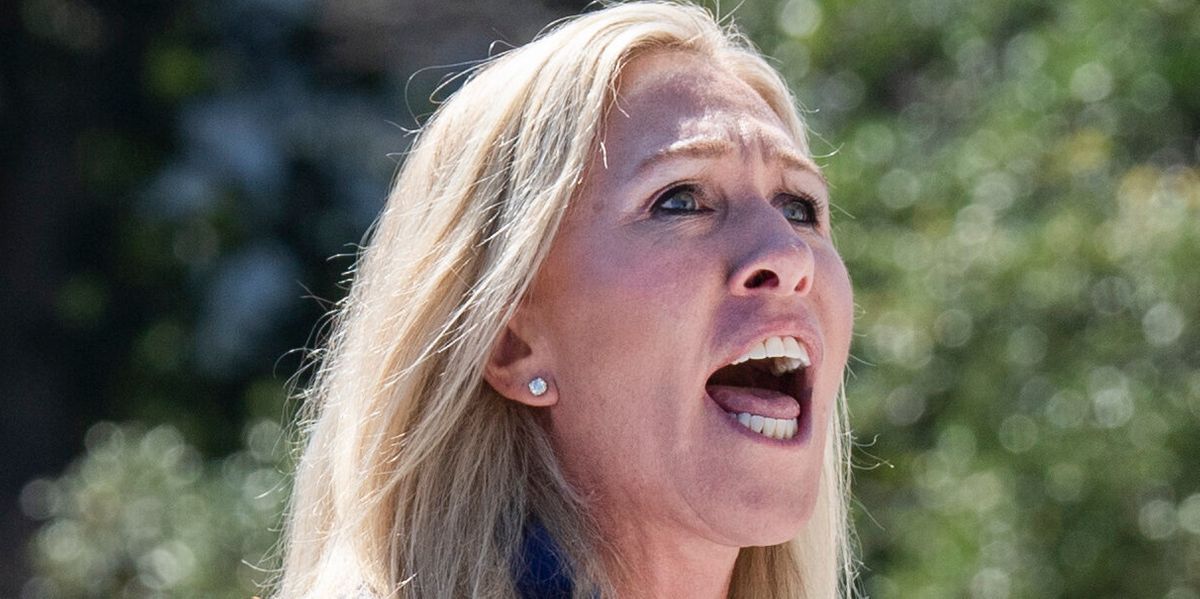
Former U.S. Representative Marjorie Taylor Greene issued a stark warning that the United States is being “incited into civil war,” following the fatal shooting of Alex Pretti during a federal immigration enforcement operation in Minneapolis. Her remarks come amid escalating protests, internal Republican divisions, and growing scrutiny of Immigration and Customs Enforcement (ICE) and Border Patrol conduct across the country.
Pretti, a 37-year-old intensive care nurse and U.S. citizen, was killed during an encounter with federal immigration officers over the weekend. His death marked the second fatal shooting by federal immigration agents in Minneapolis this month, intensifying national debate over the scope, tactics, and accountability of immigration enforcement operations under President Donald Trump’s administration.
Greene, a Georgia Republican who left office earlier this month, shared her concerns in a lengthy social media post that urged Americans to look beyond partisan loyalties and examine the broader consequences of the current political climate.
“Both sides need to take off their political blinders,” Greene wrote. “You are all being incited into civil war, yet none of it solves any of the real problems that we all face, and tragically people are dying.”
A Rare Break From Party Orthodoxy
Although Greene has long been a vocal supporter of strict border enforcement and deportation policies, her comments stood out as unusually critical of how recent federal operations have unfolded. She reiterated her support for border security and law enforcement while emphasizing that constitutional rights must remain protected.
“I unapologetically believe in border security and deporting criminal illegal aliens, and I support law enforcement,” Greene said. “But legally carrying a firearm is not the same as brandishing a firearm.”
Greene also stressed her support for First Amendment rights, including peaceful protest and the right to document law enforcement activity, as well as Fourth Amendment protections against unreasonable searches and seizures. She argued that Americans should consider how they would react if similar actions were taken against people aligned with their own political beliefs.
Drawing a comparison to the January 6, 2021 Capitol riots, Greene said many within the MAGA movement reacted with outrage when protesters were arrested under the Biden administration. She urged supporters to imagine how they would feel if a conservative protester had been shot while observing or recording law enforcement activity.
Her remarks highlight growing ideological fractures within the Republican Party and the broader MAGA movement, particularly as immigration enforcement becomes increasingly controversial.
The Minneapolis Shootings
The killing of Pretti followed the January 7 shooting of Renee Nicole Good, another U.S. citizen who was fatally wounded during a separate federal immigration enforcement action in Minneapolis. Together, the two deaths have fueled protests, legal challenges, and bipartisan concern over federal agents operating in American cities.
Homeland Security officials have said Pretti was armed and resisted attempts by officers to disarm him. However, eyewitness accounts and statements from his family dispute that narrative, claiming he was filming the encounter and did not threaten officers. Video footage circulating publicly has further complicated the official account, intensifying calls for an independent investigation.
Minnesota authorities have launched a formal inquiry into Pretti’s death, while civil rights organizations and elected officials across the country are demanding greater transparency and oversight.
Political Reactions Intensify
Greene’s warning came as reactions poured in from across the political spectrum.
Border Patrol official Gregory Bovino described the shooting as part of a broader pattern of violence directed at federal officers, stating that DHS personnel across the country have been attacked and targeted. Administration officials have consistently framed the Minneapolis unrest as a failure of local leadership to protect federal agents.
President Trump echoed that view, blaming Democratic leaders in Minnesota for what he described as inflammatory rhetoric and a lack of cooperation with federal authorities. He accused Governor Tim Walz and Minneapolis Mayor Jacob Frey of encouraging disorder by failing to support immigration enforcement operations.
Democratic leaders, however, sharply criticized federal actions. New York City Mayor Zohran Mamdani called ICE operations a danger to public safety and renewed calls to abolish the agency altogether. Colorado Senator John Hickenlooper described the Minneapolis shootings as “horrific” and urged the administration to immediately remove ICE and Border Patrol units from residential communities.
The sharply divided responses underscore how immigration enforcement has become one of the most volatile and polarizing issues in American politics.
Protests and Public Unrest
Following Pretti’s death, demonstrations erupted not only in Minneapolis but in cities nationwide. Tens of thousands of protesters have marched against ICE and Border Patrol actions, accusing federal agents of operating with impunity and escalating confrontations with civilians.
In Minneapolis, protests intensified near hotels believed to house federal officers, with clashes between demonstrators and law enforcement resulting in property damage, tear gas deployments, and multiple arrests. City officials have struggled to balance crowd control with constitutional protections for protestors.
Civil rights groups warn that the continued presence of federal agents in local communities risks further escalation, particularly as trust between residents and law enforcement erodes.
A Warning of Broader Consequences
Greene’s comments reflect a growing concern—even among conservatives—that the political environment surrounding immigration enforcement is becoming dangerously unstable. By framing the issue as one of constitutional rights rather than partisan allegiance, she signaled discomfort with the trajectory of national discourse.
Her warning about civil conflict resonated beyond her usual political base, drawing attention to fears that continued polarization, aggressive enforcement tactics, and inflammatory rhetoric could lead to more violence.
Although Greene has distanced herself from President Trump on several issues in recent months, she remains an influential figure within conservative circles. Her remarks may encourage some Republican voters to reconsider uncritical support for federal immigration operations, particularly when they involve U.S. citizens.
What Comes Next
Investigations into Pretti’s death are ongoing, with Minnesota officials reviewing evidence, witness statements, and body-camera footage. Federal authorities have pledged cooperation, though critics remain skeptical.
Meanwhile, the political fallout continues. Congressional hearings, proposed legislation, and internal party debates are expected as lawmakers grapple with public pressure and growing distrust of ICE operations.
As the nation approaches another contentious election cycle, the Minneapolis shootings have become a flashpoint in a broader debate over law enforcement authority, civil liberties, and the limits of federal power.
Greene’s warning serves as a stark reminder that the consequences of these disputes extend beyond politics. With tensions rising and lives already lost, the challenge facing American leaders may be whether they can de-escalate before divisions deepen further.

Emily Johnson is a critically acclaimed essayist and novelist known for her thought-provoking works centered on feminism, women’s rights, and modern relationships. Born and raised in Portland, Oregon, Emily grew up with a deep love of books, often spending her afternoons at her local library. She went on to study literature and gender studies at UCLA, where she became deeply involved in activism and began publishing essays in campus journals. Her debut essay collection, Voices Unbound, struck a chord with readers nationwide for its fearless exploration of gender dynamics, identity, and the challenges faced by women in contemporary society. Emily later transitioned into fiction, writing novels that balance compelling storytelling with social commentary. Her protagonists are often strong, multidimensional women navigating love, ambition, and the struggles of everyday life, making her a favorite among readers who crave authentic, relatable narratives. Critics praise her ability to merge personal intimacy with universal themes. Off the page, Emily is an advocate for women in publishing, leading workshops that encourage young female writers to embrace their voices. She lives in Seattle with her partner and two rescue cats, where she continues to write, teach, and inspire a new generation of storytellers.