


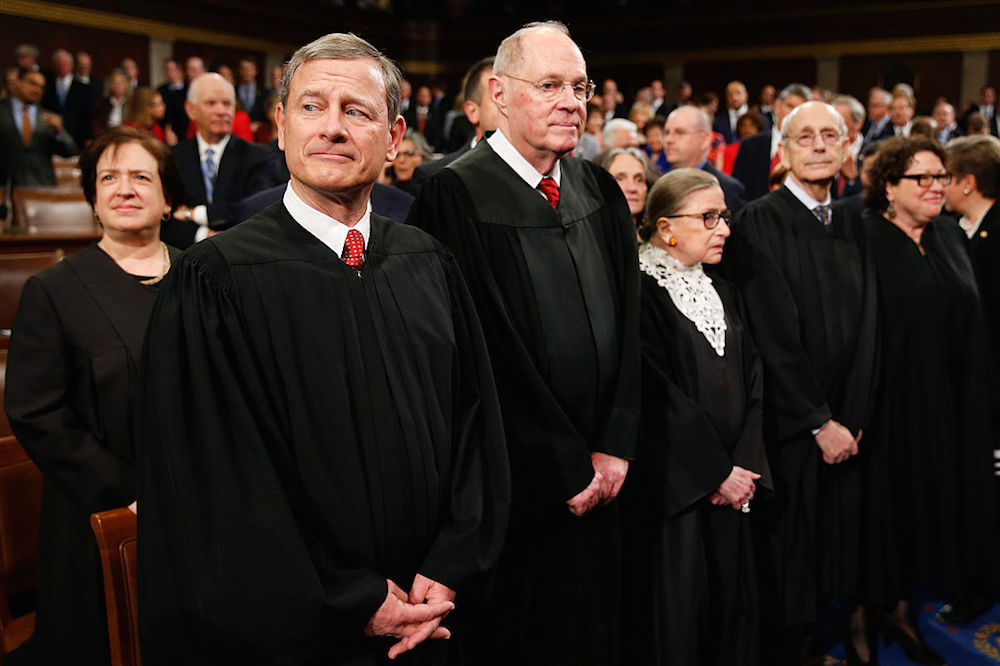
The Supreme Court last week quietly injected itself into a high-stakes redistricting fight in California, ordering state Democrats to respond within seven days to a Republican-backed emergency request that seeks to block the state’s newly drawn congressional maps from being used in the 2026 elections. The order, issued by Justice Elena Kagan, has raised fresh uncertainty around California’s electoral landscape and signaled that the justices may be taking a closer look at claims of racial gerrymandering in the nation’s most populous state.
Kagan, who handles emergency matters arising from the Ninth Circuit, directed California officials and Democratic leaders to file a formal response to the application by Jan. 29. While such orders do not guarantee that the full court will intervene, they are often viewed as an indication that at least some justices believe the arguments warrant serious consideration. For court watchers, the move came as a surprise given the Supreme Court’s recent reluctance to step into partisan redistricting disputes.
Just weeks earlier, the court declined to block a mid-decade redistricting plan enacted by Texas Republicans, allowing that map to proceed despite fierce Democratic objections. That decision led many legal analysts to assume California’s Democrat-backed map would face a similar fate. Instead, Kagan’s order suggests the court sees potential distinctions between the two cases—particularly when it comes to allegations that race, rather than politics, played a decisive role in how certain districts were drawn.
California Republicans contend that the new congressional maps violate both the Constitution and the Voting Rights Act by relying impermissibly on racial considerations. In their emergency filing, they argue that at least one district—Congressional District 13—was crafted primarily on the basis of race, crossing a constitutional line that the Supreme Court has repeatedly said states may not cross.
The emergency application was filed Tuesday by the California Republican Party, with the backing of the Justice Department, and asks the justices to immediately block the use of the new maps while the broader legal challenge proceeds. If successful, the request could upend the political balance in several districts and potentially place four to six Republican-held seats back into play under the previous map.
The court’s decision to request a response does not mean it will ultimately grant the injunction. However, the timing adds urgency to the dispute. California’s congressional candidate filing period opens Feb. 9, and election officials warn that uncertainty over district lines could create chaos for campaigns and voters alike if the matter is not resolved quickly.
Complicating matters further is another redistricting case already pending before the Supreme Court. The justices are expected to issue a ruling soon in Louisiana v. Callais, a closely watched voting rights dispute that could have sweeping implications for how courts evaluate claims of racial gerrymandering nationwide. Arguments in that case concluded in October, and the outcome may shape how the court ultimately views California’s map.
The Louisiana case centers on whether the state’s 2024 congressional plan—which added a second majority-Black district—constitutes unconstitutional racial gerrymandering or a lawful effort to comply with the Voting Rights Act. Legal experts say the court’s reasoning in that case could either bolster or undermine the arguments now being made by California Republicans.
Mark Meuser, an election law attorney with the Dhillon Law Group who filed the California challenge, welcomed Kagan’s order and framed it as an early victory for the GOP effort. In a post on X, Meuser wrote that the Supreme Court had ordered California to respond to the emergency application and emphasized the Jan. 29 deadline.
In a brief supporting the Republican challenge, Solicitor General John Sauer argued that California’s redistricting process crossed a constitutional threshold that the court has previously policed more aggressively than partisan maneuvering.
“California’s recent redistricting is tainted by an unconstitutional racial gerrymander,” Sauer wrote, asserting that race was the predominant factor in the design of at least one district.
The Supreme Court has long drawn a distinction between partisan gerrymandering—which it has largely deemed a political question beyond the reach of federal courts—and racial gerrymandering, which it has repeatedly ruled unconstitutional when race is the primary driver of district boundaries. That distinction was central to Sauer’s argument.
“But unlike Texas’s map, the California map suffers from a fatal constitutional flaw,” Sauer wrote. “One of the districts was clearly drawn on the basis of race.”
Republicans have asked the justices not only to block the map before candidate filing begins, but also to schedule oral arguments on the merits of the case. Such a move would elevate the dispute into one of the most consequential election law battles of the 2026 cycle.
Democrats, meanwhile, have been unusually candid about the political motivations behind California’s new map. State leaders openly described the plan as a strategic counterpunch to Republican redistricting efforts in Texas and elsewhere, designed to offset potential GOP gains and preserve Democratic influence in the U.S. House.
The effort was spearheaded by Democratic-aligned groups, including the Democratic Congressional Campaign Committee, which hired veteran redistricting consultant Paul Mitchell to redraw California’s 52 congressional districts. Rather than relying solely on the state’s independent redistricting commission, Democratic leaders pursued an aggressive workaround that ultimately placed the new map before voters.
Last November, California voters approved the plan through Proposition 50, a ballot measure that authorized the revised districts. The initiative passed comfortably, winning 64% of the vote statewide—a margin Democrats now cite as evidence of public support for the changes.
Gov. Gavin Newsom has leaned into the political framing of the dispute, casting it as part of a broader national struggle over control of Congress. While he did not directly address Justice Kagan’s order, Newsom used social media to accuse Republicans of hypocrisy and to tie the California fight to redistricting actions taken in Texas.
“Donald Trump called up Texas Gov. Greg Abbott and demanded more MAGA seats in Congress,” Newsom wrote on X while attending the World Economic Forum in Davos, Switzerland. “He thought we’d be good little Democrats and respond with an op-ed. Not this time, buddy.”
In separate remarks at the international summit, Newsom acknowledged the personal and political stakes involved. “I’m not naïve,” he said. “These guys are going to try to take me down—not just my state.”
California Democrats point out that the new map survived an earlier legal challenge in federal court. Earlier this month, a three-judge panel of the U.S. District Court for the Central District of California rejected Republican claims and declined to block the map from taking effect.
In their ruling, the judges wrote that challengers had failed to demonstrate that race, rather than politics, was the predominant factor in drawing the contested districts. After reviewing extensive documentary evidence and testimony, the panel concluded there was no basis for issuing a preliminary injunction.
“We find that the challengers have failed to show that racial gerrymandering occurred,” the judges wrote, adding that Republicans did not meet the high burden required to justify emergency relief.
Despite that setback, Republicans argue the Supreme Court is the appropriate venue to resolve the dispute, particularly given its broader implications for national redistricting standards. They maintain that allowing California’s map to stand would effectively greenlight race-based districting under the guise of partisan strategy.
As the Jan. 29 deadline approaches, both sides are preparing for the possibility that the Supreme Court could act quickly. Whether the justices choose to block the map, let it stand, or wait for guidance from the Louisiana case, the outcome could reshape the battlefield for the 2026 midterms—and clarify how far states can go when redrawing the political map in an era of escalating partisan warfare.

Emily Johnson is a critically acclaimed essayist and novelist known for her thought-provoking works centered on feminism, women’s rights, and modern relationships. Born and raised in Portland, Oregon, Emily grew up with a deep love of books, often spending her afternoons at her local library. She went on to study literature and gender studies at UCLA, where she became deeply involved in activism and began publishing essays in campus journals. Her debut essay collection, Voices Unbound, struck a chord with readers nationwide for its fearless exploration of gender dynamics, identity, and the challenges faced by women in contemporary society. Emily later transitioned into fiction, writing novels that balance compelling storytelling with social commentary. Her protagonists are often strong, multidimensional women navigating love, ambition, and the struggles of everyday life, making her a favorite among readers who crave authentic, relatable narratives. Critics praise her ability to merge personal intimacy with universal themes. Off the page, Emily is an advocate for women in publishing, leading workshops that encourage young female writers to embrace their voices. She lives in Seattle with her partner and two rescue cats, where she continues to write, teach, and inspire a new generation of storytellers.