



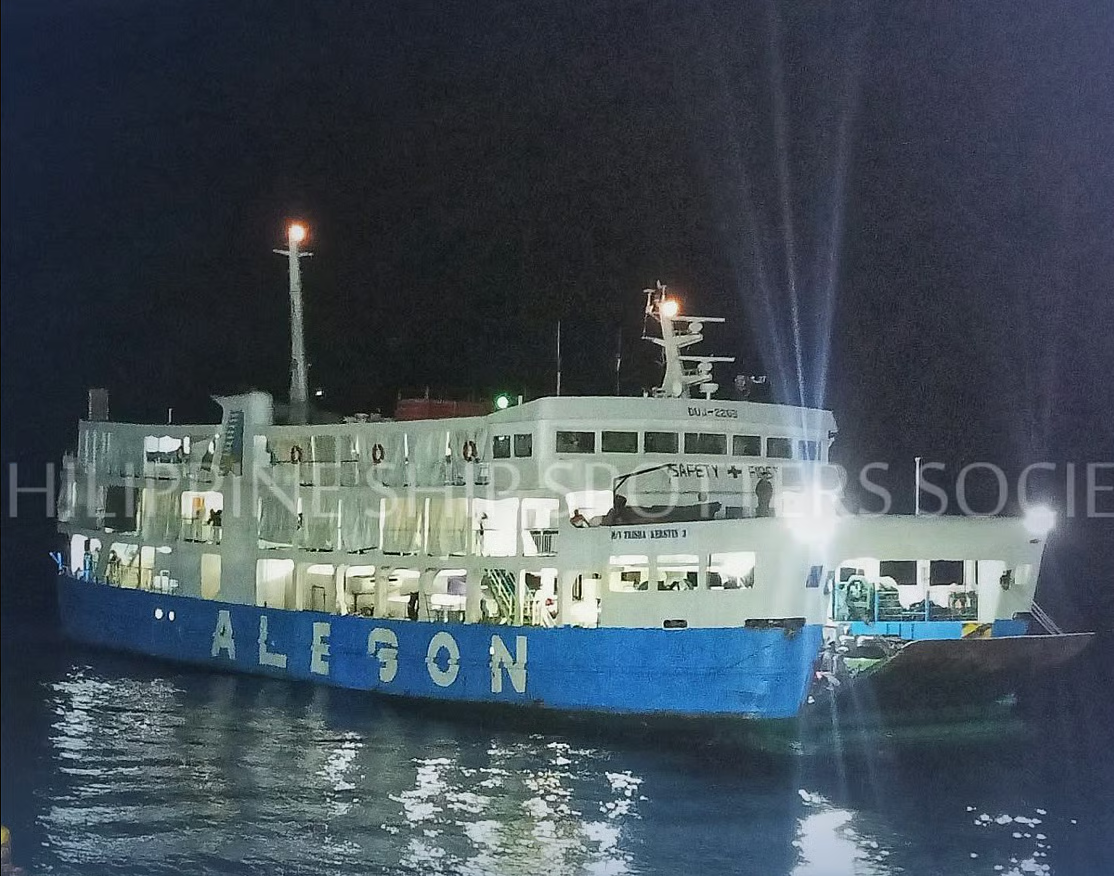
A passenger ferry carrying over 350 people sank overnight near an island in the southern Philippines, leaving dozens dead and prompting a large-scale search and rescue operation, officials confirmed Monday. Early reports indicate that at least 316 passengers have been rescued, while 15 bodies have been recovered so far. Authorities are continuing their efforts to account for everyone on board the vessel.
The vessel, identified as the M/V Trisha Kerstin 3, is an inter-island cargo and passenger ferry that was en route to southern Jolo Island in Sulu province from the port city of Zamboanga. The ship carried 332 passengers and 27 crew members at the time of the incident. Coast Guard officials reported that the ferry encountered technical problems shortly after midnight and subsequently sank approximately a nautical mile—nearly two kilometers—from the island village of Baluk-baluk in Basilan province.
Coast Guard Commander Romel Dua told the Associated Press that the sinking occurred in otherwise favorable weather conditions, which suggests that the cause was not immediately related to a storm or severe sea conditions. “There was a coast guard safety officer on board, and he was the first to call and alert us to deploy rescue vessels,” Dua said. The safety officer survived the incident, providing critical early warning that allowed for a swift mobilization of rescue operations.
The response involved a coordinated effort between the Philippine Coast Guard, the navy, the air force, and local fishing vessels. Surveillance planes and a Black Hawk helicopter were deployed to assist in locating survivors. According to Dua, multiple ships and aircraft were dispatched to cover a wide search area, reflecting the urgency of the situation and the potential for additional casualties.
Basilan provincial governor Mujiv Hataman provided additional details from the scene. Several passengers and two bodies were transported to Isabela, the provincial capital, where ambulances and emergency personnel were on standby. “I’m receiving 37 people here at the pier. Unfortunately, two are dead,” Hataman told the Associated Press by phone. He emphasized that the situation remained fluid, with more survivors and bodies likely to be accounted for as rescue efforts continued.
The coast guard confirmed that a total of 316 passengers had been rescued and at least 15 bodies had been recovered as of Monday morning. Authorities warned that the final casualty count could rise as operations continue and survivors are fully accounted for. Families of passengers and crew have been anxiously awaiting news, with many gathering at ports and communication centers to seek information on loved ones.
Preliminary investigations into the cause of the sinking have not yet yielded definitive answers. Dua stated that the vessel had been cleared by the coast guard prior to departure from Zamboanga port, and initial reports indicated no signs of overloading. Despite this, maritime accidents are not uncommon in the Philippine archipelago, where factors such as poorly maintained vessels, overcrowding, and inconsistent enforcement of safety regulations often contribute to tragedies.
The Philippines, an archipelagic nation of over 7,000 islands, has a long history of maritime accidents. The country’s waters are heavily trafficked, particularly by ferries that transport both cargo and passengers between islands. While the Trisha Kerstin 3 incident occurred under good weather, other accidents in the region have historically been linked to sudden storms or structural failures in older ships.
The incident evokes memories of the 1987 Dona Paz disaster, which remains the deadliest peacetime maritime accident in history. In that tragedy, the ferry collided with a fuel tanker in the central Philippines, resulting in the deaths of more than 4,300 people. While the circumstances of the Trisha Kerstin 3 sinking appear different, the scale of the current incident underscores ongoing concerns over maritime safety in the region.
Rescue operations have been complicated by the remote location of the sinking and the logistical challenges of coordinating multiple vessels and aircraft. Local fishing boats have played an essential role in reaching survivors quickly, often arriving before larger Coast Guard ships could maneuver to the scene. Early survivor reports describe chaotic scenes as passengers struggled to escape the sinking vessel, with some jumping into the water and clinging to debris until rescuers arrived.
Among those rescued, many were reported to be in shock or suffering minor injuries, while others required immediate medical attention for hypothermia or lacerations. Emergency medical teams have been stationed at key ports to provide rapid assessment and treatment. Authorities have emphasized the importance of counseling and psychological support for survivors, particularly children and elderly passengers who experienced trauma during the sinking.
Maritime safety experts have noted that even vessels cleared by authorities can experience sudden mechanical or structural failures, highlighting the need for rigorous inspection and maintenance. In recent years, the Philippine government has launched programs to improve maritime safety, including stricter enforcement of vessel capacity limits, mandatory life jackets, and regular technical inspections. However, challenges persist, especially in remote provinces where oversight is more difficult to maintain.
The incident has also raised questions about emergency preparedness and the response capabilities of local authorities. While the swift alert by the coast guard safety officer played a critical role in saving lives, experts argue that enhanced monitoring systems and improved communication networks could reduce fatalities in future incidents. Training for crew members in emergency evacuation procedures is also considered a key factor in improving survival rates.
In addition to local government and military response, humanitarian organizations have mobilized to provide aid for survivors and families. Relief supplies, temporary shelters, and counseling services have been arranged for those affected. The government has urged citizens to remain vigilant and report any further information about missing passengers to authorities to expedite the ongoing search and rescue mission.
As investigators work to determine the root cause of the sinking, attention has turned to potential mechanical faults, human error, and the structural integrity of the vessel. Authorities have pledged a thorough investigation and emphasized transparency, promising that any findings will be made available to the public. Meanwhile, survivors continue to be brought ashore, many reunited with family members after hours of uncertainty.
While the exact number of casualties remains uncertain, the Philippine Coast Guard and Navy have maintained a strong presence in the area, demonstrating a commitment to ensuring the safety of passengers and crew throughout the region. Officials have encouraged ferry operators to review safety procedures and for passengers to adhere strictly to emergency protocols when traveling between islands.
This latest incident underscores the persistent risks of maritime travel in the Philippines despite years of regulatory improvements. The combination of aging vessels, high traffic, and inconsistent enforcement of safety standards continues to pose challenges for authorities and highlights the importance of continuous oversight and investment in maritime infrastructure.
As the rescue operation continues, the focus remains on saving lives and accounting for every person on board. Families and local communities have rallied around survivors, providing support and assistance in the aftermath of the disaster. Authorities have urged patience and cooperation as rescue teams work tirelessly to complete their mission.
The sinking of the Trisha Kerstin 3 is a stark reminder of the vulnerabilities faced by passengers in inter-island travel and the ongoing need for vigilance, maintenance, and comprehensive emergency planning. The Philippines’ maritime history, marked by both tragedies and improvements, serves as a context for understanding the broader challenges of safe travel in a region heavily dependent on ferry transportation.
Coast Guard Commander Romel Dua concluded that the agency is committed to determining the cause of the sinking and preventing similar incidents in the future. “Our priority is ensuring the safety of our citizens and learning from this incident,” he said. “We will conduct a full investigation to understand what went wrong and take measures to ensure it does not happen again.”
With the majority of passengers rescued but a significant number of casualties already confirmed, the nation watches closely as authorities continue to manage the aftermath of the ferry disaster. The focus remains on survivors, recovery efforts, and a thorough investigation to ensure accountability and prevent future tragedies in the Philippines’ often perilous waters.

Emily Johnson is a critically acclaimed essayist and novelist known for her thought-provoking works centered on feminism, women’s rights, and modern relationships. Born and raised in Portland, Oregon, Emily grew up with a deep love of books, often spending her afternoons at her local library. She went on to study literature and gender studies at UCLA, where she became deeply involved in activism and began publishing essays in campus journals. Her debut essay collection, Voices Unbound, struck a chord with readers nationwide for its fearless exploration of gender dynamics, identity, and the challenges faced by women in contemporary society. Emily later transitioned into fiction, writing novels that balance compelling storytelling with social commentary. Her protagonists are often strong, multidimensional women navigating love, ambition, and the struggles of everyday life, making her a favorite among readers who crave authentic, relatable narratives. Critics praise her ability to merge personal intimacy with universal themes. Off the page, Emily is an advocate for women in publishing, leading workshops that encourage young female writers to embrace their voices. She lives in Seattle with her partner and two rescue cats, where she continues to write, teach, and inspire a new generation of storytellers.