


A new wave of polling data has reignited controversy surrounding the White House, triggering an explosive response from the president as fresh numbers suggest deepening dissatisfaction among American voters. The findings, released just after the administration marked one year into its second term, paint a stark picture of a divided electorate and a presidency under intense scrutiny.
Multiple surveys released in January indicate that public confidence in the administration has eroded across several key policy areas, including the economy and immigration. While the White House has dismissed the findings as unreliable, the figures have fueled renewed debate about the political trajectory of the country and the president’s standing with voters heading into the latter half of his term.
One of the most closely watched polls, conducted jointly by the Associated Press and the NORC Center for Public Affairs Research, found that only about four in ten American adults currently approve of the president’s job performance. The poll showed widespread dissatisfaction with how major issues are being handled, particularly among independent voters who played a pivotal role in recent elections.
According to the survey, 62 percent of respondents said they disapproved of the president’s handling of the economy, while 61 percent expressed dissatisfaction with his approach to immigration. Overall, nearly six in ten participants described their view of the president as unfavorable as of early January, underscoring the scale of voter unease.
The poll results arrived amid heightened national tensions following a series of high-profile immigration enforcement operations, including ICE raids in Minneapolis that resulted in the fatal shooting of two civilians by federal agents. While investigators continue to review those incidents, the events have intensified public debate over immigration policy and law enforcement practices, potentially further shaping public opinion reflected in the surveys.
A separate poll conducted by The New York Times in partnership with Siena College delivered similarly sobering conclusions. Nearly half of respondents said the country is worse off now than it was a year ago, while just under a third believed conditions had improved. The remainder said they felt circumstances had remained largely unchanged.
Together, the surveys suggest a growing perception among voters that the nation is struggling to regain stability, economically and socially, despite repeated assurances from the administration that progress is being made.
The polling results appear to have struck a nerve.
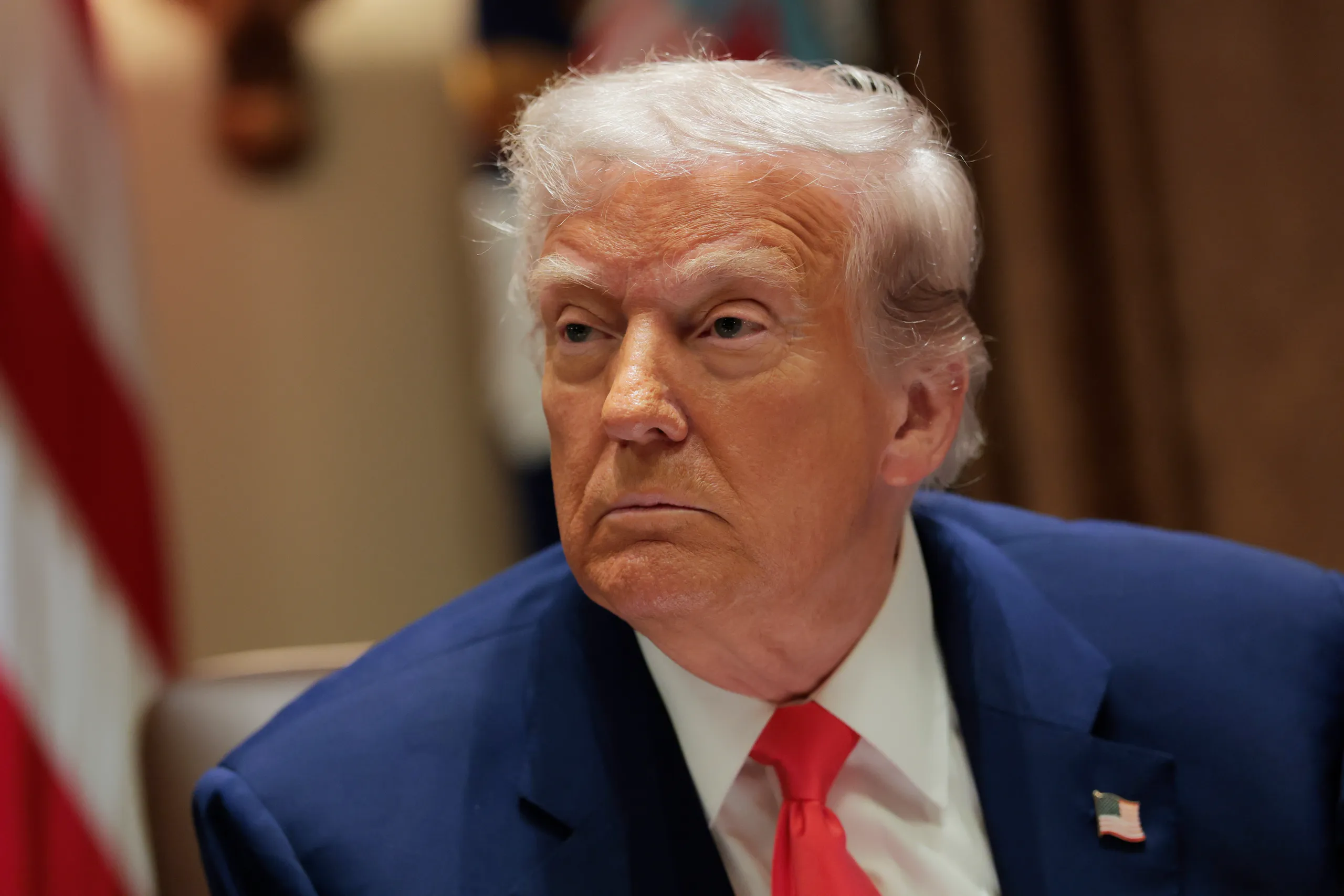
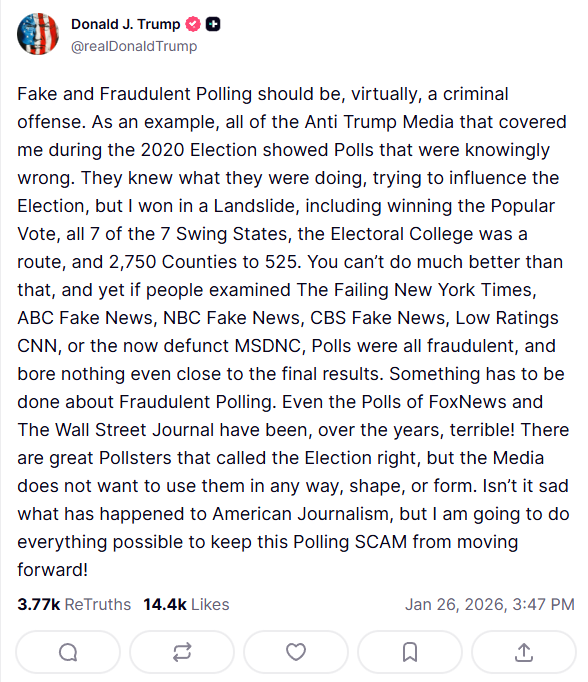
In a sharply worded statement released shortly after the data became public, Donald Trump lashed out at what he described as “fake and fraudulent polling,” accusing media organizations and pollsters of deliberately misleading the public.
“Fake and Fraudulent Polling should be, virtually, a criminal offense,” the president wrote, arguing that polling institutions have repeatedly published numbers designed to damage him politically rather than reflect reality.
He pointed to past election cycles, claiming that polls published during the 2020 election were “knowingly wrong” and intended to influence voters. In his statement, he reiterated longstanding claims that he won that election decisively, citing victories across swing states, counties, and the Electoral College, despite official results showing otherwise.
“You can’t do much better than that,” he wrote, before launching into a sweeping denunciation of major media outlets. He accused several national news organizations of knowingly promoting inaccurate polling, singling out newspapers and television networks that have been critical of his presidency.
The statement went on for several paragraphs, blending grievances about past elections with accusations of systemic media bias. The president argued that polling errors were not mistakes but deliberate acts meant to shape public perception and undermine his legitimacy.
He also criticized polling conducted by traditionally conservative-leaning outlets, asserting that even surveys published by Fox News and The Wall Street Journal have been “terrible” over the years.
Despite his broad condemnation of polling, the president claimed that “great pollsters” exist and accurately predicted election outcomes—but alleged that their work is ignored because it does not align with what he described as a hostile media agenda.
“Isn’t it sad what has happened to American Journalism,” he wrote, pledging to take action to stop what he called a “polling scam” from continuing.
The statement quickly spread across social media and cable news, prompting swift reactions from both supporters and critics. Allies defended the president’s position, arguing that polling has lost credibility in recent years due to methodological flaws and declining response rates. They pointed to past election cycles where polling underestimated support for conservative candidates.
Critics, however, accused the president of attempting to delegitimize unfavorable data rather than addressing the underlying concerns reflected in the surveys. Several political analysts noted that while polling is imperfect, consistent trends across multiple independent surveys often signal genuine shifts in public sentiment.
Experts also emphasized that approval ratings typically fluctuate throughout a presidency and are influenced by economic conditions, international events, and domestic controversies. However, some cautioned that sustained disapproval on core issues such as the economy and immigration could pose long-term political challenges, particularly as congressional races approach.
The White House has continued to promote economic indicators it says demonstrate progress, including job growth and market performance, while framing immigration enforcement as necessary for national security. Administration officials argue that tough decisions inevitably generate criticism but insist their policies will yield positive results over time.
Still, the polling has injected new uncertainty into the political landscape. For voters, the surveys appear to capture a broader sense of anxiety about the nation’s direction, regardless of partisan affiliation. For the administration, the numbers represent another test of its ability to maintain public support while pursuing a confrontational governing style.
Whether the president’s forceful rejection of the polls will resonate with voters or further polarize opinion remains unclear. What is certain is that approval ratings—fair or flawed—continue to shape the national conversation, serving as both a political weapon and a barometer of public mood.
As the second term moves forward, the battle over perception, credibility, and public trust appears far from over.

Emily Johnson is a critically acclaimed essayist and novelist known for her thought-provoking works centered on feminism, women’s rights, and modern relationships. Born and raised in Portland, Oregon, Emily grew up with a deep love of books, often spending her afternoons at her local library. She went on to study literature and gender studies at UCLA, where she became deeply involved in activism and began publishing essays in campus journals. Her debut essay collection, Voices Unbound, struck a chord with readers nationwide for its fearless exploration of gender dynamics, identity, and the challenges faced by women in contemporary society. Emily later transitioned into fiction, writing novels that balance compelling storytelling with social commentary. Her protagonists are often strong, multidimensional women navigating love, ambition, and the struggles of everyday life, making her a favorite among readers who crave authentic, relatable narratives. Critics praise her ability to merge personal intimacy with universal themes. Off the page, Emily is an advocate for women in publishing, leading workshops that encourage young female writers to embrace their voices. She lives in Seattle with her partner and two rescue cats, where she continues to write, teach, and inspire a new generation of storytellers.