


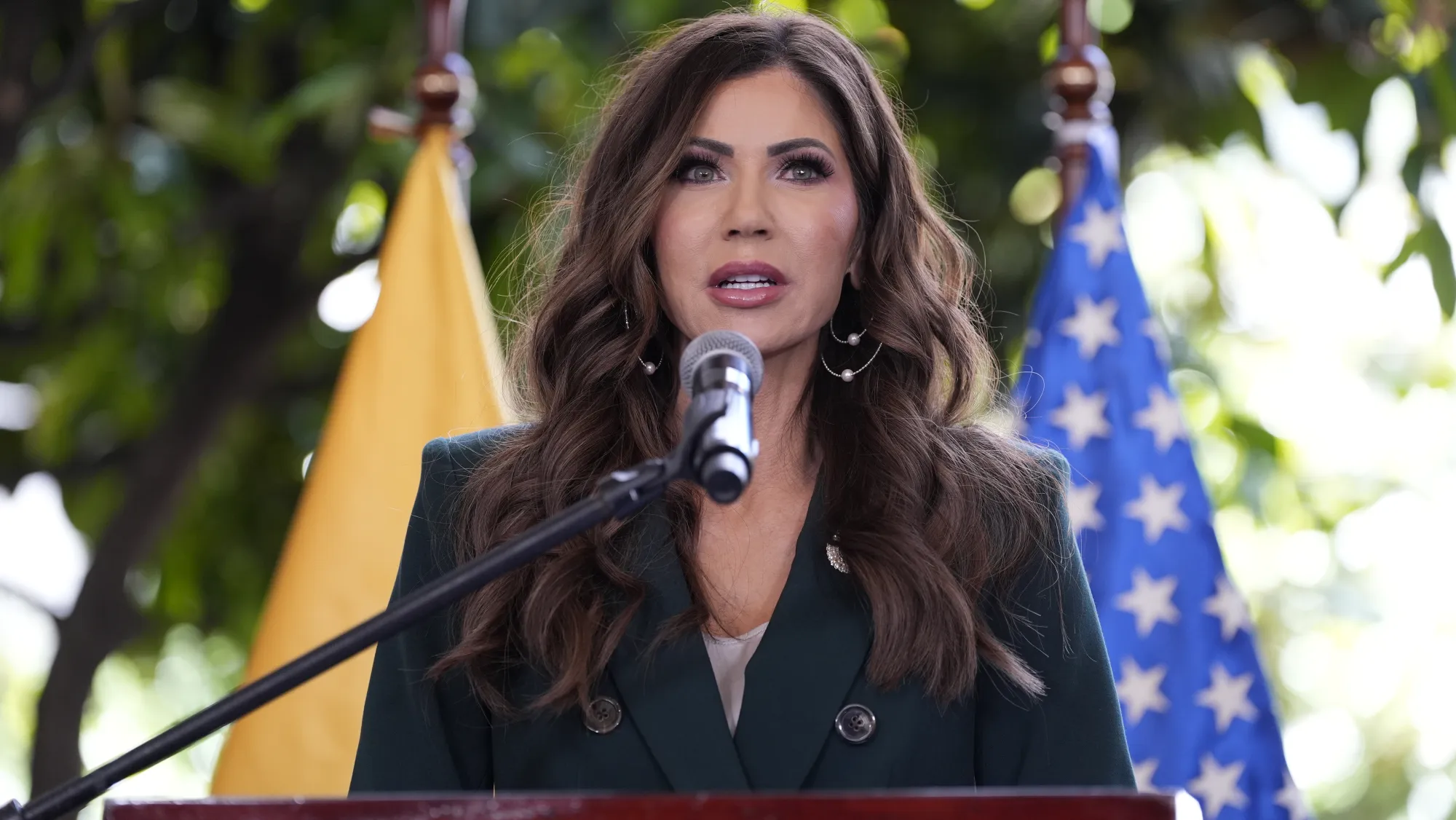
In a sudden shift of personnel, former President Donald Trump has reassigned oversight of the Immigration and Customs Enforcement (ICE) operation in Minneapolis, replacing South Dakota Governor Kristi Noem with longtime federal border official Tom Homan. The move comes amid escalating protests in the city following the fatal shooting of American citizen Alex Pretti and weeks of civil unrest linked to ICE enforcement activities.
Trump announced the personnel change on his social media platform, Truth Social, on Monday. “I am sending Tom Homan to Minnesota tonight,” he wrote. “He has not been involved in that area, but knows and likes many of the people there. Tom is tough but fair, and will report directly to me.”
The Minneapolis ICE operation has faced intense scrutiny since its inception in early December. Pretti, a 37-year-old nurse, was fatally shot by federal agents during a detainment on Saturday, triggering public outrage. Video footage and eyewitness reports circulated widely, prompting demands from Democratic leaders at both the state and national levels for ICE to cease operations in Minnesota.
The unrest comes on the heels of weeks of violent demonstrations following the death of Renee Good, a 37-year-old mother of three, who was killed during a separate encounter with ICE agents. The city has seen frequent clashes between protesters and law enforcement, with incidents ranging from vandalism to direct confrontations with ICE personnel.
Concerns Over Noem’s Management
Republican lawmakers in Washington, D.C., have privately expressed concern that Noem’s handling of the Minneapolis operation has contributed to the deteriorating situation. Multiple reports indicate that Trump, in discussions with aides, criticized Noem’s management and her office’s approach to public communications following the Pretti incident.
Trump reportedly believed that her department mishandled the messaging around Pretti’s death, exacerbating tensions in an already volatile environment. The reassignment of Homan—a veteran of federal immigration operations—reflects the President’s desire for a steadier hand in managing ICE activity in the region.
Tom Homan’s Appointment
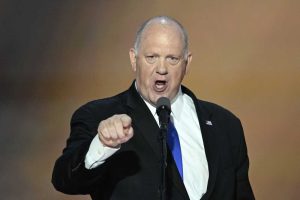
Tom Homan, a former acting director of ICE and long-time figure in federal immigration enforcement, has been tasked with taking immediate control of operations in Minneapolis. Though Homan has not previously managed operations in Minnesota, Trump emphasized his familiarity with personnel and his reputation for decisive leadership. According to the announcement, Homan will report directly to the former President and oversee both operational and strategic aspects of ICE activities in the city.
Homan’s appointment is seen as a significant signal to career ICE officers, many of whom reportedly maintain loyalty to him rather than Noem. The move also underscores ongoing tensions within the Department of Homeland Security (DHS) and ICE over policy direction and enforcement priorities.
Riots and Public Unrest
The reassignment comes as Minneapolis experiences heightened public unrest. On Sunday night, protesters gathered outside a Hilton hotel reportedly housing ICE agents. Video footage shows demonstrators smashing windows, spray-painting walls, and chanting for over an hour. Despite the intensity of the protests, authorities did not immediately intervene, allowing the demonstrations to continue unchecked.
Observers note that these protests are part of a larger pattern of unrest linked to federal immigration operations, amplified by the deaths of Pretti and Good. The community reaction has drawn widespread media coverage and placed additional pressure on both local and federal authorities to address the situation.
Internal Tensions Within ICE
Reports indicate that internal tensions within ICE have complicated the Minneapolis operation. Under Noem’s direction, non-law enforcement DHS officials frequently clashed with career ICE personnel regarding the management of detainees and deportations. These conflicts often centered on policy enforcement and operational priorities, with career officers aligned with Homan reportedly resisting directives issued by Noem’s office.
The friction between Noem and Homan dates back to the early months of the Trump administration, when the two frequently competed for influence over the federal immigration agenda. Sources suggest that this longstanding rivalry contributed to coordination challenges and miscommunications in Minneapolis, which may have exacerbated public perception of chaos.
Political Fallout and Allegations
The situation in Minnesota has quickly escalated into a politically charged debate. Trump’s team, including long-time ally Corey Lewandowski, has publicly accused Homan of leaking information to the press and working against Noem’s policy priorities. Lewandowski also reportedly sought to remove certain immigration officers aligned with the former governor from their posts, further complicating internal dynamics.
Despite these tensions, Trump’s decision signals a clear endorsement of Homan as the central authority in Minneapolis. Administration officials indicated that the reassignment is intended to restore order, enforce existing policy directives, and mitigate the negative publicity surrounding recent incidents.
Pretti’s Death and Public Response
Alex Pretti, a nurse with no criminal record, was shot by ICE agents while being detained in Minneapolis. Witness accounts and official statements indicate that the incident occurred on Saturday, immediately drawing national attention. The death prompted renewed criticism of federal immigration enforcement tactics and sparked widespread calls for accountability.
Democratic officials have repeatedly demanded that federal agents withdraw from Minneapolis, citing concerns over public safety and the treatment of local residents. Local leaders, community organizations, and advocacy groups have organized multiple protests, emphasizing both the human impact of immigration operations and the broader social consequences of aggressive enforcement measures.
Trump’s Broader Criticism and Ongoing Investigations
In addition to reassigning Homan, Trump has publicly criticized Minnesota Representative Ilhan Omar, alleging involvement in welfare fraud and linking her to broader unrest in the state. On social media, Trump stated, “Separately, a major investigation is going on with respect to the massive 20 billion dollar, plus, welfare fraud that has taken place in Minnesota, and is at least partially responsible for the violent organized protests going on in the streets.”
He further singled out Omar, noting that she reportedly accumulated significant wealth since entering the United States, while asserting that ongoing investigations will clarify the situation. Legal experts caution that such statements, particularly those combining political critique with law enforcement issues, may complicate both investigations and public discourse.
Looking Ahead
With Homan now in charge, the Minneapolis ICE operation is expected to undergo immediate structural changes. Analysts predict adjustments to operational procedures, increased coordination with career officers, and a more centralized reporting structure under Homan’s oversight.
Observers note that the reassignment also carries symbolic weight: Trump is signaling that aggressive enforcement will continue despite public criticism, but under leadership perceived to be more disciplined and politically aligned with his objectives. How effective Homan will be in calming tensions or restoring operational control remains uncertain, as community protests continue and media scrutiny intensifies.
Conclusion
The situation in Minneapolis highlights the complex interplay between federal enforcement, political leadership, and community response. With the deaths of Alex Pretti and Renee Good as recent catalysts, the reassignment of Tom Homan to oversee ICE operations represents an effort to regain control and stabilize a volatile situation.
As protests persist and political figures weigh in, the Minneapolis ICE operation has become a focal point for debates over federal authority, public safety, and the human impact of immigration enforcement. The coming weeks will likely test the effectiveness of Homan’s leadership and the administration’s ability to manage both operational and political challenges in a high-profile, contentious environment.

Emily Johnson is a critically acclaimed essayist and novelist known for her thought-provoking works centered on feminism, women’s rights, and modern relationships. Born and raised in Portland, Oregon, Emily grew up with a deep love of books, often spending her afternoons at her local library. She went on to study literature and gender studies at UCLA, where she became deeply involved in activism and began publishing essays in campus journals. Her debut essay collection, Voices Unbound, struck a chord with readers nationwide for its fearless exploration of gender dynamics, identity, and the challenges faced by women in contemporary society. Emily later transitioned into fiction, writing novels that balance compelling storytelling with social commentary. Her protagonists are often strong, multidimensional women navigating love, ambition, and the struggles of everyday life, making her a favorite among readers who crave authentic, relatable narratives. Critics praise her ability to merge personal intimacy with universal themes. Off the page, Emily is an advocate for women in publishing, leading workshops that encourage young female writers to embrace their voices. She lives in Seattle with her partner and two rescue cats, where she continues to write, teach, and inspire a new generation of storytellers.