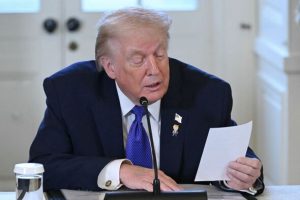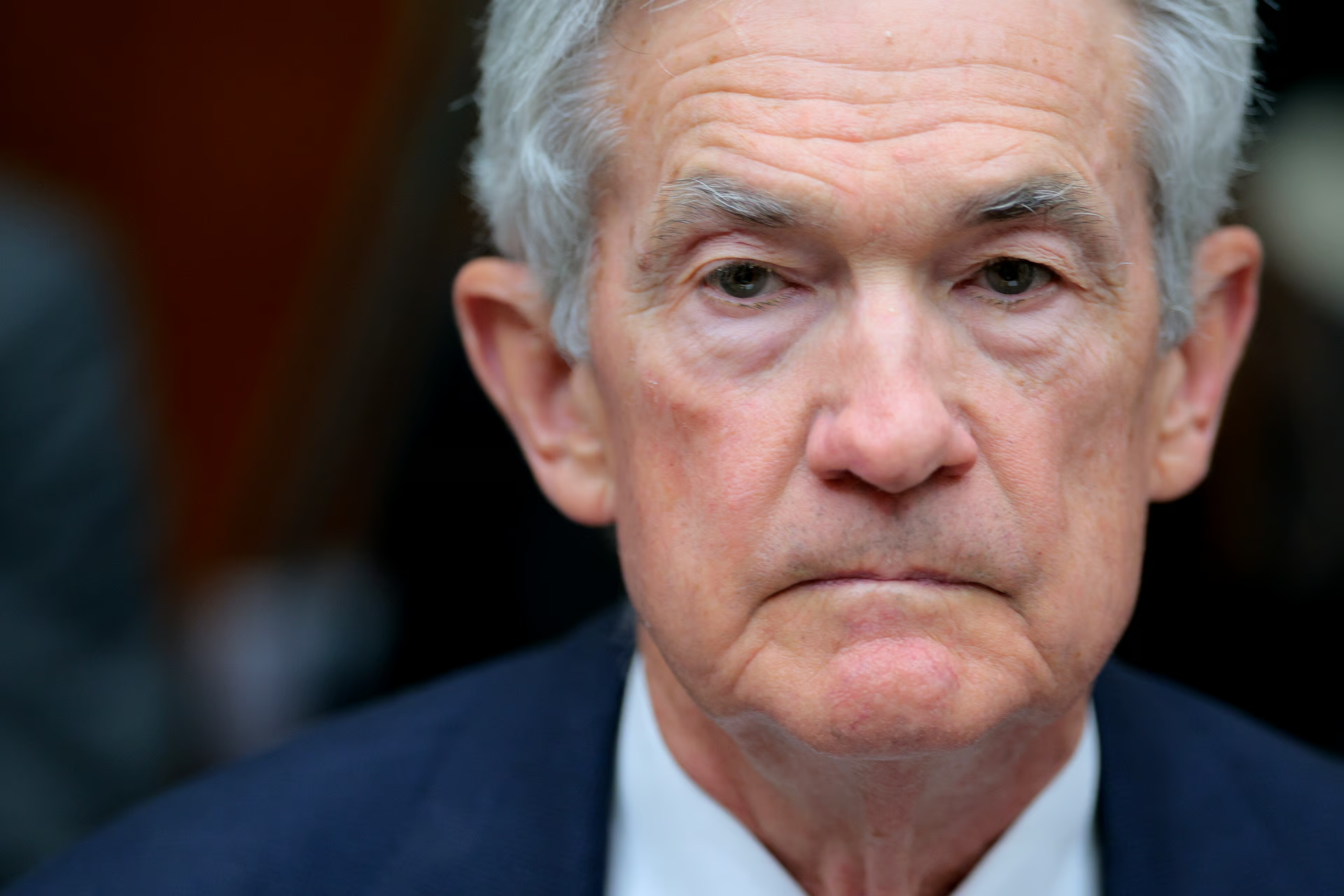
Federal Reserve Chair Jerome Powell is preparing to attend oral arguments before the U.S. Supreme Court this week, a highly unusual move that underscores how sharply the long-simmering conflict between the central bank and President Donald Trump has escalated. The case before the justices centers on whether the president has the authority to remove a sitting Federal Reserve governor—an issue with sweeping implications for the independence of the nation’s central bank and the balance of power between the executive branch and independent agencies.
According to individuals familiar with the matter, Powell plans to be present as the Court hears arguments over President Trump’s attempt to fire Federal Reserve Governor Lisa Cook. The Supreme Court allowed Cook to remain in her position last October while it agreed to take up the dispute, signaling the justices view the matter as a serious constitutional question rather than a routine personnel disagreement.
Powell’s personal appearance has drawn intense scrutiny, particularly from conservatives who argue the Fed chair has abandoned the tradition of political neutrality. Critics say his decision to attend the hearing—rather than allowing lawyers to handle the matter—amounts to a public political statement at a time when the central bank is already under fire for stubbornly high interest rates and slowing economic growth.
Over the past several weeks, calls for Powell’s resignation have grown louder across conservative media and among some Republican lawmakers, who accuse him of politicizing the Federal Reserve and placing institutional self-preservation ahead of the economic well-being of American households. Supporters of the chair counter that Powell is defending the independence of monetary policy from direct political control, a principle long viewed as essential to financial stability.
A Rare and High-Stakes Court Fight
The Supreme Court case stems from President Trump’s decision last summer to remove Governor Cook, citing allegations of mortgage fraud that were referred to the administration by Federal Housing Finance Agency Director William Pulte. Trump argued that such allegations constituted sufficient cause for dismissal, asserting that the president must retain authority to remove officials engaged in wrongdoing, even within independent agencies.
Cook has categorically denied the accusations, and multiple reports have indicated that available bank records do not support the claims. Her legal team, led by prominent attorney Abbe Lowell, quickly challenged the dismissal, arguing that the Federal Reserve Act strictly limits the president’s authority to remove governors except in cases of proven misconduct.
“President Trump has no authority to remove Federal Reserve Governor Lisa Cook,” Lowell said in a statement following the attempted firing. “This action lacks any factual or legal basis and threatens the statutory independence Congress granted to the Federal Reserve.”
Cook’s term as a Fed governor runs through January 2038, a deliberately lengthy tenure designed by lawmakers to insulate monetary policymakers from short-term political pressure. The Supreme Court’s ruling will determine whether that protection holds firm—or whether presidents can exert far greater control over the central bank than previously understood.
Powell Under Fire From the Right
While the case formally concerns Cook, Powell has increasingly become the focal point of the political backlash. His relationship with Trump, tense during the president’s first term, has deteriorated further since Trump returned to the White House. The president has repeatedly criticized Powell for failing to cut interest rates aggressively, arguing that tight monetary policy is stifling growth, hurting homeowners, and weighing down working families.
Trump has publicly labeled Powell “too late” and “a major loser,” accusing him of deliberately undermining the administration’s economic agenda. Those attacks intensified earlier this month when Powell disclosed that the Justice Department had issued grand jury subpoenas related to a massive $2.5 billion renovation of Federal Reserve buildings in Washington, D.C.
The revelation stunned Washington and fueled speculation that the Fed itself could face criminal exposure. Powell, however, dismissed the premise behind the investigation, characterizing it as retaliation for the central bank’s refusal to bend to political pressure on interest rates.
“Those are pretexts,” Powell said, referring to the potential indictment. “The threat of criminal charges is a consequence of the Federal Reserve setting interest rates based on our best assessment of what will serve the public, rather than following the preferences of the president.”
That statement further inflamed critics, who argue Powell was openly accusing the administration of weaponizing the Justice Department—a claim the White House has not publicly addressed.
Renovations, Subpoenas, and Political Optics
The renovation project at the heart of the Justice Department’s inquiry involves long-planned upgrades to aging Fed facilities, including security improvements and modernization efforts. Powell has testified before Congress that the costs ballooned due to inflation, supply chain disruptions, and revised security requirements. Still, opponents argue the scale of the project reflects mismanagement at best and potential misconduct at worst.
Powell’s defenders say the investigation has been selectively politicized to discredit the Fed chair during a broader power struggle over monetary policy. They point out that large federal construction projects routinely exceed initial cost estimates and rarely trigger criminal scrutiny.
Yet for many Americans grappling with high borrowing costs and persistent inflation, the optics are difficult. The image of a central bank overseeing a multibillion-dollar renovation while households struggle to afford mortgages and credit card payments has proven politically combustible.
The Independence Question
At the core of the controversy is a fundamental question: how independent should the Federal Reserve be from elected officials? Since its modern structure was established, the Fed has operated with substantial autonomy, based on the belief that insulating monetary policy from electoral politics leads to better long-term economic outcomes.
Trump and his allies challenge that assumption, arguing that an unaccountable central bank wielding enormous power over the economy undermines democratic governance. They contend that if voters elect a president with a clear economic mandate, unelected officials should not be able to block or dilute that agenda.
Powell, by contrast, has consistently argued that independence is not about defying democracy but about preventing short-term political considerations from driving decisions that can have lasting economic consequences.
His decision to attend the Supreme Court arguments personally has been interpreted by supporters as a signal of how seriously he views the stakes—not just for Cook, but for the institutional role of the Federal Reserve itself.
What Happens Next
The Supreme Court’s ruling, expected later this year, could reshape the relationship between the White House and the central bank for decades. If the justices side with Trump, future presidents may gain broad authority to remove Fed governors, potentially eroding the institution’s independence. If the Court rules in favor of Cook, it would reaffirm long-standing limits on presidential power and likely intensify political pressure on Powell through other means.
In the meantime, Powell remains at the center of a political storm, facing criticism from the right, scrutiny from federal investigators, and an increasingly hostile relationship with the president. Whether those pressures culminate in his resignation—or solidify his resolve to remain in office—remains an open question.
What is clear is that the fight over Jerome Powell is no longer just about interest rates. It has become a defining battle over the future of economic governance in the United States, with consequences that will extend well beyond any single administration.

Emily Johnson is a critically acclaimed essayist and novelist known for her thought-provoking works centered on feminism, women’s rights, and modern relationships. Born and raised in Portland, Oregon, Emily grew up with a deep love of books, often spending her afternoons at her local library. She went on to study literature and gender studies at UCLA, where she became deeply involved in activism and began publishing essays in campus journals. Her debut essay collection, Voices Unbound, struck a chord with readers nationwide for its fearless exploration of gender dynamics, identity, and the challenges faced by women in contemporary society. Emily later transitioned into fiction, writing novels that balance compelling storytelling with social commentary. Her protagonists are often strong, multidimensional women navigating love, ambition, and the struggles of everyday life, making her a favorite among readers who crave authentic, relatable narratives. Critics praise her ability to merge personal intimacy with universal themes. Off the page, Emily is an advocate for women in publishing, leading workshops that encourage young female writers to embrace their voices. She lives in Seattle with her partner and two rescue cats, where she continues to write, teach, and inspire a new generation of storytellers.