A highly respected figure in European rock music has died at the age of 71, prompting an outpouring of grief from fans, fellow musicians, and the wider music community. The artist passed away on Thursday following a long and private struggle with cancer, a battle that had largely remained out of the public eye until his death.
The news was confirmed by his family in a deeply emotional statement shared online, in which they spoke of loss, love, and the quiet strength he showed throughout his illness. According to the statement, he died peacefully, surrounded by those closest to him, after facing his condition with dignity and resolve.
“It is with overwhelming sadness and heavy hearts that we share this news,” the family wrote. “He fought bravely and privately, and we stood beside him through every challenge, just as he taught us to do—together, as a family.”
For decades, the musician had been a defining presence in hard rock and heavy metal, contributing to albums and tours that helped shape the genre’s global rise in the late twentieth century. His work reached millions, yet he remained known among peers as humble, grounded, and intensely dedicated to the craft of music rather than celebrity.
Fans across Europe and beyond woke to tributes flooding social media, many recalling seeing him live during rock’s golden era, while others remembered encounters that left a lasting impression. To many, he represented not just technical excellence, but a sense of authenticity that defined an entire generation of musicians.
His family also addressed supporters directly, thanking them for their loyalty over the years. “You gave him the world,” the statement read, “and he gave you his music in return. Though the strings have gone silent, his spirit lives on in every note he played and in every life he touched.”
It was midway through his long career that he became a household name among rock fans worldwide, anchoring the sound of one of Germany’s most successful musical exports during its most commercially powerful years.
That musician was Francis Buchholz.
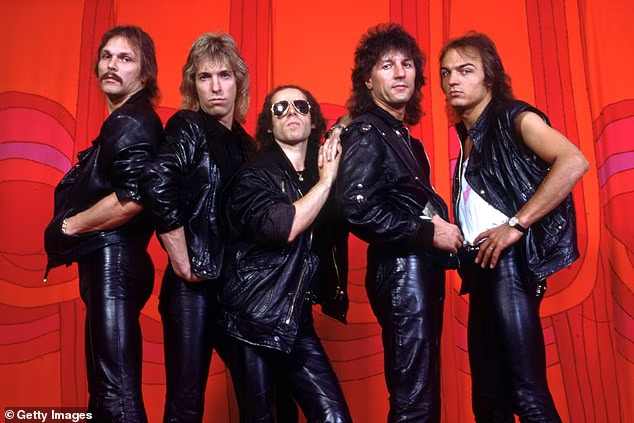
Buchholz was best known as the longtime bassist of the legendary rock band Scorpions, a role he held from 1973 until 1992. During that period, the band released 12 studio albums, many of which went on to achieve international success and cement Scorpions as one of the most influential hard rock acts in history.
As bassist, Buchholz provided the rhythmic backbone behind some of the band’s most iconic material. While often less visible than lead singers or guitarists, his contribution was essential—steady, precise, and deeply musical. Fellow musicians frequently praised his ability to balance power with restraint, allowing songs to breathe while still driving them forward.
Beyond his work with Scorpions, Buchholz collaborated with a range of artists, most notably reuniting with guitarist Michael Schenker for the Temple of Rock project. In 2012, he joined Schenker on the Lovedrive Reunion Tour, a moment that delighted longtime fans and reaffirmed his enduring place in the rock world.

Tributes from bandmates and peers reflected both personal loss and professional admiration. One former collaborator described the news as “very saddening,” noting their long friendship and extending heartfelt condolences to Buchholz’s wife and family. Others emphasized his reliability, musicianship, and quiet influence behind the scenes.
Fans echoed those sentiments, sharing memories of concerts from the 1980s and later reunion tours. Some recalled seeing him perform multiple times during Scorpions’ peak years, while others spoke of more recent shows that demonstrated his continued passion for live performance well into later life.
“He was a great bass player and a respected member of the classic Scorpions lineup,” one fan wrote. Another shared how meeting him in person left a lasting impression, describing him as approachable and generous with his time.
Outside of touring and recording, Buchholz also worked as a record producer and consultant, lending his experience to younger artists and projects. Those who worked with him in this capacity described him as thoughtful, detail-oriented, and deeply invested in helping others refine their sound.
Despite his success, he maintained a relatively private personal life. He lived in Hanover with his wife, Hella, and was a devoted father to their children, including a son and twin daughters. Family remained central to his life, particularly in recent years as he stepped back from the demands of constant touring.
According to those closest to him, his final months were marked not by bitterness, but by gratitude—for music, for family, and for the fans who had supported him throughout his career. The family emphasized that he faced his illness with courage, choosing to keep the struggle private while continuing to cherish time with loved ones.
Francis Buchholz leaves behind a legacy measured not only in albums sold or stages played, but in the lasting influence he had on rock music and those who listened to it. His basslines continue to resonate through decades of recordings, forming the foundation of songs that remain staples of the genre.
Though his passing marks the end of an era, his music endures—loud, steady, and unmistakably his.