


The U.S. House of Representatives on Thursday narrowly rejected a Democratic-sponsored resolution intended to limit President Donald Trump’s authority to take military action in Venezuela without explicit authorization from Congress. In a dramatic and closely watched vote, the chamber ended in a 215–215 tie, falling short of the majority needed to advance the measure.
The Wednesday vote marked the latest chapter in a broader debate in Washington over the constitutional balance between the executive branch’s role as commander-in-chief and Congress’s authority to declare and authorize military engagement. The vote also underscored internal divisions within the Republican majority and highlighted ongoing partisan tensions over foreign policy, executive power, and congressional oversight.
The Resolution and What It Sought to Do
The measure, which drew unanimous support from House Democrats and backing from a small group of Republicans, was designed to invoke the War Powers Resolution, a 1973 law that seeks to limit the president’s ability to engage U.S. forces in hostilities without Congress’s explicit consent. Under the terms of the draft resolution, Trump would have been directed to withdraw any U.S. military personnel from Venezuela unless Congress declared war or passed specific statutory authorization for further military force.
Democratic lawmakers framed the resolution as a constitutional safeguard, arguing that the president’s recent military actions in the Western Hemisphere — particularly those related to Venezuela — reflect an expansion of military authority without adequate legislative oversight. Proponents said that without clear limits, presidents could set precedents that weaken Congress’s constitutional prerogatives and erode checks and balances.
House Democrats pointed specifically to recent U.S. involvement around Venezuela — including a high-profile operation that resulted in the capture of Venezuelan President Nicolás Maduro — as evidence that stronger congressional oversight is needed. While administration officials maintain that no U.S. troops are currently engaged in combat within Venezuela’s borders, the presence of naval operations and broader military actions has fueled concern among some legislators.
A Tie Vote and High Stakes
The 215–215 outcome reflected just how closely divided the House is on this issue. The chamber’s vote was originally expected to be routine, but it became a dramatic standoff on the floor. Republican leaders kept the vote open for over 20 minutes — well beyond the usual window — while waiting for Republican Representative Wesley Hunt of Texas to return from campaigning for a state Senate seat so he could cast a decisive vote against the resolution.
As the clock stretched, tensions on the House floor heightened. Democrats protested that keeping the vote open beyond standard procedure was improper, saying that the delay undermined the integrity of the process. Ultimately, Hunt’s arrival and “no” vote ensured the resolution’s defeat.
All House Democrats voted in favor of the resolution, joined by two Republicans — Thomas Massie of Kentucky and Don Bacon of Nebraska — who diverged from the majority of their party in supporting congressional limits on presidential war powers.
Republican Arguments Against the Measure
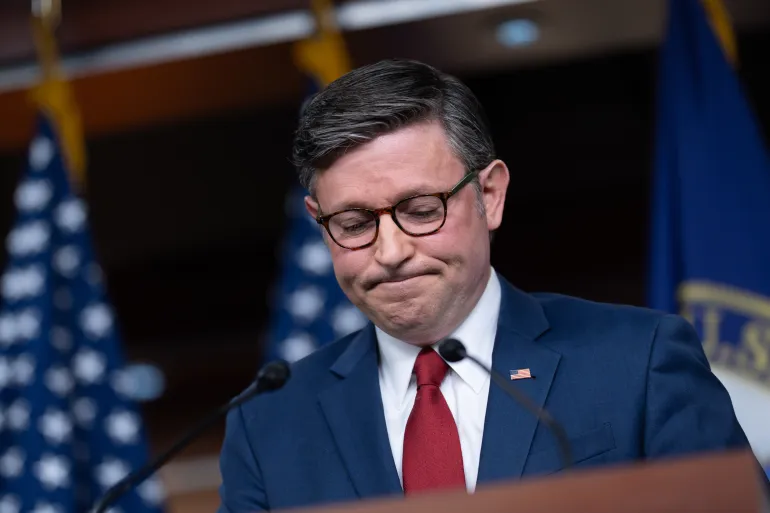
Republican leaders, including House Speaker Mike Johnson, defended their opposition to the measure as a reasonable recognition of both constitutional authority and current circumstances. In their view, the United States is not engaged in a formal war with Venezuela, and there are no U.S. troops on the ground in the country’s territory, making the restrictions proposed by Democrats unnecessary.
Those opposing the resolution argued that its passage could constrain the president’s ability to respond to emerging threats or unforeseen developments. Many Republicans also suggested that the resolution was politically motivated, accusing Democrats of using war powers concerns as a way to criticize the president’s broader foreign policy agenda.
Representative Brian Mast, Republican chair of the House Armed Services Committee, called the resolution “an exercise in spite,” asserting that it was aimed more at opposing President Trump than at advancing a coherent strategic objective. Other GOP leaders noted that Trump’s administration has publicly committed to seeking congressional input before engaging in future military operations, diminishing the need for legislative action.
Historical Context: War Powers Act and Congressional Authority
The War Powers Resolution of 1973 emerged during the Vietnam War era as an effort to curb unilateral executive action. It requires that the president notify Congress within 48 hours of deploying armed forces into hostilities and limits sustained military engagements without congressional approval to a specified time frame. While intended to reinforce Congress’s constitutional role in matters of war, the law has long been the subject of debate over its effectiveness, enforceability, and constitutional standing.
In recent decades, presidents of both parties have tested the bounds of executive war powers, engaging in military operations without formal declarations of war by Congress. This has included limited air strikes, special operations missions, and other actions where the legal justification has often been contested. The recent debates over Venezuela reflect that ongoing tension between branches of government.
A Similar Struggle in the Senate
The House vote follows a narrowly decided action in the Senate last week, where a similar war powers resolution failed to advance. That vote ended in a tie, 50–50, and Vice President J.D. Vance cast the deciding vote to defeat the proposal. The Senate episode demonstrated that disagreements over executive military authority extend beyond the House and illustrate broader divisions not only across party lines but within them as well.
In that Senate vote, two Republican senators who initially supported the resolution reversed their positions after discussions with administration officials, emphasizing assurances that any future significant military action would be brought to Congress for consideration.
Debate Over U.S. Role in Venezuela and Foreign Policy
At the center of the war powers debate is the broader context of U.S. involvement in Venezuela. The Trump administration’s recent military and law enforcement actions — particularly the capture of Maduro — have drawn both praise and criticism. Supporters of the administration argue that these actions represent decisive efforts to counter authoritarianism, drug trafficking, and human rights abuses. Critics counter that such unilateral initiatives risk dragging the nation into protracted foreign entanglements without adequate oversight.
Democratic lawmakers framed the resolution as a constitutional check on presidential authority, arguing that Congress should be the body to decide whether the United States engages more deeply in foreign conflicts. They also warned against allowing a policy pattern that could set precedent for future presidents to take military action with little legislative input.
What the Vote Says About Congressional Dynamics
The razor-thin margin by which the House rejected the resolution highlights the fragility of the Republican majority and the depth of dissent even within its ranks. That two Republican lawmakers joined Democrats in supporting the measure signals that concern about executive war powers crosses traditional party boundaries in some quarters.
At the same time, Republican leaders’ efforts to marshal votes against the resolution illustrate the lengths to which party leadership is willing to go to protect executive authority, particularly when the president is a member of their own party. Holding the vote open for an extended period to secure a decisive vote demonstrated the tactical dimension of congressional maneuvers.
Looking Ahead
With the 2026 election cycle already underway, foreign policy and executive authority are likely to remain key issues in public discourse. The debate over the war powers resolution is emblematic of larger questions facing lawmakers: how to balance national security interests with constitutional constraints, and how to ensure that no single branch of government accumulates unchecked authority.
While the House and Senate have now both rejected war powers limitations on military action in Venezuela, the underlying disagreements are far from settled. Similar measures may resurface, and the executive branch’s interactions with foreign nations — particularly those involving the use or threat of force — are likely to remain a subject of congressional scrutiny and debate.
As legislators return to their districts and weigh constituent reactions, the issue of war powers could shape voter attitudes on broader themes of governance, oversight, and the proper division of responsibilities in American democracy. ✍️

Emily Johnson is a critically acclaimed essayist and novelist known for her thought-provoking works centered on feminism, women’s rights, and modern relationships. Born and raised in Portland, Oregon, Emily grew up with a deep love of books, often spending her afternoons at her local library. She went on to study literature and gender studies at UCLA, where she became deeply involved in activism and began publishing essays in campus journals. Her debut essay collection, Voices Unbound, struck a chord with readers nationwide for its fearless exploration of gender dynamics, identity, and the challenges faced by women in contemporary society. Emily later transitioned into fiction, writing novels that balance compelling storytelling with social commentary. Her protagonists are often strong, multidimensional women navigating love, ambition, and the struggles of everyday life, making her a favorite among readers who crave authentic, relatable narratives. Critics praise her ability to merge personal intimacy with universal themes. Off the page, Emily is an advocate for women in publishing, leading workshops that encourage young female writers to embrace their voices. She lives in Seattle with her partner and two rescue cats, where she continues to write, teach, and inspire a new generation of storytellers.