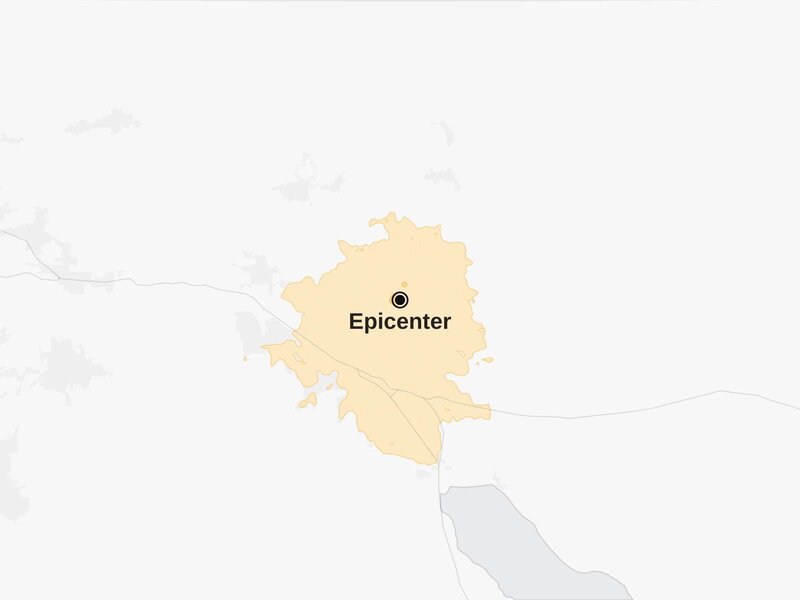
Southern California has been rattled by a flurry of earthquakes in less than 24 hours, raising concerns among scientists and residents alike about the region’s seismic stability. The most recent tremor struck just a few miles from Indio in the Coachella Valley, roughly 100 miles east of both Los Angeles and San Diego. Measured at magnitude 3.8, it occurred along a section of the notorious San Andreas Fault known as the Mission Creek strand at 1:48 pm ET on Tuesday.
The current seismic swarm began late Monday evening when a magnitude 4.9 earthquake was detected in the same area, marking the start of over a dozen tremors in under 16 hours. The initial quake caused significant shaking at its epicenter and was reported by thousands of residents across the state, stretching from inland communities all the way to the coast, impacting millions in Los Angeles and San Diego. Despite the widespread shaking, no serious injuries or major structural damage have been reported so far.
Tuesday’s tremor was one of many aftershocks that followed the initial quake. While most were minor, registering under magnitude 2.0 and barely perceptible to residents, over a dozen measured between 2.5 and 4.9, producing noticeable shaking but limited destruction. Experts have warned that these events are indicative of heightened activity along the San Andreas Fault, and there is a significant likelihood of additional tremors in the coming days. According to the U.S. Geological Survey (USGS), there is a 98 percent chance of more quakes exceeding magnitude 3.0 within the next week, with a 39 percent chance that some could surpass magnitude 4.0.
The region affected includes areas near the annual Coachella music and arts festival, which draws roughly 250,000 attendees in April. The proximity of such large gatherings highlights the potential public safety risks posed by ongoing seismic activity. The San Andreas Fault itself stretches roughly 800 miles through California, from the southern deserts through the Bay Area and into the northern Pacific Ocean. It represents one of the most closely monitored fault lines in the world due to its history of major earthquakes.
Recent studies have underscored the growing concern regarding the southern segment of the San Andreas Fault, including the Mission Creek strand. A 2021 study in Science Advances concluded that this part of the fault has been quietly accumulating enormous stress over centuries, creating conditions for potentially catastrophic movement. When this stress is released, experts warn, the energy could produce a massive earthquake akin to a snapping rubber band, affecting a densely populated and economically critical region.
In addition to the swarm along the Mission Creek strand, USGS data indicate that Southern California remains at very high risk for a major earthquake in the coming decades. A 2015 USGS report estimated a 95 percent probability that at least one quake stronger than magnitude 6.7 will strike somewhere in the state by 2043. While earlier models suggested that other branches of the San Andreas, such as the Banning strand, were responsible for most of the seismic stress, updated research has identified Mission Creek as the primary driver of lateral movement between the Pacific and North American tectonic plates, accounting for approximately 90 percent of horizontal motion in this region.
The potential consequences of a major earthquake along this segment are severe. Simulations conducted by USGS and emergency preparedness organizations have projected that a magnitude 7.8 event could result in thousands of fatalities and tens of thousands of injuries. Estimates suggest that roughly 1,800 deaths and 50,000 injuries could occur, accompanied by direct economic losses exceeding $200 billion. Surface ruptures might reach up to 13 feet, causing widespread damage to infrastructure, including roads, bridges, pipelines, and rail systems that cross the fault line.
Buildings in the affected region are particularly vulnerable. Older, unreinforced structures and certain high-rise buildings with brittle welds could sustain catastrophic damage. Emergency planners stress that retrofitting existing structures and enforcing strict building codes for new developments are critical for minimizing casualties and economic loss in the event of a large-scale earthquake.
Residents have experienced firsthand the intensity of the recent tremors. Many reported feeling the ground shake violently for several seconds, with furniture rattling and objects falling from shelves. The swarm has reignited conversations about earthquake preparedness, including the importance of securing heavy items, creating emergency supply kits, and understanding local evacuation routes. Although Southern California is accustomed to minor tremors, the concentration and frequency of quakes in such a short span have heightened public concern.
Local authorities and scientists emphasize the unpredictability of aftershocks. While smaller tremors often follow a larger quake, the pattern and magnitude of subsequent events can vary widely. As such, residents are advised to remain vigilant and prepared for additional shaking over the coming days. Public safety campaigns have focused on reminding people to “Drop, Cover, and Hold On” during quakes and to check for damage after each tremor.
The broader implications of the ongoing seismic activity extend beyond immediate safety concerns. California’s economy, heavily reliant on major cities, infrastructure, and tourism, could be significantly disrupted by even moderate earthquakes. Transportation networks, energy distribution, and water systems all cross fault lines, making rapid response and resilience planning essential to mitigate long-term impacts.
The San Andreas Fault has a long and well-documented history of major earthquakes. Historical records indicate several destructive events in Southern California over the past two centuries, and the recent swarm underscores that the fault remains highly active. Scientists stress that while small to moderate tremors are part of normal seismic activity, clusters like the current one may indicate adjustments in stress that could precede a larger event.
Overall, the situation in the Coachella Valley and surrounding areas serves as a reminder of California’s vulnerability to seismic hazards. Continuous monitoring by the USGS, along with public education and preparedness, are vital components of earthquake mitigation efforts. Authorities are encouraging residents to remain calm but cautious, understand their local risks, and ensure they are equipped to respond to earthquakes of varying magnitudes.
As Southern California experiences this latest swarm, the focus is on preparedness and resilience. From the potential for property damage to the threat to human life, the recent tremors highlight the importance of scientific vigilance, informed urban planning, and individual readiness. While no major damage has yet been reported, the combination of historical risk and recent activity reminds all residents that the San Andreas Fault is a dynamic and powerful natural feature that demands constant respect.

Emily Johnson is a critically acclaimed essayist and novelist known for her thought-provoking works centered on feminism, women’s rights, and modern relationships. Born and raised in Portland, Oregon, Emily grew up with a deep love of books, often spending her afternoons at her local library. She went on to study literature and gender studies at UCLA, where she became deeply involved in activism and began publishing essays in campus journals. Her debut essay collection, Voices Unbound, struck a chord with readers nationwide for its fearless exploration of gender dynamics, identity, and the challenges faced by women in contemporary society. Emily later transitioned into fiction, writing novels that balance compelling storytelling with social commentary. Her protagonists are often strong, multidimensional women navigating love, ambition, and the struggles of everyday life, making her a favorite among readers who crave authentic, relatable narratives. Critics praise her ability to merge personal intimacy with universal themes. Off the page, Emily is an advocate for women in publishing, leading workshops that encourage young female writers to embrace their voices. She lives in Seattle with her partner and two rescue cats, where she continues to write, teach, and inspire a new generation of storytellers.