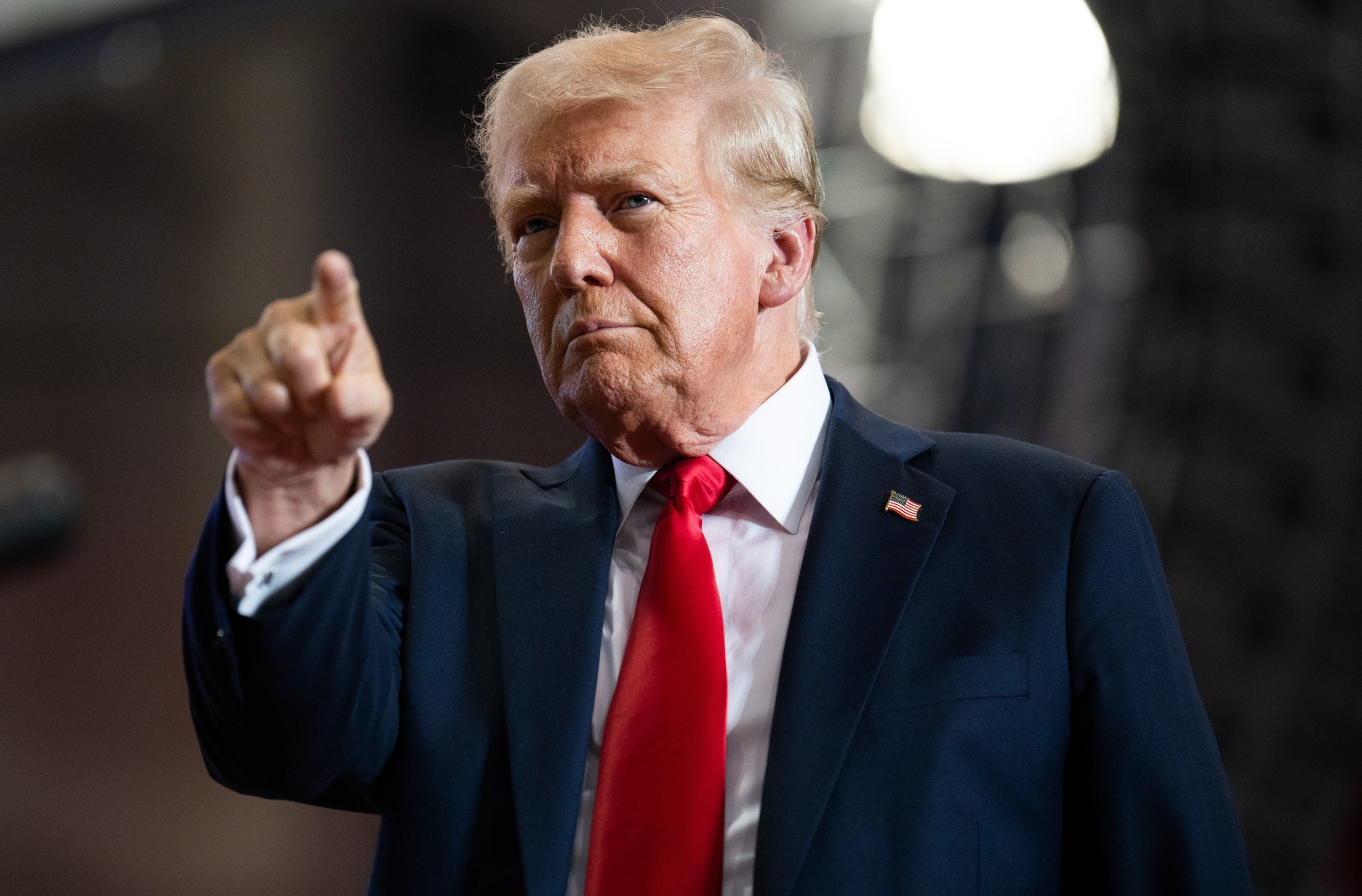
Donald Trump has presided over one of the most turbulent and high-profile second terms in modern American history, yet new polling suggests the constant motion in Washington has not translated into broader public approval.
More than a year after reclaiming the White House, the 79-year-old president has wasted no time reshaping the country’s political and diplomatic landscape. His return to power was immediately followed by sweeping changes: immigration rules tightened almost overnight, trade relationships were renegotiated with threats of tariffs, federal agencies were restructured, and even the physical appearance of the White House was altered to reflect his personal style.
Supporters describe the pace as proof of decisive leadership. Critics see chaos.
Trump himself has framed the last year as a period of historic achievement. He regularly claims his administration has prevented wars, stabilized volatile regions, and saved millions of lives. In speeches and interviews, he portrays his leadership as uniquely effective, arguing that only his brand of hardline diplomacy can deter enemies and force allies to shoulder their share of global responsibility.
At the same time, he has openly floated the possibility of military action in several parts of the world. Iran, Mexico, and Venezuela have all been mentioned in moments of heightened tension. Perhaps most controversially, he has refused to rule out force in Greenland — a self-governing territory owned by Denmark and protected under NATO.
That proposal alone has sent shockwaves through Europe. Allied leaders have expressed disbelief that a sitting U.S. president would publicly contemplate the acquisition of a NATO partner’s territory. Trump’s administration insists the issue is one of national security, arguing that Greenland’s strategic position and natural resources make it too important to leave vulnerable to Chinese or Russian influence.
European officials counter that such rhetoric undermines decades of trust and stability.
At home, Trump’s immigration agenda has proven just as polarizing. Expanded ICE operations, faster deportations, and broader enforcement powers have ignited protests in major cities. Civil liberties organizations warn of overreach and intimidation in immigrant communities. Meanwhile, Trump’s supporters argue that he is simply fulfilling the promises that returned him to office — restoring border control and enforcing the law.
The president has embraced the conflict. He portrays resistance as proof that entrenched interests and political opponents are uncomfortable with real change. In rallies and online posts, he frames criticism as weakness, insisting that disruption is necessary to “fix what was broken.”
Yet for all the activity, new data suggests most Americans remain unconvinced.
A nationwide poll conducted in January found that roughly four in ten U.S. adults approve of Trump’s performance so far in his second term. Nearly six in ten disapprove. The figures are striking not only for their imbalance, but for their stability: they are almost identical to those recorded in the early months after he returned to office.
In other words, despite a year of dramatic action, Trump has not expanded his appeal.
The survey reveals consistent disapproval across the very issues that define his presidency.
On the economy, about 37 percent of respondents say they approve of Trump’s handling, while around 62 percent disapprove. Inflation pressures, trade uncertainty, and fears of retaliation from foreign markets appear to be weighing heavily on public sentiment.
Immigration shows a similar divide. Approximately 38 percent approve of Trump’s approach, while 61 percent disapprove. Even among those who favor stricter enforcement, concerns linger over how policies are implemented and the impact on families and communities.
Foreign policy fares no better. Only about 37 percent approve of Trump’s handling of international affairs, compared with 61 percent who disapprove. Critics cite strained alliances, unpredictable diplomacy, and confrontational rhetoric. Supporters argue that traditional allies have grown too comfortable and that Trump is simply recalibrating global expectations.
Trade negotiations mirror these numbers almost exactly, with 37 percent approving and 61 percent disapproving. Tariffs and threats of economic retaliation may resonate with voters who believe America has been taken advantage of, but they also fuel anxiety about higher prices and global instability.
Taken together, the figures paint a picture of a presidency that energizes a committed base while alienating a majority of the country.
The poll also notes that all surveys include a margin of error and that results vary among demographic subgroups. Younger adults, older voters, and different regions often display distinct patterns. Even so, the overall trend is unmistakable: Trump remains underwater across every major policy area.
For a leader who thrives on momentum, spectacle, and dominance of the news cycle, the data highlights a central paradox of his second term. Visibility has not softened opposition. Boldness has not broadened support. Constant motion has not translated into greater trust.
Trump appears unbothered.
He continues to frame his presidency as a battle against complacency, bureaucracy, and foreign dependence. In his telling, resistance is not a verdict on his performance but evidence that his reforms are hitting their targets. He measures success less by approval ratings than by disruption.
Yet history suggests that numbers matter.
Sustained disapproval limits political capital. It complicates legislative ambitions, weakens leverage abroad, and shapes how future generations will judge a presidency. While Trump may not seek validation from polls, the broader system in which he operates does respond to public mood.
For now, the country remains deeply divided. To supporters, Trump is a leader finally willing to break norms and confront entrenched interests. To critics, he is destabilizing alliances, eroding institutions, and governing through perpetual conflict.
A year into his second term, one thing is clear: the pace has been relentless, the headlines unending, and the stakes enormous. But for most Americans, the question is not whether Trump is active — it is whether all this activity is moving the nation in the right direction.
So far, a majority appear to be saying no.