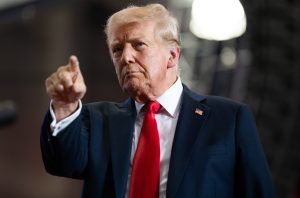



President Trump’s escalating campaign to secure control of Greenland has begun to rattle capitals on both sides of the Atlantic, transforming what once sounded like a political curiosity into a full-scale geopolitical confrontation.
As the president prepares to depart Washington for Davos, Switzerland, aides describe his upcoming meetings with European leaders as “high-stakes.” The focus will be unmistakable: Greenland. Trump’s administration has spent days laying the groundwork for a renewed push, framing the Arctic territory as a strategic necessity for American dominance in an era of melting ice, emerging shipping routes, and intensifying competition with China and Russia.
Behind the scenes, officials are reportedly assembling a package of economic incentives, security guarantees, and diplomatic pressure aimed at forcing movement from Denmark and Greenland’s autonomous government. What began years ago as an unconventional proposal is now being treated inside the White House as an active objective.
The shift in tone is being felt most sharply in Greenland itself.
In Nuuk, Prime Minister Jens-Frederik Nielsen addressed the nation with an unusually stark warning. While stressing that conflict remains unlikely, he acknowledged that the island must prepare for extreme outcomes.
“It’s not likely there will be a military conflict,” Nielsen said, “but it can’t be ruled out.”
For a territory that has long navigated a delicate balance between self-rule and Danish sovereignty, the comment marked a dramatic change. Greenland’s leaders have traditionally avoided alarmist language, even as foreign interest in the island’s resources and location has grown. Now, the possibility of coercion is being discussed openly.
Trump’s posture hardened over the past week as he turned the Greenland push into a personal crusade. In a late-night social media blitz, he leaked private messages from French President Emmanuel Macron and NATO Secretary General Mark Rutte, mocking them with memes and taunts. The posts were aimed at critics who accused him of destabilizing alliances.
He later admitted the messages were released because “they made my point.”
According to Trump, while European leaders were extending polite invitations, he was dealing with crises others could not manage. He cited a prison break in Syria involving European extremists, claiming U.S. intervention was decisive in restoring control.
“European terrorists were in prison. They had a prison break,” he told the New York Post. “Working with the government of Syria and the new leader of Syria, they captured all the prisoners, put them back to jail… these were the worst terrorists in the world, all from Europe.”
The episode, which unfolded at Al-Shaddadi prison after clashes between Syrian forces and Kurdish-led troops, became part of Trump’s broader narrative: Europe depends on American power while lecturing Washington from a position of comfort.
That logic now underpins his Greenland strategy.
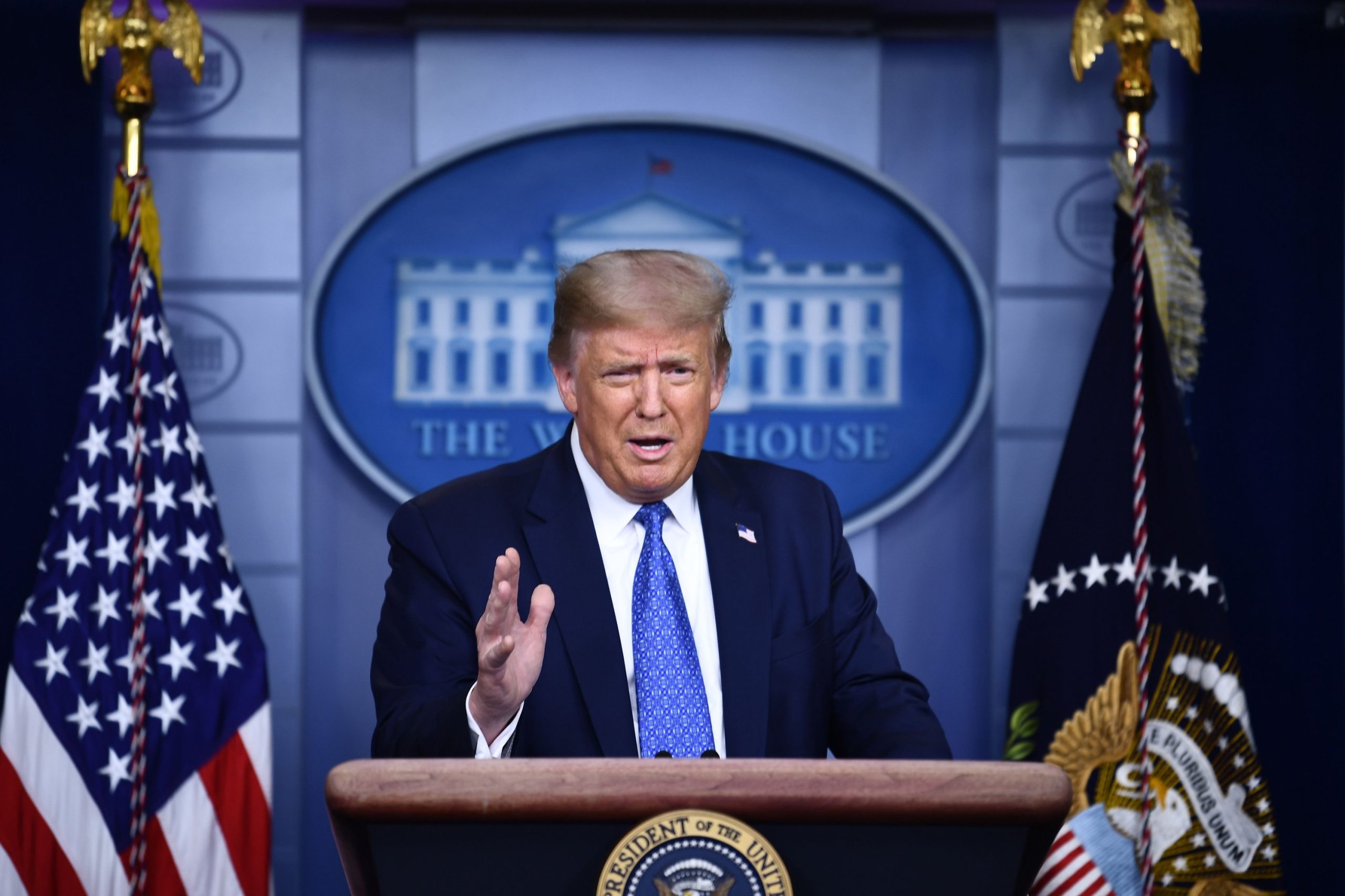
At a White House briefing on Tuesday, reporters pressed the president on how far he was prepared to go to achieve his objective. Only then did Trump deliver the line that electrified observers:
“You will find out.”
He followed with a measured assurance that “a lot of meetings” were scheduled and that he believed “things are going to work out pretty well,” referencing his agenda at the World Economic Forum.
The ambiguity was deliberate. It left allies uncertain, adversaries guessing, and critics unsettled.
In a separate telephone interview the day before, Trump was asked directly whether he would use military force if negotiations failed. His response was equally opaque: “No comment.”
Diplomats across Europe interpreted the exchange as a warning shot. While few believe the United States is preparing an imminent military move, Trump’s refusal to rule anything out changes the calculus. It forces Denmark, NATO, and Greenland’s own government to confront scenarios once dismissed as implausible.
For Greenlanders, the pressure feels existential. The island’s population of roughly 56,000 has long sought greater autonomy while relying on Denmark for defense and economic stability. Trump’s rhetoric threatens to turn that balance into a contest between superpowers.
Some residents welcome the prospect of increased American investment and security. Others view Trump’s approach as colonial in tone, dismissive of local sovereignty, and indifferent to the island’s right to self-determination.
Yet the president appears unmoved by such concerns. In his view, history favors the bold. He has repeatedly framed Greenland not as a distant land with its own political identity, but as an inevitable extension of American reach.
Supporters argue that he is simply acknowledging strategic reality. As ice recedes, Greenland becomes central to global trade routes and resource competition. Critics counter that Trump is undermining alliances built over generations and normalizing coercion between partners.
What makes the moment particularly volatile is the convergence of crises. Europe is grappling with instability in the Middle East, renewed migration pressures, and internal political fragmentation. Trump’s posture exploits that vulnerability. By leaking messages and mocking diplomatic overtures, he is signaling that courtesy will no longer suffice.
The Davos meetings now loom as a potential inflection point. European leaders are expected to push back forcefully against any suggestion of pressure or force. Trump, however, thrives in confrontation. The world’s premier economic summit offers him a stage to redefine the rules.
Inside the White House, aides describe the Greenland push as part of a broader strategy: recast American power not as cooperative leadership, but as unapologetic dominance. Trump believes the post–Cold War order constrained U.S. ambition. His second term, they say, is about rewriting the map.
The risk lies in miscalculation. Words carry weight when spoken by a commander-in-chief. Even hinting that military options exist compels others to respond.
Greenland’s prime minister has already done so, telling his people that conflict “can’t be ruled out.” That alone marks a turning point in Arctic politics.
Whether Trump intends to go further remains unknown. But one thing is clear: this is no longer a thought experiment. The world is being told—implicitly—that it may soon discover just how far he is willing to go.

Emily Johnson is a critically acclaimed essayist and novelist known for her thought-provoking works centered on feminism, women’s rights, and modern relationships. Born and raised in Portland, Oregon, Emily grew up with a deep love of books, often spending her afternoons at her local library. She went on to study literature and gender studies at UCLA, where she became deeply involved in activism and began publishing essays in campus journals. Her debut essay collection, Voices Unbound, struck a chord with readers nationwide for its fearless exploration of gender dynamics, identity, and the challenges faced by women in contemporary society. Emily later transitioned into fiction, writing novels that balance compelling storytelling with social commentary. Her protagonists are often strong, multidimensional women navigating love, ambition, and the struggles of everyday life, making her a favorite among readers who crave authentic, relatable narratives. Critics praise her ability to merge personal intimacy with universal themes. Off the page, Emily is an advocate for women in publishing, leading workshops that encourage young female writers to embrace their voices. She lives in Seattle with her partner and two rescue cats, where she continues to write, teach, and inspire a new generation of storytellers.