


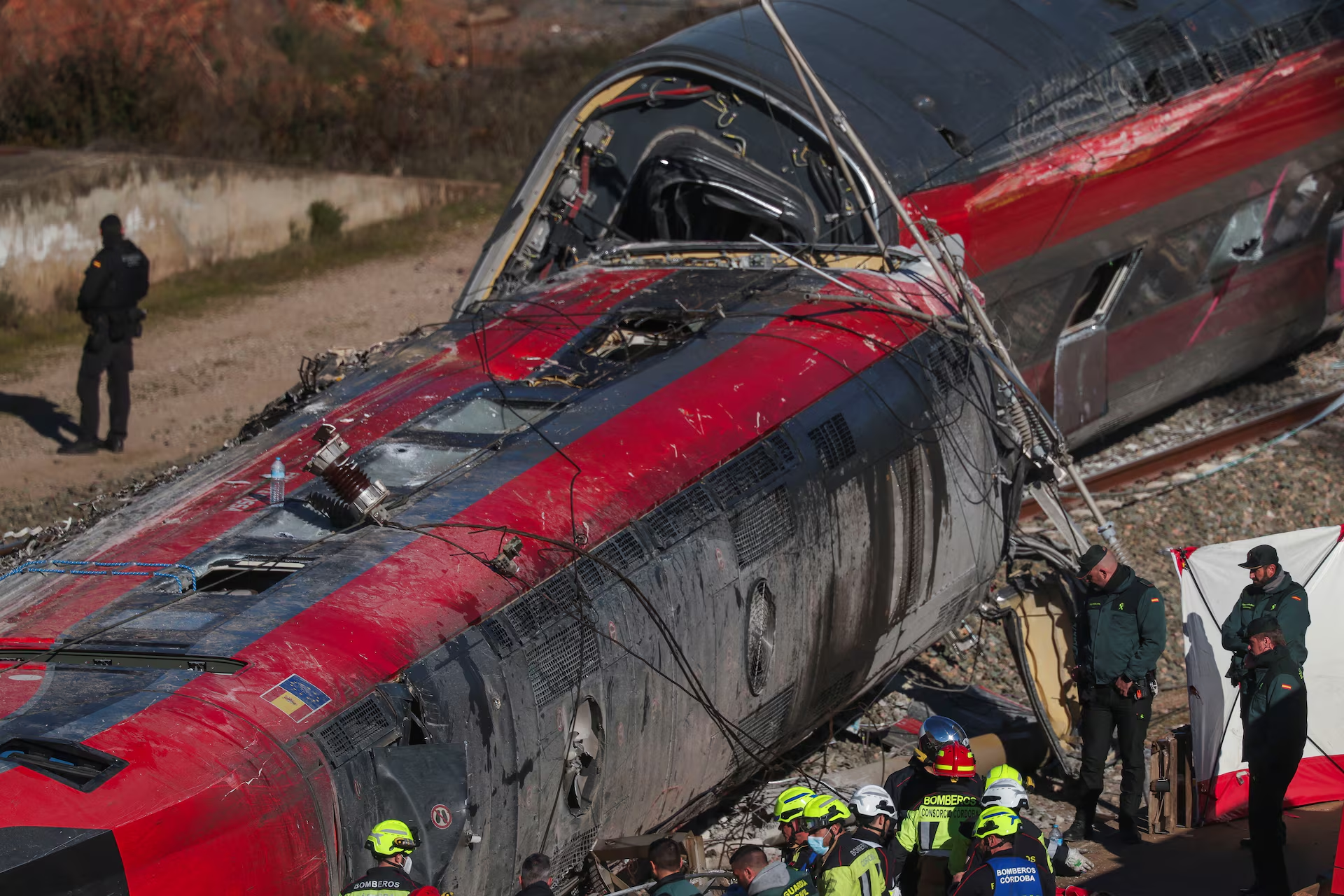
At least 40 people were killed and dozens more injured after a high-speed train derailed and collided with an oncoming train late Sunday night near Adamuz, in the province of Córdoba, southern Spain. The accident is being described as one of the worst railway disasters in Europe in the past 80 years. Emergency services reported that 12 victims remained in intensive care following the crash, and a total of 43 missing-person reports had been filed at police stations across Córdoba, Huelva, Madrid, Málaga, and Seville.
The collision occurred in a remote, hilly area of Andalusia, a region known for its olive groves, accessible only by a single-track road. The terrain made it difficult for ambulances and heavy rescue equipment to reach the site quickly, according to Iñigo Vila, national emergency director at the Spanish Red Cross. “The location is challenging. You need heavy machinery to lift wreckage and reach people trapped under the trains, and that took time,” Vila said.
Eyewitness accounts from survivors paint a harrowing picture. Ana Garcia Aranda, 26, described the moment the train tipped over. “The train tipped to one side… then everything went dark, and all I heard was screams,” she recalled. Limping and with plasters on her face, Garcia said that fellow passengers dragged her from the wreckage while she was covered in blood. Firefighters rescued her pregnant sister, and both were taken to a hospital by ambulance. “There were people who were fine and others who were very, very badly injured… you knew they were going to die, and you couldn’t do anything,” she said.
The trains involved were carrying a combined total of 527 passengers. According to Renfe President Álvaro Fernandez Heredia, the first train, an Iryo service traveling from Málaga to Madrid at 110 kilometers per hour, derailed. Approximately twenty seconds later, a second train, heading to Huelva at a speed of 200 kilometers per hour, collided with the rear carriages of the Iryo train or struck debris from the derailment. The first train reportedly lost a wheel, which has not yet been recovered.
Police drone footage of the accident scene showed the two trains coming to rest approximately 500 meters apart. One carriage had been split in two, while a locomotive was described as being “crushed like a tin can.” Rescue workers, aided by firefighters and Red Cross personnel, have been combing the wreckage for survivors. DNA collection offices have been opened in Córdoba to assist relatives in identifying victims.
Initial investigations suggest that a faulty rail joint may have played a key role in the derailment. A source familiar with the investigation told Reuters that a broken joint between rail sections created a gap that widened as trains continued to operate on the track. Experts say this gap could have destabilized the first train and contributed to the collision. Ignacio Barron, head of Spain’s Commission of Investigation of Rail Accidents (CIAF), emphasized that the “interaction between the track and the vehicle” is always a critical factor in derailments, and investigators are focusing on this aspect as they study the site.
The conditions surrounding the accident remain under scrutiny. Fernandez Heredia told local radio that the crash occurred in “strange conditions,” though human error is considered unlikely. The Iryo train involved in the incident is a Frecciarossa 1000 model, under four years old, and the track near Adamuz had been renovated as recently as May 2025. The train itself underwent its last inspection on January 15, just days before the accident.
Local residents also described witnessing the aftermath firsthand. Paqui, a citizen of Adamuz who assisted in rescue efforts with her husband, said, “I found a dead child inside, another child calling for his mother. You’re never ready to see something like this.” Authorities and emergency responders have worked to stabilize injured passengers and extract those still trapped under debris.
The tragedy has drawn national attention, prompting Spanish Prime Minister Pedro Sanchez to cancel his trip to the World Economic Forum in Davos, Switzerland. Transport Minister Oscar Puente visited the crash site on Monday to coordinate response and recovery efforts. The Andalusian regional president, Juan Manuel Moreno, confirmed that the death toll had reached at least 40 and that emergency crews faced major obstacles due to the terrain.
Spain’s high-speed rail network, the largest in Europe and second only to China, spans 3,622 kilometers, connecting major cities across the country. In recent years, the network has been partially opened to private competition to offer low-cost alternatives to Renfe’s Ave trains, including the joint venture Iryo, which operates the train involved in Sunday’s derailment. Iryo is a partnership between the Italian state railway operator Ferrovie dello Stato, Spanish airline Air Nostrum, and Spanish infrastructure investment fund Globalvia.
The disaster comes amid ongoing criticism of Spain’s rail infrastructure management. In August 2025, Spain’s train drivers’ union, Semaf, sent a letter to Adif, the state-owned rail infrastructure administrator, warning of “severe wear and tear” on the Madrid-Andalusia line and other routes and urging stricter speed restrictions. Officials have not yet commented publicly on the letter or whether the warnings might relate to the derailment.
Sunday night’s crash is one of the deadliest train accidents in Spain since 2013, when a train derailed in Santiago de Compostela, killing 80 people. European statistics indicate that the death toll places this incident among the 20 most severe train crashes in Europe in the past eight decades.
Investigators have been reviewing all possible factors, including mechanical faults, infrastructure issues, and environmental conditions. Fernandez Heredia said it is too early to draw definitive conclusions. “What happened was very unusual,” he said. “At this point, human error is virtually ruled out, but the exact cause remains under investigation.”
Emergency crews have been working around the clock to recover bodies, assist survivors, and clear the wreckage. The challenging geography of Adamuz has slowed the process, as heavy equipment has had to navigate narrow roads and hilly terrain. Authorities are also providing support to families of victims, including temporary housing and counseling services.
The Spanish government has pledged a full investigation into the accident. Adif has been asked to cooperate fully, and national authorities are coordinating with local emergency teams to prevent further tragedies. Meanwhile, the public remains in shock, with residents of Adamuz and surrounding towns volunteering to aid in recovery operations and provide assistance to survivors.
The incident has renewed debate over the safety of Spain’s high-speed rail network and the effectiveness of recent renovations and inspections. Despite the modernity of trains like the Frecciarossa 1000, infrastructure failures such as faulty rail joints can have catastrophic consequences. Rail safety experts stress the importance of rigorous maintenance, continuous monitoring, and timely repairs to prevent similar accidents in the future.
As of Monday, rescue operations were ongoing, with authorities continuing to search for missing passengers and recover the bodies of those killed. Investigators expect it will take several days to fully reconstruct the sequence of events that led to the derailment and subsequent collision, and preliminary reports regarding the rail joint will likely be critical in determining responsibility and preventing similar incidents.
Sunday night’s crash is a stark reminder of the risks associated with high-speed rail travel and the need for continued vigilance in infrastructure management. It has left Spain mourning a tragic loss of life and prompted national reflection on safety protocols, emergency response capabilities, and accountability within the rail industry.

Emily Johnson is a critically acclaimed essayist and novelist known for her thought-provoking works centered on feminism, women’s rights, and modern relationships. Born and raised in Portland, Oregon, Emily grew up with a deep love of books, often spending her afternoons at her local library. She went on to study literature and gender studies at UCLA, where she became deeply involved in activism and began publishing essays in campus journals. Her debut essay collection, Voices Unbound, struck a chord with readers nationwide for its fearless exploration of gender dynamics, identity, and the challenges faced by women in contemporary society. Emily later transitioned into fiction, writing novels that balance compelling storytelling with social commentary. Her protagonists are often strong, multidimensional women navigating love, ambition, and the struggles of everyday life, making her a favorite among readers who crave authentic, relatable narratives. Critics praise her ability to merge personal intimacy with universal themes. Off the page, Emily is an advocate for women in publishing, leading workshops that encourage young female writers to embrace their voices. She lives in Seattle with her partner and two rescue cats, where she continues to write, teach, and inspire a new generation of storytellers.