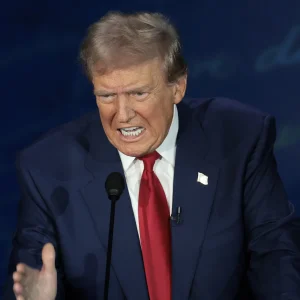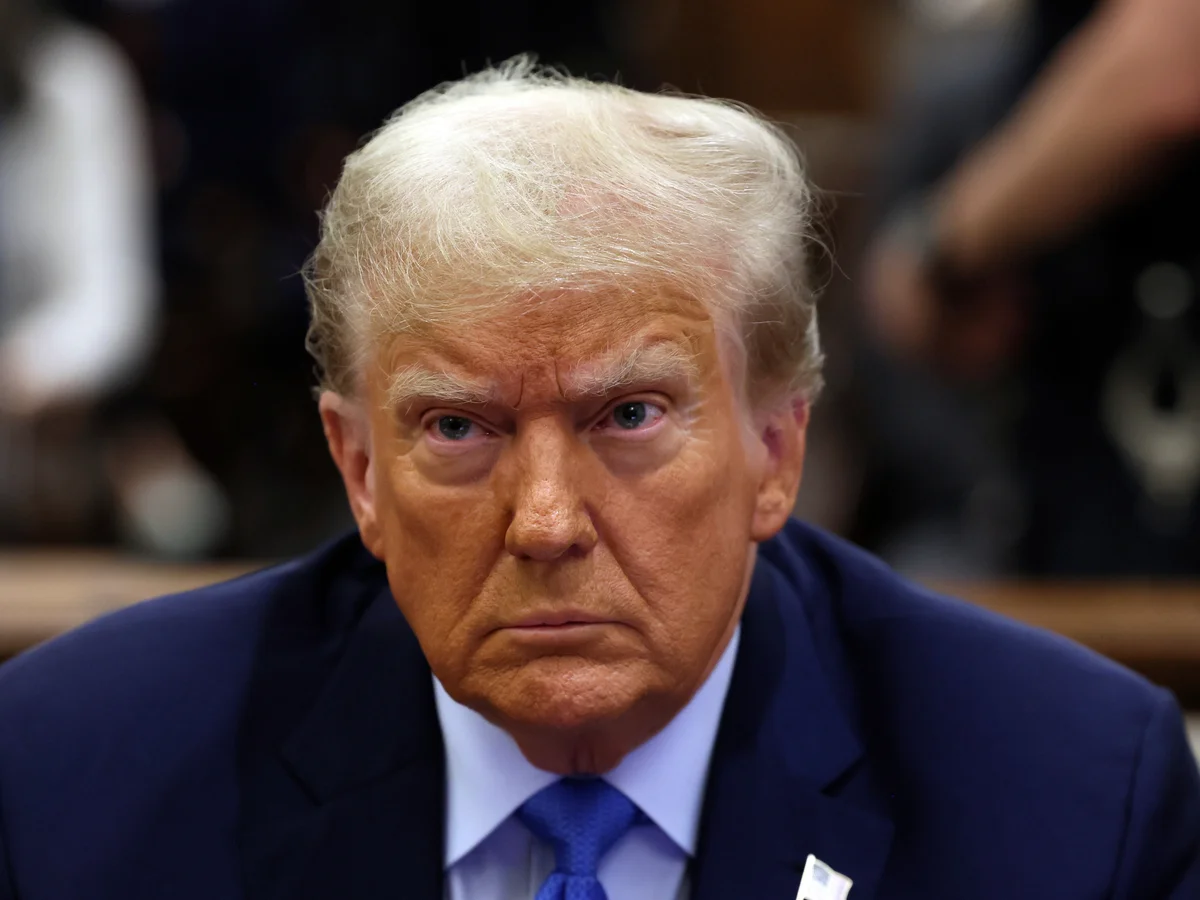
A former CIA covert operations officer has offered a striking new perspective on one of the most unusual geopolitical standoffs of recent years: President Donald Trump’s escalating campaign to bring Greenland under American control. What began as a headline-grabbing idea has evolved into something far more serious, with Trump openly warning that the United States could take the vast Arctic territory “the easy way or the hard way,” leaving the door open to economic coercion—and even military pressure.
Andrew Bustamante, a former U.S. Air Force officer and CIA operative, believes the public narrative barely scratches the surface of what is truly driving Trump’s ambitions. In his view, the push for Greenland is not a whim, a joke, or a publicity stunt. It is a calculated move rooted in Arctic dominance, strategic geography, and access to some of the world’s most valuable untapped resources.
Trump recently intensified tensions with Europe by threatening tariffs against the United Kingdom and seven other European nations unless the United States is allowed to purchase Greenland, which is an autonomous territory governed by Denmark. The response from European leaders was swift and blunt. British Prime Minister Keir Starmer condemned the proposed tariffs as “wrong,” stressing that only Greenland and Denmark “have the right to decide what happens to the territory.”
Trump, however, has refused to retreat. He continues to insist that Greenland is essential to American “national security,” repeating that the island will be obtained “one way or another.” While he has denied that mineral wealth is the driving factor, critics and analysts remain unconvinced.
Bustamante, speaking to Express.co.uk, laid out what he believes is the true strategic calculus behind the White House’s posture.
“American dominance in the Arctic is critical to American primacy,” he said. “And that’s the argument for Greenland.”
From a military standpoint, Greenland’s position between North America and Europe makes it invaluable. It sits at the gateway to the Arctic, providing unmatched vantage points for missile detection systems, early warning radar, and maritime surveillance. As global powers increasingly contest Arctic routes opened by melting ice, control over the region is becoming a defining element of 21st-century power.
But Bustamante argues that geography is only half the story.
“The second argument for Greenland is the importance of American economic independence,” he explained, “in the use of not only strategic critical minerals or rare earth minerals, but also critical minerals.”
Greenland is believed to hold vast deposits of rare earth elements essential for modern technology and advanced weapon systems. These materials are fundamental to everything from smartphones and electric vehicles to missile guidance systems and military hardware. Today, much of the global supply chain for such resources runs through geopolitical rivals, particularly China.
According to Bustamante, Greenland represents a rare opportunity to shift that balance.
“The minerals that are required for economic development, as well as the rare earth minerals that are required for military advancement and weaponisation, both of those exist in Greenland,” he said. “With the benefit of global warming, more and more of Greenland is becoming accessible.”
In other words, climate change is transforming what was once an inhospitable frozen expanse into a strategic treasure trove.
Still, Bustamante is clear on one point: there is no legal framework—by American standards or international law—that would justify seizing Greenland by force.
“There’s no legal precedent for us to take it by force,” he said. “So what does that mean?”
In his view, the answer lies not in invasion, but in influence.
Bustamante believes Washington may attempt to bypass Denmark altogether, working directly with political and economic actors inside Greenland who already favor greater independence. Rather than waging a public diplomatic war, the United States could pursue a quieter strategy: commercial agreements, infrastructure investment, and long-term partnerships that effectively place critical regions of Greenland under American control.
“I think there’s a very real chance that the United States strikes an economic deal with the independent parties in Greenland that already want independence,” he said.
Under such a scenario, the U.S. would gain practical control over strategic sites and resources without formally annexing the territory or fracturing NATO. Denmark would remain technically sovereign, but Washington would wield decisive influence where it matters most.
“So the United States will take control of the parts of Greenland that it wants,” Bustamante said, “and I think it will find a way to do so without undermining NATO.”
He does not, however, expect Denmark to accept such an outcome quietly.
“I don’t see an outcome where Denmark is happy,” he added. “I see an outcome where Greenlanders are happier than their parent country. But it’s a very difficult thing to predict. This is not something that’s just going to be forgotten.”
That uncertainty is part of what makes the situation so volatile. While Bustamante dismisses the idea of a legally justified military takeover, he does not rule out chaos.
“There’s no case for them to break their commitment to NATO by moving aggressively, politically or militarily, against an allied protectorate,” he said. “So it’s a very strange and confusing situation.”
Greenland’s residents have already rejected the notion of becoming part of the United States. Yet Trump’s rhetoric continues to escalate, and his administration has signaled that the issue is far from closed. Earlier this year, Vice President JD Vance visited a U.S. military base on the island, reinforcing the message that Washington views Greenland as strategically indispensable.
Bustamante believes Trump understands how to leverage ambiguity.
“If it doesn’t bleed, it doesn’t lead,” he said, predicting that once commercial agreements are quietly signed, the public will lose interest. “Right now, he has a chance to continue to assert his power—strategic ambiguity—because of his demonstration of power elsewhere. So why not milk that for all it’s worth and make people wonder whether they should just kowtow to his demands in Greenland?”
In that sense, the drama itself becomes a weapon. By keeping allies and rivals guessing, Trump increases pressure without firing a shot. The threat of tariffs, the hint of military action, and the relentless framing of Greenland as a national security imperative all serve to shift the negotiating table in Washington’s favor.
What looks bizarre on the surface, Bustamante suggests, is in fact a long game. Greenland is not about novelty or spectacle. It is about who controls the Arctic, who dominates the next generation of military technology, and who secures the raw materials of future power.
And in that contest, Trump appears determined that the United States will not come in second.

Emily Johnson is a critically acclaimed essayist and novelist known for her thought-provoking works centered on feminism, women’s rights, and modern relationships. Born and raised in Portland, Oregon, Emily grew up with a deep love of books, often spending her afternoons at her local library. She went on to study literature and gender studies at UCLA, where she became deeply involved in activism and began publishing essays in campus journals. Her debut essay collection, Voices Unbound, struck a chord with readers nationwide for its fearless exploration of gender dynamics, identity, and the challenges faced by women in contemporary society. Emily later transitioned into fiction, writing novels that balance compelling storytelling with social commentary. Her protagonists are often strong, multidimensional women navigating love, ambition, and the struggles of everyday life, making her a favorite among readers who crave authentic, relatable narratives. Critics praise her ability to merge personal intimacy with universal themes. Off the page, Emily is an advocate for women in publishing, leading workshops that encourage young female writers to embrace their voices. She lives in Seattle with her partner and two rescue cats, where she continues to write, teach, and inspire a new generation of storytellers.