



The Day the Janitor Fixed More Than Just a Truck
The sound of metal grinding against metal filled the loading dock like a death rattle. The massive semi-truck shuddered once, twice, then fell silent with the finality of a coffin closing.
“That’s it. We’re done.” The driver slammed his door and flicked his cigarette into a puddle, the ember hissing as it died.
Alexander Pavlovich, owner of the largest produce distribution center in the region, stood frozen beside thirteen tons of fresh vegetables that were supposed to be delivered to the supermarket chain in four hours. One missed delivery meant contract penalties. Two meant losing the account entirely. Three meant bankruptcy.
The engine had seized completely.
“Well?” Alexander grabbed the sleeve of the imported mechanic—a heavyset man in an expensive leather jacket whose watch cost more than most people’s cars. “What’s the verdict?”
The mechanic wiped his hands on a pristine rag and shook his head with theatrical sympathy. “Engine’s locked up solid. Electronics are fried too. You’ll need a full tow to my shop. Eight to ten hours minimum, if we’re lucky.”
“Eight to ten hours?” Alexander’s voice cracked with desperation. “Do you understand what’s at stake here? This one delay could destroy twenty years of business!”
The mechanic shrugged with the indifference of a man who charged by the hour regardless of the outcome. The truck drivers shuffled their feet and avoided eye contact. The company’s regular mechanic stared at his shoes, clearly out of his depth.
The tension on the loading dock was suffocating, like the moment before a dam bursts.
That’s when Ivan Nikolayevich walked over.
Everyone knew him. The old man with the broom. Worn canvas jacket, rubber boots, a baseball cap that had seen better decades. He’d been at the warehouse for three years, hauling boxes, sweeping floors, and quietly doing the jobs nobody else wanted. Behind his back, they called him “the eternal janitor” and made jokes about his age.
He stopped beside the open hood, studied the engine for a long moment, then looked at Alexander with calm, weathered eyes.
“Sasha, let me take a look. Might be something simple.”
The silence that followed was broken by snickering.
“Are you serious?” The first truck driver burst into laughter.
“What’s next, grandpa? Gonna fix it with your mop?” the second driver chimed in.
“Maybe he’ll just sweep the engine clean,” the expensive mechanic added with a smirk.
Alexander waved his hand dismissively, his nerves frayed beyond patience. “Ivan Nikolayevich, not now—”
“Give me five minutes,” the old man said quietly, his voice carrying an unexpected authority. “If it doesn’t work, you can go back to laughing.”
Something in his tone made Alexander pause. Maybe it was desperation, maybe it was the absolute certainty in the janitor’s voice, but he found himself nodding.
“Fine. Five minutes.”
What happened next left everyone speechless.
Ivan Nikolayevich carefully set his broom against the wall, removed his jacket, and rolled up his sleeves. His movements as he approached the engine were precise, confident, nothing like the shuffling gait of an aging custodian.
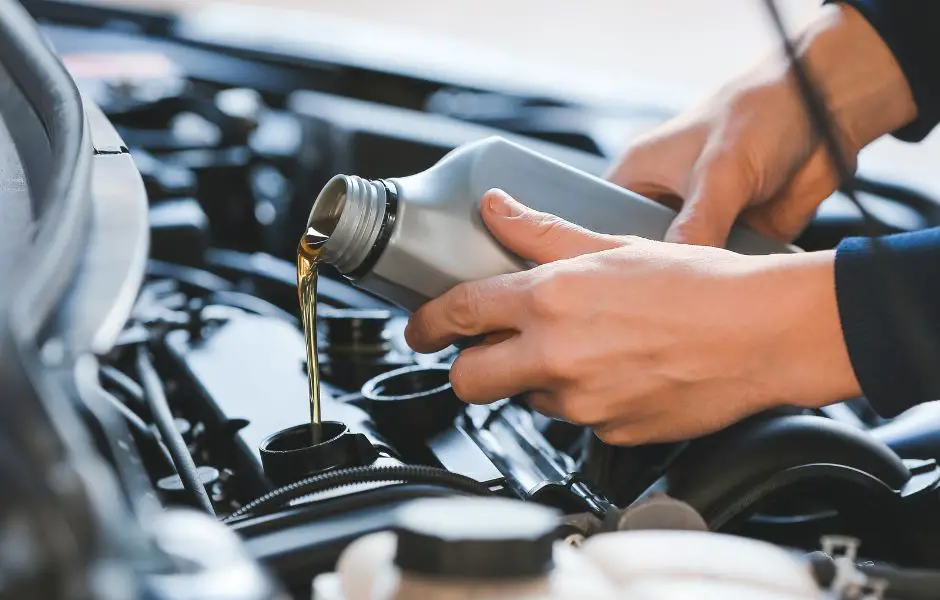
He leaned into the engine bay, his hands moving with the practiced efficiency of someone who knew exactly what he was looking for. He disconnected something, unscrewed something else, asked for a rag, then a screwdriver, then a wrench.
The laughter died. The expensive mechanic frowned and moved closer. The drivers craned their necks, trying to see what the old man was doing. One minute passed. Then two.
Ivan straightened up, wiped his hands on the rag, and said simply, “Start her up.”
“Come on…” someone began to protest.
But the driver climbed into the cab and turned the key. The engine coughed once, then caught. It rumbled to life, smooth and strong, without the grinding death rattle that had silenced it minutes before.
The loading dock fell into complete, stunned silence.
“How… how did you…” the expensive mechanic stammered.
“What did you do?” Alexander whispered.
Ivan Nikolayevich put his jacket back on, picked up his broom, and answered with the same calm tone he’d used all along.
“Corroded connection, faulty sensor. Simple enough, if you know where to look.”
“But how do you know where to look?” one of the drivers asked, his voice small with confusion.
For the first time that day, the old janitor smiled.
“I used to own an auto dealership. Had a service center attached. Ran it for twenty years.” He shrugged as if it was no big deal. “Then my business partners figured out how to forge documents and steal everything I’d built. Left me with nothing but the clothes on my back.”
He paused, looking at the now-purring engine.
“But hands remember what they’ve learned. Skills don’t disappear just because paperwork does.”
The silence stretched as everyone processed what they’d just heard. This man they’d dismissed as a simple janitor had once been a successful businessman. The person they’d mocked and overlooked had just saved Alexander’s company with knowledge they assumed he couldn’t possibly possess.
Ivan turned to walk back toward the warehouse, as if fixing a dead truck engine was just another item on his daily checklist.
“Wait,” Alexander called out. “Ivan Nikolayevich, wait.”
The old man stopped but didn’t turn around.
“Why didn’t you ever tell us? About your background, your experience?”
Ivan looked back over his shoulder, his expression unreadable. “Would it have mattered? You needed a janitor, and I needed work. The rest is just history.”
“But you could have… I mean, with your knowledge, you could have been working in our garage, or as a supervisor, or—”
“Could have, should have, would have,” Ivan interrupted gently. “I learned a long time ago that life doesn’t care about what should happen. It only cares about what you do with what actually happens.”
He started walking again, then paused once more.
“Besides, there’s honor in all honest work. I’ve swept your floors for three years and never once felt ashamed of it. The same hands that once signed million-dollar deals can push a broom or fix an engine. Skills are just tools, Sasha. Character is what matters.”
As he disappeared into the warehouse, the loading dock remained frozen in stunned silence.
The expensive mechanic was the first to speak, his voice hollow. “I… I would have charged you eight thousand rubles for that repair. Minimum.”
“How much did you pay him to fix it?” one of the drivers asked Alexander.
Alexander realized he hadn’t paid Ivan anything. Hadn’t even thought to offer. The man had just saved his business and walked away without asking for so much as a thank you.
“Nothing,” he admitted quietly. “I paid him nothing.”
The shame hit him like a physical blow.
Over the next hour, as the truck was loaded and sent on its way, the story spread through the warehouse like wildfire. The janitor who’d been everybody’s joke had just performed a miracle. The old man they’d dismissed and overlooked had saved jobs, contracts, and the company’s reputation.
Alexander found Ivan in the break room during lunch, eating a simple sandwich and reading a worn paperback novel.
“Ivan Nikolayevich, we need to talk.”
The old man looked up calmly. “About what?”
“About this morning. About what you did. About what you’ve been doing here for three years while we… while I…”
Alexander couldn’t finish the sentence. How do you apologize for three years of blindness? How do you make up for treating a skilled professional like invisible help?
“While you treated me like a janitor?” Ivan supplied gently. “Because that’s what I am. That’s the job I applied for, and that’s the job I’ve been doing.”
“But you’re so much more than that.”
“Am I?” Ivan marked his place in the book and set it down. “Sasha, let me tell you something. I lost everything once—money, business, reputation. I could have spent the last twenty years being bitter about it, or feeling sorry for myself, or demanding that the world recognize my worth.”
He gestured around the modest break room.
“Instead, I decided to find dignity in whatever work I could get. I decided that my value as a person wasn’t tied to my job title or my bank account. I decided that doing any job well was better than doing no job at all.”
Alexander sat down across from him, feeling smaller than he had in years.
“But we wasted your talents. We could have used your experience, your knowledge—”
“Did you?” Ivan interrupted. “Waste my talents, I mean?”
Alexander started to argue, then stopped. “What do you mean?”
“I’ve been watching this company for three years. I’ve seen how things work, where the problems are, what could be improved. I’ve been learning your business from the ground up—something I never did when I owned my own company. I was too busy managing to actually understand.”
Ivan leaned back in his plastic chair.
“Do you know why your truck broke down this morning?”
“Because engines break down?”
“Because nobody’s been doing preventive maintenance. I’ve been watching your drivers, your mechanics. They fix things when they break, but they don’t prevent things from breaking. That truck has been showing signs of electrical problems for weeks.”
Alexander felt another wave of realization wash over him.
“You’ve been studying us.”
“I’ve been learning. There’s a difference.” Ivan picked up his sandwich. “The question is, what do you want to do with what happened today?”
“I want to offer you a position. Head of maintenance, or assistant manager, or—”
Ivan held up his hand. “Stop. Don’t offer me a job because you feel guilty. Don’t promote me because you’re embarrassed about how you treated the janitor. If you have a position that would benefit from my skills, and if you think I’m the right person for that position, then we can talk. But not because you pity the old man with the broom.”
Alexander studied Ivan’s face, seeing intelligence and dignity that had been there all along, hidden behind assumptions and stereotypes.
“What would you want? If I offered you a real position, what would you want?”
Ivan considered the question seriously. “Partnership.”
“What kind of partnership?”
“You have a good business, Sasha, but you’re not thinking big enough. You’re focused on moving produce from point A to point B. But I see opportunities you’re missing.”
Ivan pulled a small notebook from his shirt pocket—the kind of notebook that suggested he’d been taking careful notes for a long time.
“Your drivers waste fuel because their routes aren’t optimized. Your loading dock operates at sixty percent efficiency because nobody’s analyzed the workflow. You’re paying premium prices for maintenance because you don’t have relationships with the right suppliers.”
He flipped through pages covered with neat handwriting.
“And your contracts with the big chains—you’re underselling yourself. You could be handling distribution for three more regions if you had the infrastructure and the confidence to bid properly.”
Alexander stared at the notebook, realizing he was looking at three years of careful observation and analysis.
“You’ve been planning this.”
“I’ve been preparing for an opportunity. Today, you gave me one.”
They talked for two hours. By the end of the conversation, Alexander understood that he hadn’t just discovered a hidden talent—he’d found a potential business partner who understood his industry better than he did.
Six months later, the company had expanded into two new regions. The maintenance program Ivan designed had reduced breakdowns by eighty percent. The route optimization system he developed was saving thousands of rubles in fuel costs every month.
Ivan no longer swept floors, but he kept his broom in his office as a reminder. When new employees asked about it, he would tell them the truth: “It reminds me that all honest work has dignity, and that you never know who you’re talking to until you take the time to really look.”
The expensive mechanic who’d wanted eight thousand rubles for the repair never got another call from Alexander’s company. Word spread through the industry about the janitor who’d diagnosed in five minutes what a certified expert had missed entirely.
People began to wonder what other talents they might be overlooking in the people they barely noticed.
Ivan’s story became legendary in the warehouse district—not as a fairy tale about hidden princes disguised as paupers, but as a reminder that respect costs nothing and assumptions cost everything.
And Alexander learned the most important lesson of his business career: the person pushing the broom might be the one who knows how to build the castle.
The last time anyone laughed at Ivan Nikolayevich, it was because he’d told an excellent joke at the company Christmas party—not because they thought he was one.
Sometimes the best education comes from the people you least expect to teach you anything at all.

Sarah Mitchell is a bestselling novelist recognized for her insightful and emotionally resonant stories that explore the complexities of human relationships. Originally from Denver, Colorado, Sarah grew up in a family of teachers who nurtured her curiosity and love for storytelling. She studied psychology at Stanford University, where she became fascinated by the intricacies of human behavior—an interest that would later shape her writing career. Sarah’s novels are praised for their nuanced characters, intricate plots, and ability to capture the subtle tensions that define love, friendship, and family ties. Her breakthrough novel, The Spaces Between Us, became an instant bestseller, lauded for its honest portrayal of strained family relationships and the fragile bonds that hold people together. Since then, she has published several works that continue to captivate audiences around the world. Outside of her writing career, Sarah is passionate about mental health advocacy and often partners with organizations to promote awareness and support for those struggling with emotional well-being. Her personal life is quieter—she enjoys hiking in the Colorado mountains, practicing yoga, and spending time with close friends. With each new book, Sarah Mitchell cements her reputation as a writer who illuminates the beauty and struggles of human connection.