


A newly released incident report from the Minneapolis Fire Department has provided stark details about the injuries sustained by Renee Nicole Good after she was shot by an Immigration and Customs Enforcement agent earlier this month, shedding new light on the final moments of the 37-year-old mother-of-three.
Good was fatally wounded on January 7 during a confrontation involving federal immigration officers in a residential area of Minneapolis. The Trump administration initially described Good as a “domestic terrorist,” claiming she posed an imminent threat to the ICE agent who fired the shots. Officials alleged that she was attempting to kill the officer, identified as Jonathan Ross.
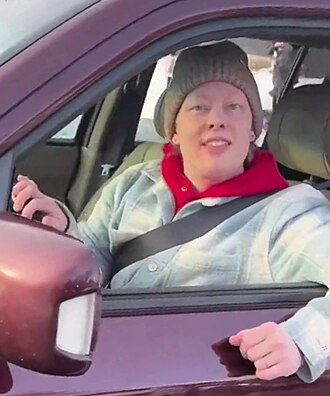
However, recently released video footage appears to challenge that account. The recording shows Good seated behind the wheel of her vehicle, attempting to drive away from the scene as Ross fires three shots into the car. The images have fueled widespread public outrage and intensified scrutiny of the federal government’s version of events.
According to the Minneapolis Fire Department report, obtained by local media, Good was struck in the chest, arm, and head. Paramedics arriving at the scene found her unresponsive inside her vehicle, with visible blood on her face and torso. The report notes that she was not breathing and had an “irregular pulse” when first assessed.
Fire personnel removed Good from the car and placed her on the sidewalk in order to “gain separation from an escalating scene involving law enforcement and bystanders.” The document states that the area had become volatile, with growing tension between federal officers and members of the public who had gathered nearby.
Emergency responders began life-saving measures immediately. CPR was administered as Good was transported toward the hospital. Despite these efforts, she remained pulseless and unresponsive. Resuscitation attempts were discontinued at 10:30 a.m., approximately 48 minutes after paramedics first reached her.
Transcripts from emergency calls provide additional insight into the chaos of the scene. One 911 caller can be heard telling dispatchers, “They shot her because she wouldn’t open her car door.” The caller repeatedly pleaded, “Send an ambulance please, ambulance please.”
The details contained in the report have deepened public concern and amplified calls for accountability. Civil rights advocates and community leaders argue that the medical findings contradict the narrative that Good posed an immediate, lethal threat.
Good’s family has continued to speak out in the days following her death, describing a woman defined not by confrontation, but by compassion and warmth. In a letter shared publicly, her loved ones expressed gratitude for the outpouring of support and described her as “the beautiful light of our family.”
“We want to thank everyone who has reached out in support of Renee and our family,” the letter reads. “The kind of unending care we’ve been given during this time is exactly the kind that she gave to everyone. Nae was the beautiful light of our family and brought joy to anyone she met. She was relentlessly hopeful and optimistic, which was contagious. We all already miss her more than words could ever express.”
On the morning of the shooting, Good had followed a routine familiar to countless families. She and her wife, Becca Good, dropped off their six-year-old child at school. Their dog was in the back seat as they drove back through their neighborhood.
Along the way, the couple noticed an ICE operation unfolding nearby. According to the family’s attorney, they stopped “to observe, with the intention of supporting and helping their neighbors.” What began as a moment of concern and curiosity quickly escalated into a fatal encounter.
Cellphone footage captured part of the interaction between Good and the agent. In the video, she can be heard telling him, “That’s fine, dude. I’m not mad at you.” Moments later, as another officer approached her vehicle, she attempted to drive away. It was then that Ross fired the shots that ended her life.
The incident has become a flashpoint in Minneapolis, igniting days of protests and drawing national attention. Demonstrations have taken place near the site of the shooting and outside federal buildings, with residents demanding answers and accountability.
Just two blocks from where Good was killed, another confrontation unfolded during a protest, with video appearing to show a woman being forcibly dragged away by ICE agents. The scenes have further inflamed tensions and reinforced perceptions that the city has become ground zero in a broader national struggle over immigration enforcement and federal authority.
Local officials have acknowledged the strain on the community. Minneapolis residents have described an atmosphere of fear and uncertainty, particularly in neighborhoods where ICE operations continue. For many, Good’s death symbolizes a sense that ordinary people can become collateral damage in an aggressive enforcement campaign.
Attorneys representing Good’s family have announced plans to pursue an independent investigation into the shooting and to seek legal action against the federal government. They argue that her death raises profound questions about use of force, accountability, and the rules governing federal agents operating in civilian neighborhoods.
The Department of Justice has so far declined to open a formal federal inquiry, stating that it found “no basis” to do so. That decision has been sharply criticized and reportedly prompted several federal prosecutors to resign in protest.
As the city grapples with the aftermath, the fire department report stands as a clinical, unemotional record of what happened after the gunshots faded. Its language is measured, but its implications are devastating: a mother found unresponsive in her car, bloodied, not breathing, with life slipping away despite urgent medical intervention.
For Good’s family, the document confirms what they already know—that her final moments were violent, chaotic, and irreversible. For the public, it adds weight to growing doubts about the official story and reinforces demands for transparency.
Renee Nicole Good’s death has become more than a single tragic incident. It has evolved into a symbol of a nation wrestling with questions about power, protest, and the human cost of policy. As investigations unfold and demonstrations continue, her name remains at the center of a debate that shows no sign of fading.

Emily Johnson is a critically acclaimed essayist and novelist known for her thought-provoking works centered on feminism, women’s rights, and modern relationships. Born and raised in Portland, Oregon, Emily grew up with a deep love of books, often spending her afternoons at her local library. She went on to study literature and gender studies at UCLA, where she became deeply involved in activism and began publishing essays in campus journals. Her debut essay collection, Voices Unbound, struck a chord with readers nationwide for its fearless exploration of gender dynamics, identity, and the challenges faced by women in contemporary society. Emily later transitioned into fiction, writing novels that balance compelling storytelling with social commentary. Her protagonists are often strong, multidimensional women navigating love, ambition, and the struggles of everyday life, making her a favorite among readers who crave authentic, relatable narratives. Critics praise her ability to merge personal intimacy with universal themes. Off the page, Emily is an advocate for women in publishing, leading workshops that encourage young female writers to embrace their voices. She lives in Seattle with her partner and two rescue cats, where she continues to write, teach, and inspire a new generation of storytellers.