
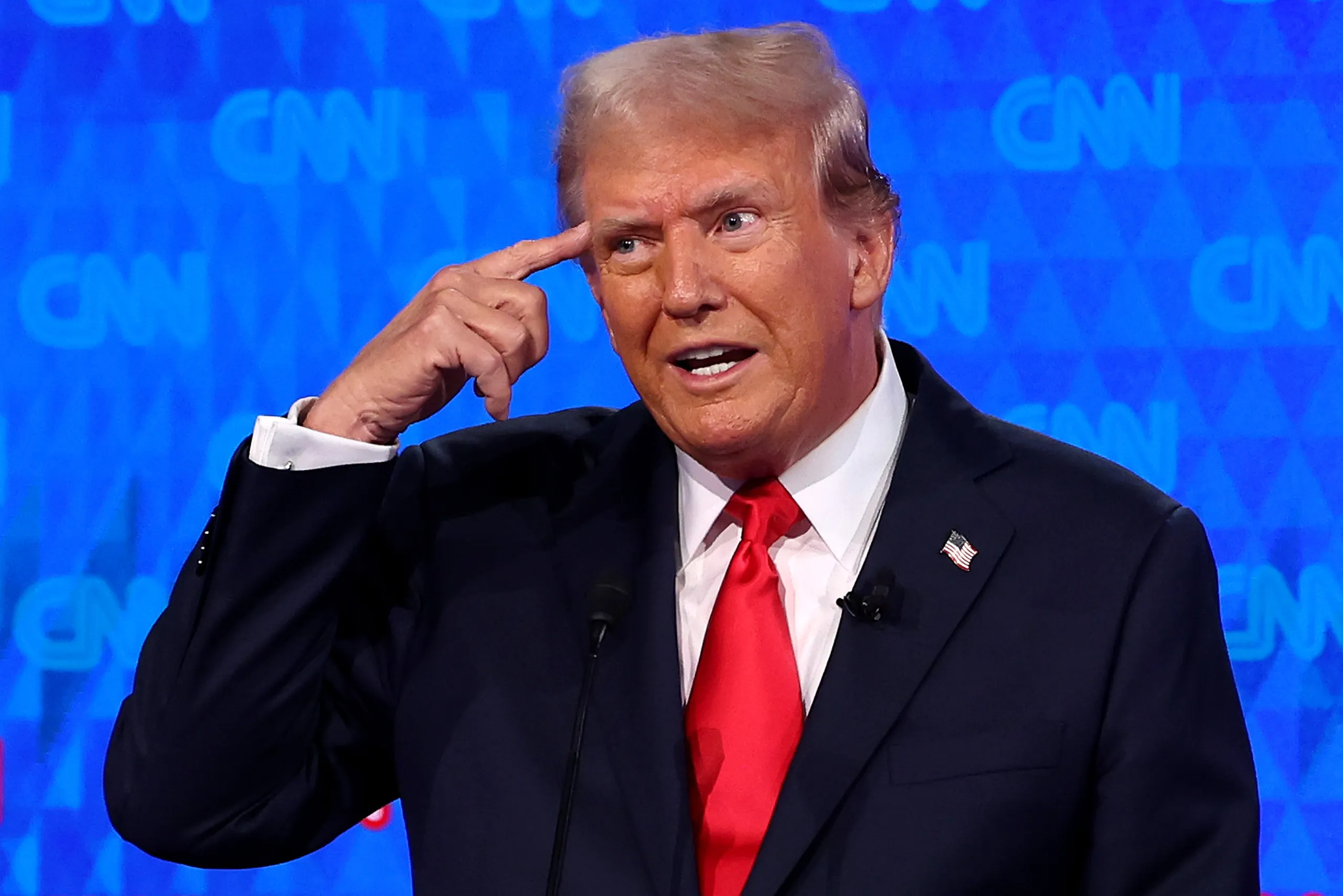
A prominent medical expert has claimed that former President Donald Trump, 79, may have suffered a stroke several months ago, raising questions about the 45th president’s health during his second term. The assertion was made by Professor Bruce Davidson of Washington State University’s Elson S. Floyd College of Medicine during a podcast discussion with historian Sean Wilentz and biographer Sidney Blumenthal.
Davidson outlined what he described as “lines of evidence supportive” of a stroke, suggesting that it occurred on the left side of the brain, which controls movement on the right side of the body. “I think the stroke was six months ago or more, earlier in 2025,” he said, citing videos that show Trump shuffling his feet, holding his right hand with his left, and temporarily garbling words—behaviors that were reportedly uncharacteristic prior to that period.
He also noted episodes of excessive daytime sleepiness, medically referred to as hypersomnolence, which is common among stroke patients. Davidson cited several public appearances in which Trump appeared to nod off, including events at the White House. He also referenced footage showing Trump carefully descending the steps of Air Force One while gripping the banister with his left hand, despite being right-handed—a possible sign of post-stroke motor adjustments.
While Davidson did not specify the exact type of stroke, he emphasized that if his assessment is correct, Trump appears to have made significant recovery, although behavioral changes post-stroke may have influenced his decision-making and temperament. Davidson suggested that post-stroke behavioral shifts could explain Trump’s erratic and aggressive governing style during this period, noting that individuals who survive a severe medical event may act with renewed urgency or euphoria. “It’s a very serious, concerning, life-threatening, upsetting, scary event, and people react in different ways,” Davidson stated. “Some respond with humility, others become euphoric, and some decide to act as if they’ve been given a second chance.”
Concerns and Observations
Speculation about Trump’s mental and physical health has circulated for months, especially as he approaches a historic age for a U.S. president. Observers have noted:
-
Visible bruises on his hands, which some attributed to frequent handshakes combined with daily aspirin use.
-
Swollen lower legs, a symptom of chronic venous insufficiency officially acknowledged by the White House in July 2024.
-
Occasional drooping of the face during public appearances, which has fueled speculation about neurological events.
Davidson’s claims reference these signs as potential indicators of a stroke, though no official medical confirmation has been provided outside the president’s medical team.
White House Response
The White House, through Press Secretary Karoline Leavitt, strongly rejected any suggestion that Trump’s health was compromised. Leavitt stated, “As the President’s physician, Dr. Sean Barbabella, has made clear time and again—and as the American people see with their own eyes every single day—President Trump remains in excellent overall health.”
She further framed the reports as politically motivated, contrasting coverage of Trump with what she called “the failing legacy media” coverage of President Joe Biden’s health, and emphasized Trump’s work ethic, energy, and accessibility as evidence of his well-being.
Context
Trump, now 79, is on track to become the oldest president in U.S. history, and health considerations have taken on renewed significance in light of his public appearances and continued political activity. Davidson’s assessment, if verified, would indicate that Trump faced a serious medical event during 2025, yet continued to perform presidential duties while recovering.
The situation underscores the ongoing tension between public speculation, political narrative, and verified medical information in evaluating the health of prominent political figures.

Emily Johnson is a critically acclaimed essayist and novelist known for her thought-provoking works centered on feminism, women’s rights, and modern relationships. Born and raised in Portland, Oregon, Emily grew up with a deep love of books, often spending her afternoons at her local library. She went on to study literature and gender studies at UCLA, where she became deeply involved in activism and began publishing essays in campus journals. Her debut essay collection, Voices Unbound, struck a chord with readers nationwide for its fearless exploration of gender dynamics, identity, and the challenges faced by women in contemporary society. Emily later transitioned into fiction, writing novels that balance compelling storytelling with social commentary. Her protagonists are often strong, multidimensional women navigating love, ambition, and the struggles of everyday life, making her a favorite among readers who crave authentic, relatable narratives. Critics praise her ability to merge personal intimacy with universal themes. Off the page, Emily is an advocate for women in publishing, leading workshops that encourage young female writers to embrace their voices. She lives in Seattle with her partner and two rescue cats, where she continues to write, teach, and inspire a new generation of storytellers.