


Minnesota’s highest-ranking Republican in Congress has called for Governor Tim Walz to step down, accusing him of failing to maintain public order as Minneapolis remains engulfed in unrest following two Immigration and Customs Enforcement–related shootings in less than a week.
House Majority Whip Tom Emmer, the third-ranking Republican in the House and the most senior Minnesotan in Congress, issued a forceful statement on Thursday demanding Walz’s immediate resignation. His remarks came as demonstrations continued to escalate across the city, with protesters clashing nightly with federal agents deployed as part of President Donald Trump’s immigration crackdown.
“The scenes of destruction and damage taking place in Minneapolis are abhorrent. This violence cannot be tolerated,” Emmer said. “Tim Walz should resign, effective immediately. The safety of Minnesotans depends on it.”
At the center of the crisis is the fatal shooting of 37-year-old Renee Nicole Good, a Minneapolis mother who was killed earlier this month during an encounter with ICE officers. The incident has become a national flashpoint, transforming a local tragedy into a defining moment in the debate over immigration enforcement, federal authority, and the use of force.
Republicans argue that the ICE agent who shot Good acted in self-defense, maintaining that she struck him with her vehicle while attempting to interfere with enforcement operations. They describe the shooting as the tragic consequence of a dangerous situation created by protesters who sought to obstruct federal officers.
Democrats and activists, however, present a sharply different narrative. They contend that video footage shows Good attempting to comply with officers’ demands to leave the area when she was shot. In their view, the killing exemplifies what they describe as an increasingly aggressive posture by federal agents operating in civilian neighborhoods.
The divide widened further this week after a second ICE-related shooting in Minneapolis, in which another agent allegedly shot a man in the leg during an arrest attempt. Though the injury was reported as non-life-threatening, the incident poured fuel on an already smoldering fire.
For many residents, the two shootings in rapid succession reinforced fears that federal operations have become reckless and unpredictable. For Republicans, they underscored what they see as the dangers faced by officers attempting to do their jobs in an environment shaped by resistance and hostility.
Night after night, protesters have filled the streets. Demonstrators have used horns, whistles, and chants to disrupt operations, while federal officers have responded with tear gas, pepper balls, and crowd-control tactics. Fires and fireworks have been reported near protest sites. Streets have been blocked, and traffic diverted. Businesses in affected areas have closed early, while residents brace for further unrest.
Emmer placed responsibility squarely on Walz and other state leaders, accusing them of enabling chaos through permissive policies and inflammatory rhetoric.
“Unfortunately, our state leaders’ inaction and support of these violent riots are failing every Minnesotan and putting law enforcement’s lives at risk,” he said. “It’s past time for Gov. Tim Walz to take accountability for his sanctuary-state policies that got us here in the first place and lower the temperature. But last night’s embarrassing and inflammatory speech once again proved he is incapable of leading.”
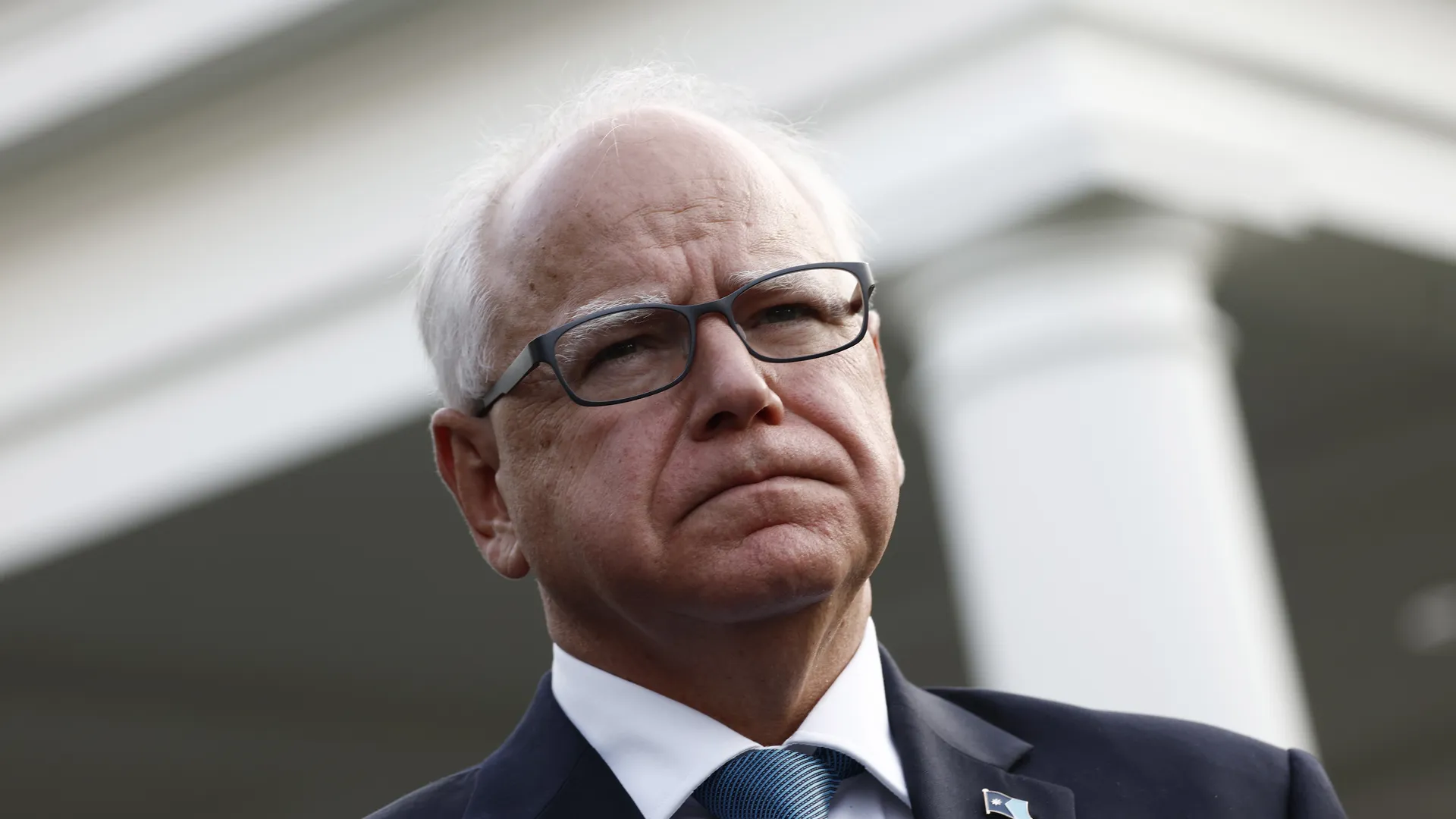
Walz, a Democrat and former congressman, delivered a televised address on Wednesday evening in which he sharply criticized the Trump administration’s approach. He accused the federal government of deliberately escalating tensions and turning Minnesota into a testing ground for a more aggressive national agenda.
“The federal government is raining down upon our communities,” Walz said. “As bad as it’s been, Donald Trump intends for it to get worse. This week, he went online to promise that the day of retribution and reckoning is coming. That’s a direct threat against the people of this state who dared to vote against him—three times—and who continue to stand up for freedom with courage and empathy and profound grace.”
To supporters, Walz’s remarks reflected moral clarity in the face of what they view as federal overreach. Progressive activists praised him for defending Minnesota communities and refusing to remain silent as agents conduct raids in residential neighborhoods.
To Republicans, the speech epitomized what they see as reckless leadership. They argue that Walz’s language encourages defiance, undermines law enforcement, and deepens the divide between state and federal authorities at a moment when cooperation is essential.
The confrontation has transformed Minneapolis into a symbolic battleground in the national culture war over immigration. For the Trump administration and its allies, the city represents what happens when local leaders adopt sanctuary-style policies and fail to support federal enforcement. For Democrats, it has become a case study in the human cost of aggressive immigration tactics and the dangers of militarizing routine operations.
Emmer’s demand for Walz’s resignation marks a significant escalation. While calls for governors to step aside are not unprecedented in moments of crisis, they are rare and typically reserved for scandals or catastrophic failures. By invoking resignation, Emmer signaled that Republicans see the situation not as a temporary disturbance but as evidence of fundamental incompetence.
Walz has shown no indication that he intends to step down. His office has defended his handling of the situation, emphasizing the need to protect public safety while respecting constitutional rights. Allies argue that the governor is attempting to navigate an impossible terrain: balancing public anger, federal authority, and the risk of further violence.
Behind the political theater lies a city on edge. Minneapolis residents find themselves caught between nightly protests and heavily armed federal agents. Some neighborhoods report the constant thump of helicopters overhead. Parents worry about sending children to school amid uncertainty. Small business owners fear further damage or looting. Many simply want stability.
Community leaders have called for de-escalation, urging protesters to remain peaceful and authorities to exercise restraint. Yet each new development seems to raise the temperature. Social media amplifies every confrontation. Rumors spread rapidly. Each side accuses the other of provocation.
The broader implications extend far beyond Minnesota. Trump has framed the unrest as proof that stronger measures are needed nationwide. His supporters argue that resistance to ICE undermines the rule of law. Critics warn that deploying federal agents into volatile situations without clear coordination invites tragedy.
The Minneapolis crisis has also reignited debates over the limits of executive power. Walz’s allies contend that states should not be compelled to serve as staging grounds for federal crackdowns that put residents at risk. Republicans counter that federal law supersedes local preferences and that obstruction cannot be tolerated.
As the standoff continues, both sides appear entrenched. Emmer and other Republicans continue to hammer Walz, portraying him as weak and ideologically driven. Walz and his supporters frame the unrest as the product of federal provocation, not state failure.
What remains uncertain is how long the city can endure this level of tension. Each night of unrest deepens fatigue and fear. Each new incident risks tipping the situation from volatile to unmanageable.
For now, Minneapolis stands at the center of a national struggle over power, policy, and identity. Emmer’s demand that Walz resign may not succeed, but it captures the intensity of a moment when tragedy, politics, and public anger have converged. Whether leaders at every level can defuse the crisis—or whether it will continue to spiral—may determine not only the future of Minnesota’s governor, but the direction of the country’s immigration debate itself.

Emily Johnson is a critically acclaimed essayist and novelist known for her thought-provoking works centered on feminism, women’s rights, and modern relationships. Born and raised in Portland, Oregon, Emily grew up with a deep love of books, often spending her afternoons at her local library. She went on to study literature and gender studies at UCLA, where she became deeply involved in activism and began publishing essays in campus journals. Her debut essay collection, Voices Unbound, struck a chord with readers nationwide for its fearless exploration of gender dynamics, identity, and the challenges faced by women in contemporary society. Emily later transitioned into fiction, writing novels that balance compelling storytelling with social commentary. Her protagonists are often strong, multidimensional women navigating love, ambition, and the struggles of everyday life, making her a favorite among readers who crave authentic, relatable narratives. Critics praise her ability to merge personal intimacy with universal themes. Off the page, Emily is an advocate for women in publishing, leading workshops that encourage young female writers to embrace their voices. She lives in Seattle with her partner and two rescue cats, where she continues to write, teach, and inspire a new generation of storytellers.