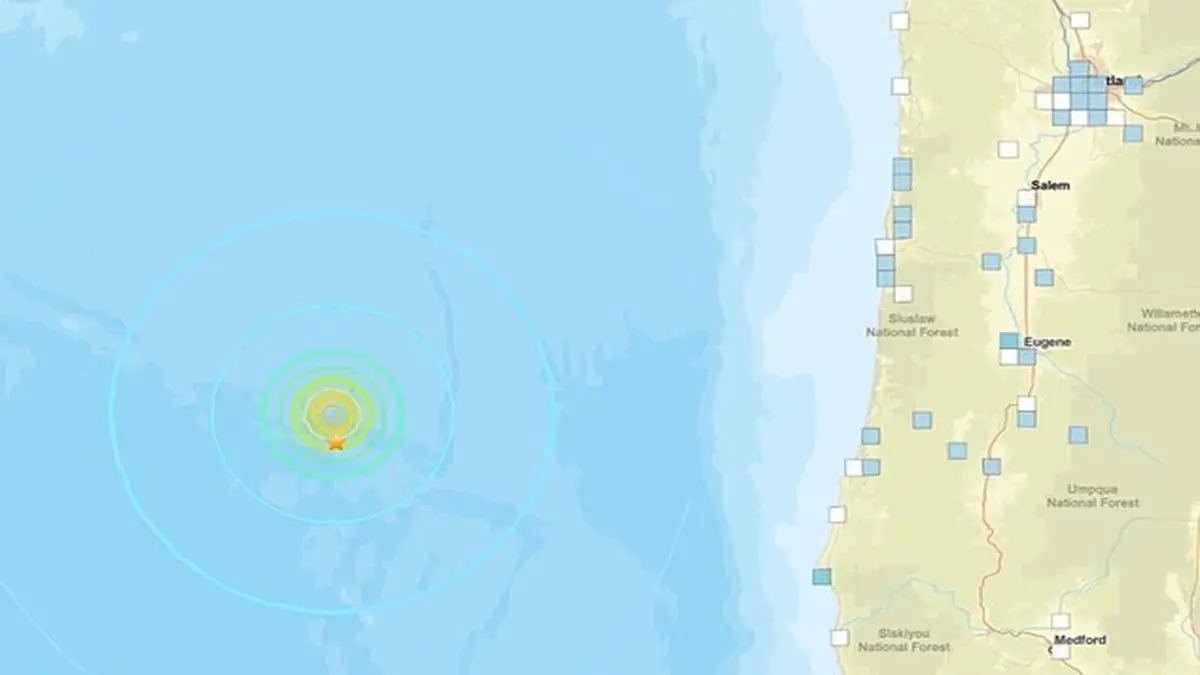
A significant seismic event struck the West Coast late Thursday evening, sending tremors across a broad swath of the Pacific Northwest and prompting widespread attention from scientists, emergency managers, and residents alike. The earthquake was powerful enough to be detected by instruments throughout the region, and its effects were felt—at least indirectly—by communities inland, even though the epicenter lay far offshore.
Officials with seismic monitoring networks said that the initial reports of the jolt began coming in shortly after locals felt the ground shake and some coastal residents reported swaying structures. In the hours that followed, data from monitoring stations confirmed that a strong earthquake had occurred without immediate signs of damage or casualties.
The quake highlights the constant movement beneath the surface of the North American tectonic plate and underscores how a complex network of faults beneath the Pacific Ocean can impact life along the West Coast. Though residents did not experience dramatic devastation, experts are reminding the public that such events are reminders of the region’s active seismic hazards and the importance of preparedness.
What Happened and Where
Initial seismic reports indicated that a large earthquake took place late Thursday, with monitoring stations registering waves from a remote area of the Pacific Ocean off the West Coast. The event occurred well offshore, situated far to the west of the Oregon and Washington shoreline, in a region known for frequent but usually less intense seismic activity.
Though the location was distant from major population centers, the energy released was sufficient to produce measurable ground motion in coastal areas and be recorded on instruments maintained by scientists across the country. Early estimates placed the earthquake’s depth at roughly 10 kilometers (about 6.2 miles) beneath the ocean floor — a relatively shallow focus that often causes stronger surface shaking compared with deeper events.
In the hours after the event, monitoring agencies around the nation worked to analyze the data and issue statements about potential impacts. At first, many residents along the Pacific Northwest coast reported feeling subtle vibrations or heard low rumbles but no major damage was immediately evident. Emergency services in coastal regions alerted residents to stay aware but noted that the distance from land likely reduced potential impacts on shore.
The Earthquake’s Strength and Measurement
Scientists characterize earthquakes by a scale that measures the amount of energy released, and in this case, the readings indicated a magnitude of approximately 6.0 to 6.2, an intensity that is considered strong but not typically catastrophic. This magnitude level reflects significant seismic energy, capable of producing noticeable shaking in nearby regions — and potentially minor effects kilometers from the epicenter — but generally not the level of destruction associated with higher magnitudes.
The United States Geological Survey (USGS) confirms that the intense waves originated several hundred miles offshore, well past major coastal cities and communities. Because of that position, conditions on land were not expected to deteriorate drastically, and early assessments suggested minimal risk of damage from this specific quake.
Identity of the Event and Geological Context
The seismic event now identified as a magnitude 6.0 earthquake occurred off the coast of Oregon, with data confirming its location roughly 183 miles west of the small coastal city of Bandon. That places the epicenter in deep ocean waters, where tectonic forces associated with the complex interplay between the Pacific, Juan de Fuca, and North American plates regularly produce stress and movement beneath the seabed.
Geological studies show that the West Coast of the United States lies near the Cascadia Subduction Zone, a major fault where the Juan de Fuca plate slides beneath the continental crust. This zone has produced significant earthquakes in the past, ranging from moderate offshore shocks to massive events that have historically reshaped coastal landscapes. While most quakes in this offshore region are moderate and do not affect communities on land directly, scientists pay close attention because they can be indicators of stress release in a tectonically active area.
Unlike the rare larger earthquakes that cause widespread destruction, this particular event did not trigger immediate tsunami warnings and did not produce surface ruptures. Officials from the National Tsunami Warning Center clarified that no tsunami advisory was issued following the event, reflecting confidence that the quake’s characteristics did not meet the thresholds for generating dangerous ocean waves.
Why Offshore Earthquakes Matter
Even when an earthquake occurs far from shore, the shaking can be a powerful reminder of the dynamic nature of Earth’s crust. Seismologists study offshore quakes to understand fault behavior, identify patterns over time, and update hazard models that inform building codes and emergency planning. Questions about how often large offshore quakes might occur, and what they might signal regarding seismic readiness, are important for scientists and government planners.
Emergency management officials also emphasize the importance of preparedness even when a big quake does not cause immediate harm. Simple measures — such as securing heavy furniture, having an emergency communication plan, and assembling a basic supply kit — can dramatically improve safety when stronger quakes occur closer to land. Though this recent event was offshore and did not produce heavy shaking inland, authorities say it offers a useful reminder for residents throughout the West Coast.
Local and Regional Response
Following the quake, local authorities in coastal and inland regions shared information with the public to help clarify what had happened and what to watch for in the days ahead. Emergency services encouraged people to check in on neighbors, particularly older residents and those with limited mobility, to ensure everyone was aware of what to do if aftershocks occurred.
Some residents reported feeling mild shaking, particularly in areas facing the ocean, and social media posts showed locals comparing notes about what they sensed in their homes or workspaces. Videos captured by residents near coastal highways and towns showed brief swaying of light fixtures and shaking windows immediately after the quake’s estimated origin time. Those experiences, while unsettling for some, did not correspond to reports of structural damage from authorities.
Engineers and building inspectors also reminded the public that modern construction standards in earthquake-prone regions are designed to withstand moderate quakes, and that the materials and design practices used in many communities help reduce the risk of catastrophic failures under moderate shaking.
The Science of Aftershocks
Large earthquakes are often followed by smaller events known as aftershocks, and while not every quake produces them, scientists said they would be monitoring the likelihood of additional tremors in the hours and days after the main event. Aftershocks can provide scientists with important data about how stress redistributes along fault lines following a major slip and can sometimes affect public perception of seismic risk.
Monitoring agencies also stressed that individual experiences of shaking can vary greatly depending on local geology, soil types, and structural characteristics of buildings. For example, soft soils can amplify shaking, making it feel stronger in some neighborhoods compared to adjacent areas built on more solid ground.
Historical Context of West Coast Seismicity
This part of the West Coast has a history of seismic activity, and although the recent offshore quake was significant, it is not unprecedented. Earthquakes of similar strength have occurred in the Pacific Northwest before, and mild to moderate shaking occurs every year without major harm. In 1993, a pair of magnitude 6.0 earthquakes struck inland Oregon, causing damage and even fatalities at that time.
While the science of earthquakes continues to evolve, researchers have long noted that the Pacific Northwest is subject to both crustal quakes — like this offshore event — and potentially larger subduction zone quakes that could have more serious impacts on populated areas. For now, the evidence suggests that most offshore quakes — including the recent one — are part of a long-term pattern of regular seismic release.
What Residents Need to Know
Though the recent earthquake did not trigger a tsunami or cause widespread destruction, it should not be interpreted as a reason to become complacent. Experts recommend that residents throughout the West Coast remain familiar with earthquake preparedness plans, including:
-
Knowing safe places to take shelter during shaking
-
Keeping an emergency kit stocked with food, water, and medical supplies
-
Reviewing family communication plans
-
Understanding how to turn off utilities like gas and electricity if necessary
Preparedness can make a significant difference when quakes occur nearer to land or in more populated areas.
Conclusion
A powerful earthquake off the West Coast has reminded residents and officials that seismic events are an ongoing reality in the Pacific Northwest. Although the magnitude 6.0 tremor occurred far offshore and posed no immediate threat of tsunami or major damage, it served as a stark reminder of the geological forces at work beneath the ocean and the importance of staying prepared. With modern monitoring and emergency planning, communities are better equipped than ever to understand and respond to earthquakes — even those that occur far out at sea.

Emily Johnson is a critically acclaimed essayist and novelist known for her thought-provoking works centered on feminism, women’s rights, and modern relationships. Born and raised in Portland, Oregon, Emily grew up with a deep love of books, often spending her afternoons at her local library. She went on to study literature and gender studies at UCLA, where she became deeply involved in activism and began publishing essays in campus journals. Her debut essay collection, Voices Unbound, struck a chord with readers nationwide for its fearless exploration of gender dynamics, identity, and the challenges faced by women in contemporary society. Emily later transitioned into fiction, writing novels that balance compelling storytelling with social commentary. Her protagonists are often strong, multidimensional women navigating love, ambition, and the struggles of everyday life, making her a favorite among readers who crave authentic, relatable narratives. Critics praise her ability to merge personal intimacy with universal themes. Off the page, Emily is an advocate for women in publishing, leading workshops that encourage young female writers to embrace their voices. She lives in Seattle with her partner and two rescue cats, where she continues to write, teach, and inspire a new generation of storytellers.