


Federal officials have disclosed new details about the injuries sustained by the Immigration and Customs Enforcement agent involved in a deadly confrontation in Minneapolis earlier this month, a development that has reignited national debate over the incident, the government’s narrative, and the broader role of federal enforcement operations in American cities.
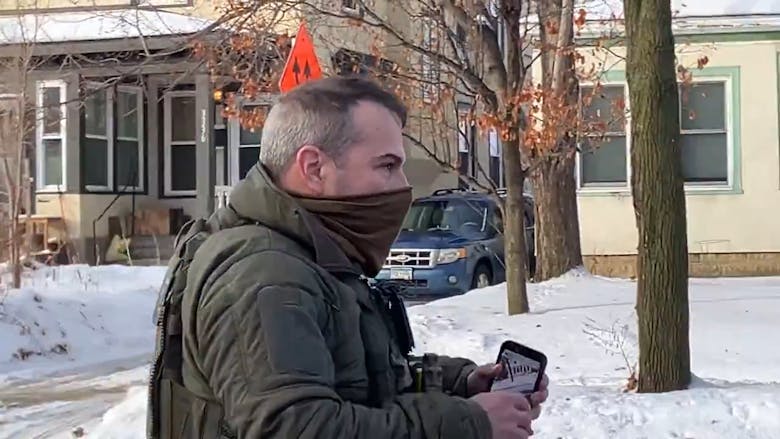
The agent, identified as Jonathan Ross, was part of a team conducting immigration-related raids in a residential neighborhood when chaos erupted. Video footage circulating online shows a woman seated in a vehicle as federal officers attempt to clear protesters from the street. Moments later, gunfire can be heard. The woman was struck multiple times and later died at the scene.
In the days following the shooting, federal authorities asserted that Ross acted in self-defense, claiming the driver had “weaponized” her vehicle and attempted to strike officers. Administration officials characterized the encounter as a life-or-death moment for the agent, framing the shooting as justified under federal use-of-force guidelines.
Until now, however, the precise nature of Ross’s injuries had not been made public.
According to two U.S. officials briefed on his medical condition, Ross suffered internal bleeding in his torso following the incident. The officials said the injury was consistent with being struck by a vehicle, though they declined to specify the severity of the bleeding or provide medical documentation. The Department of Homeland Security has confirmed only that Ross was injured and required medical treatment.
Kristi Noem, the secretary of Homeland Security, previously stated that the agent was hospitalized after the shooting but released later the same day. Ross has not yet returned to active duty. Officials have not said whether his absence is due to physical recovery, administrative review, or the ongoing investigation into the shooting.
The revelation of internal bleeding appears intended to bolster the government’s position that Ross faced imminent danger. Yet the disclosure has done little to quell public skepticism. Critics argue that video footage does not clearly show the agent being struck and that the government’s evolving narrative raises more questions than it answers.
Minneapolis Mayor Jacob Frey has openly challenged federal claims, describing the official account as misleading and calling for an independent review of the incident. “People deserve the truth,” Frey said in a recent interview. “What we have seen does not line up with what we have been told.”
Across Minneapolis and beyond, the shooting has become a flashpoint. Protests erupted within hours, drawing thousands into the streets. Demonstrators have demanded transparency, accountability, and an end to aggressive immigration enforcement tactics in residential neighborhoods. Chants of “Justice” and “Shut down ICE” have echoed through downtown corridors and outside federal buildings.
Civil rights groups argue that the lack of immediate, clear evidence undermines the government’s justification for lethal force. They note that internal bleeding, while serious, does not automatically establish that a vehicle was intentionally used as a weapon. Medical injury alone, they say, cannot substitute for a transparent reconstruction of events.
Supporters of federal enforcement counter that agents operating in volatile environments must make split-second decisions. They argue that even the perception of an oncoming vehicle can constitute a deadly threat. For them, the agent’s injuries reinforce the danger faced by officers tasked with carrying out federal law.
The woman at the center of the controversy has since become a symbol for many who oppose the administration’s immigration policies. In the middle of the unfolding national debate, her identity emerged not merely as a name, but as a story that resonated far beyond Minneapolis.
Renee Nicole Good was a 37-year-old mother of three, a poet, and a community volunteer. She had dropped her six-year-old son at school just hours before the confrontation. Her wife, Rebecca, described her as “pure love” and “pure sunshine,” someone who believed deeply in kindness and human connection.
“She literally sparkled,” Rebecca said. “Renee lived by an overarching belief that there is kindness in the world and we need to do everything we can to find it where it resides and nurture it where it needs to grow.”
Those who knew her say she was deeply engaged in her community, committed to social justice, and guided by her Christian faith. Friends recall her organizing food drives, supporting neighbors in crisis, and encouraging people to see the humanity in one another.
In the aftermath of her death, federal officials labeled her a “domestic terrorist,” asserting that she attempted to harm officers. The language shocked many Americans and further inflamed tensions. To her family and supporters, the characterization felt like an erasure of her life and values.
Her wife has rejected the government’s framing, insisting that Renee was trying to leave a chaotic scene, not attack anyone. “She was scared,” Rebecca said. “She wanted to go home.”
Video footage shows a vehicle wedged between others on a narrow street, surrounded by officers and protesters. The exact sequence of events remains unclear. Some observers believe the car lurched forward under pressure. Others argue the movement appears minimal and does not justify lethal force.
The federal government has not released a full, unedited account of the incident, nor has it made public any forensic analysis. The absence of comprehensive evidence has fueled distrust.
The newly revealed information about Ross’s internal bleeding has therefore landed in a charged environment. To some, it validates the claim that the agent was in danger. To others, it feels like a selective disclosure designed to reinforce a predetermined narrative.
Medical experts note that internal bleeding can range from mild to life-threatening and can occur from a variety of impacts. Without detailed medical records or independent verification, the public cannot assess the injury’s severity or cause.
Meanwhile, Ross remains out of public view. He has not spoken, and no statement has been issued on his behalf. The investigation into the shooting continues, though federal authorities have not indicated a timeline or whether state or independent prosecutors will be involved.
The political ramifications have been swift. Lawmakers in Minnesota have proposed legislation to restrict the operations of federal immigration agents within the state. Some Democrats in Congress have called for hearings and oversight, while Republicans have largely defended the administration’s stance.
In cities across the country, activists have drawn parallels between this case and other high-profile uses of force, arguing that the militarization of law enforcement and immigration policy has created a climate where deadly outcomes are increasingly likely.
For supporters of the administration, the incident underscores the hazards faced by federal agents and the resistance they encounter. They argue that protests and obstruction put lives at risk and that officers must retain the authority to protect themselves.
At the heart of the controversy lies a fundamental question: how should the state balance enforcement with restraint, authority with accountability?
The answer is playing out not only in Minneapolis, but in living rooms, courtrooms, and legislative chambers nationwide. The name of a mother, the injuries of an agent, and a few seconds of chaotic footage have become the lens through which Americans are reexamining power, protest, and the value of human life.
As long as critical details remain undisclosed, the debate will persist. The government’s assertion of internal bleeding may strengthen its legal position, but it has not resolved the moral and social questions raised by the shooting.
For one family, the consequences are irreversible. A child has lost a mother. A partner has lost her life companion. A community has lost someone it cherished.
For the nation, the incident has become another chapter in a growing narrative about force, fear, and the limits of authority. Whether it leads to reform, retrenchment, or deeper division remains uncertain.
What is clear is that this moment will not fade quietly. Each new detail—medical, legal, or political—adds weight to a story that continues to shape public trust in institutions and the meaning of justice in an era of conflict.
The internal bleeding of an agent may be a medical fact. The death of a mother is a human tragedy. Between those two realities lies a country struggling to decide what it will accept, what it will challenge, and how it will define accountability when power and vulnerability collide.

Emily Johnson is a critically acclaimed essayist and novelist known for her thought-provoking works centered on feminism, women’s rights, and modern relationships. Born and raised in Portland, Oregon, Emily grew up with a deep love of books, often spending her afternoons at her local library. She went on to study literature and gender studies at UCLA, where she became deeply involved in activism and began publishing essays in campus journals. Her debut essay collection, Voices Unbound, struck a chord with readers nationwide for its fearless exploration of gender dynamics, identity, and the challenges faced by women in contemporary society. Emily later transitioned into fiction, writing novels that balance compelling storytelling with social commentary. Her protagonists are often strong, multidimensional women navigating love, ambition, and the struggles of everyday life, making her a favorite among readers who crave authentic, relatable narratives. Critics praise her ability to merge personal intimacy with universal themes. Off the page, Emily is an advocate for women in publishing, leading workshops that encourage young female writers to embrace their voices. She lives in Seattle with her partner and two rescue cats, where she continues to write, teach, and inspire a new generation of storytellers.