



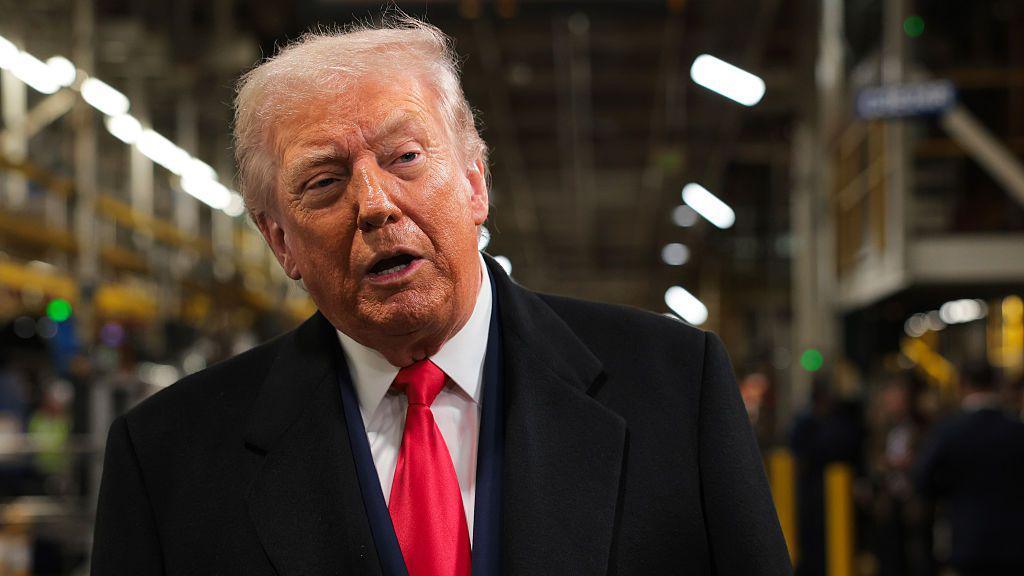
President Donald Trump unveiled a sweeping new healthcare framework on Thursday, presenting what the White House has branded “The Great Healthcare Plan,” a proposal aimed at reshaping how Americans pay for medical care, prescription drugs, and insurance coverage. Administration officials say the plan is designed to lower drug prices and insurance premiums, bring unprecedented transparency to the healthcare market, and impose new accountability standards on insurance companies and industry middlemen.
Speaking alongside senior aides, Trump framed the initiative as a long-overdue correction to what he described as a “broken, rigged, and confusing” system that leaves families paying more while corporations profit in the dark.
“For decades, Americans have been overcharged, misled, and forced to navigate a system that nobody really understands,” Trump said. “We’re going to change that. Prices will come down, people will know what they’re paying for, and the companies will finally be held responsible.”
At the center of the plan is a call for Congress to codify Trump’s “most-favored-nation” drug pricing model, a policy that would tie the cost of certain medications in the United States to the lowest prices paid by other developed nations. The administration argues that Americans routinely pay two to three times more than patients abroad for the same drugs, even when those drugs are manufactured domestically.
Under the proposal, pharmaceutical companies would be required to offer Medicare and other federal programs prices comparable to those charged in countries with government-negotiated rates. White House officials say this alone could slash prescription costs for millions of seniors and working families.
The framework also pushes to expand the number of medications available over the counter, reducing the need for doctor visits and prescription fees for common treatments. Administration health advisers argue that many drugs currently locked behind prescriptions could be safely purchased directly by consumers, creating competition and lowering prices.
Another major pillar of the plan focuses on health insurance premiums, particularly for Americans enrolled in Affordable Care Act plans. According to the White House, the proposal includes an insurance cost-sharing reduction program that could cut premiums for the most common Obamacare plans by more than 10 percent.
Instead of relying on complex government subsidies paid directly to insurers, the plan would shift toward direct payments to individuals, allowing consumers to apply funds themselves when purchasing coverage. The administration says this approach would empower patients, increase competition among insurers, and reduce waste.
“Right now, the system is designed for bureaucrats and corporations,” a senior official said. “We’re redesigning it for patients.”
Perhaps the most aggressive aspect of the plan targets pharmacy benefit managers, or PBMs, the little-known intermediaries that negotiate prices between drug manufacturers, insurers, and pharmacies. PBMs have long been criticized for operating behind closed doors, collecting fees and rebates that are rarely visible to consumers.
Trump’s framework would subject these entities to new disclosure rules and financial scrutiny, aiming to expose how much money is being extracted from the system before savings ever reach patients. The administration argues that PBMs often inflate prices while claiming to lower costs, a practice that has fueled bipartisan frustration in Congress.
Insurance companies would also face sweeping transparency mandates. Under the plan, insurers would be required to publish clear, plain-English explanations of their rates, coverage options, and profit structures on their websites. These disclosures would include:
-
The percentage of premium revenue paid out in claims versus overhead and profit.
-
The rate at which claims are denied.
-
Average wait times for routine medical care.
-
Side-by-side comparisons of coverage plans and pricing.
The goal, according to the White House, is to make it impossible for companies to hide behind jargon and fine print. Consumers would be able to see, at a glance, how much of their premium actually goes toward care.
In addition, any provider or insurer that accepts Medicare or Medicaid funds would be required to publicly post pricing and fees for services. Hospitals, clinics, and specialists would have to disclose what they charge for common procedures, giving patients the ability to compare costs before receiving care.
Administration officials argue that healthcare is one of the few major industries where consumers routinely commit to services without knowing the price in advance. The plan aims to change that dynamic entirely.
“Imagine going to a restaurant, ordering a meal, and only finding out the price weeks later,” one adviser said. “That’s how healthcare works today. We’re ending that.”
Supporters of the proposal say its combined effect would be to inject real market discipline into healthcare, forcing companies to compete on price and performance rather than complexity. They argue that transparency alone could drive significant savings, as patients begin choosing lower-cost providers and insurers.
Critics, however, are already questioning whether the plan can survive Congress or withstand legal challenges from industry groups. Pharmaceutical companies have long opposed international price indexing, arguing it could reduce investment in research and development. Insurers and hospital systems are expected to push back against mandatory public disclosures, citing administrative burden and proprietary information.
There is also uncertainty about the plan’s legislative path. While elements of the framework resemble proposals floated by Republican senators last year, it is not yet clear whether any lawmakers are preparing to introduce the president’s package as formal legislation.
Capitol Hill reactions have been mixed. Some Republicans praised the emphasis on transparency and consumer empowerment, calling it consistent with free-market principles. Others expressed caution about federal mandates on pricing and disclosures, warning against unintended consequences.
Democrats, meanwhile, acknowledged that drug pricing and insurance opacity are real problems but accused the administration of repackaging ideas without offering sufficient consumer protections. Several lawmakers argued that replacing subsidies with direct payments could expose low-income families to risk if costs rise faster than assistance.
Despite the uncertainty, the White House is framing the plan as a defining domestic initiative of Trump’s second term. Officials say it reflects the president’s belief that the healthcare system has become too complex, too expensive, and too insulated from accountability.
“This is about putting power back where it belongs,” Trump said. “With the people. You’ll know what things cost. You’ll pay less. And the companies will finally have to answer for what they do.”
Whether Congress acts on the proposal remains an open question. But the announcement has already intensified the national debate over healthcare, reviving long-standing arguments about prices, profits, and who ultimately controls the system.
For millions of Americans struggling with medical bills, rising premiums, and unpredictable costs, the promise of a more transparent and affordable system is compelling. For the industries that dominate healthcare, the plan represents a fundamental challenge to how business has been done for decades.
As the administration begins pressing lawmakers to act, the battle lines are forming. At stake is not just a new set of rules, but a redefinition of how healthcare operates in the United States—and who it is ultimately designed to serve.

Emily Johnson is a critically acclaimed essayist and novelist known for her thought-provoking works centered on feminism, women’s rights, and modern relationships. Born and raised in Portland, Oregon, Emily grew up with a deep love of books, often spending her afternoons at her local library. She went on to study literature and gender studies at UCLA, where she became deeply involved in activism and began publishing essays in campus journals. Her debut essay collection, Voices Unbound, struck a chord with readers nationwide for its fearless exploration of gender dynamics, identity, and the challenges faced by women in contemporary society. Emily later transitioned into fiction, writing novels that balance compelling storytelling with social commentary. Her protagonists are often strong, multidimensional women navigating love, ambition, and the struggles of everyday life, making her a favorite among readers who crave authentic, relatable narratives. Critics praise her ability to merge personal intimacy with universal themes. Off the page, Emily is an advocate for women in publishing, leading workshops that encourage young female writers to embrace their voices. She lives in Seattle with her partner and two rescue cats, where she continues to write, teach, and inspire a new generation of storytellers.