
He was a central figure during one of the most turbulent eras in Arizona’s modern political history, a public servant whose career intersected with national debates over elections, law enforcement, and the limits of political power. On Monday, after suffering a heart attack, the former top law officer of the state died at the age of 59. The news was confirmed Tuesday by family spokesperson Katie Conner.
His years in office coincided with unprecedented scrutiny of Arizona’s institutions, particularly in the aftermath of the 2020 presidential election. As questions swirled and pressure mounted from across the political spectrum, he found himself in the middle of a national storm, navigating demands for answers in a state narrowly carried by Joe Biden while President Donald Trump and his allies sought evidence of widespread fraud.
Long before that defining chapter, however, he had built a reputation as a disciplined and wide-ranging legal professional. His career spanned nearly every corner of the justice system: judge, prosecutor, private attorney, and director of the Arizona Department of Gaming. Colleagues often described him as someone deeply committed to the rule of law and to the people affected by it, particularly victims of crime.
Former Governor Doug Ducey remembered him as a “happy warrior,” a man whose humor and optimism left an impression on everyone around him. In a public message, Ducey wrote that his friend’s positivity and passion for justice defined his career and inspired those who worked alongside him.
Elected in 2014 as Arizona’s 26th attorney general and reelected in 2018, he oversaw a period marked by high-profile prosecutions and ambitious policy initiatives. His office secured record consumer restitution, prosecuted Arizona’s first ISIS-inspired terrorist in state court, and earned national recognition for pioneering a fintech regulatory sandbox designed to foster innovation while maintaining oversight.
As an assistant U.S. attorney earlier in his career, he handled cases involving public corruption and gambling-related crimes. His legal acumen carried him to the highest court in the country, where he argued three cases before the U.S. Supreme Court. His work also extended beyond U.S. borders, contributing to rule-of-law and judicial reform projects in countries including Mexico, Israel, Qatar, and Morocco.
The most controversial period of his tenure arrived after the 2020 election. Over six months, his office reviewed claims of irregularities in Arizona’s voting process. An interim report released in April 2022 raised concerns about certain procedures but did not uncover evidence of systemic fraud. The findings placed him in an uneasy position—caught between critics who demanded more aggressive action and defenders of the electoral system who feared politicization.
At the time, he was seeking the Republican nomination for U.S. Senate and hoping for President Trump’s endorsement. That endorsement never came. Trump publicly criticized him for failing to pursue election fraud prosecutions, a rebuke that echoed through conservative circles. His Senate campaign ended in defeat in the Republican primary, closing one political path even as his public profile remained high.
It was in this context—midway through his career and under intense national attention—that Mark Brnovich became one of the most recognizable legal figures in the state. In his campaign launch, he framed his life story as that of the son of immigrants who fled communism in Yugoslavia. He presented himself as a fighter against government overreach and “crony capitalists,” championing border security, religious liberty, and election integrity.
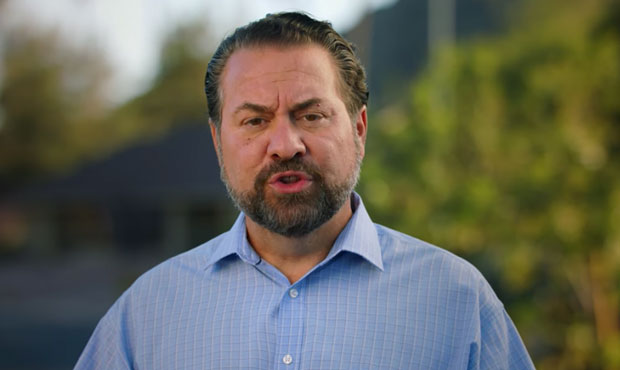
Another turn came in April when President Trump nominated him as U.S. ambassador to Serbia, a role that would have drawn on his fluency in Serbo-Croatian and his international legal experience. The nomination was withdrawn in October, effectively ending that chapter of his public service.
In his final years, he transitioned back into private practice as a partner at Boies Schiller Flexner LLP. His résumé already included service as a Judge Pro Tem in Maricopa County Superior Court, a Command Staff Judge Advocate in the U.S. Army National Guard, and director of the Center for Constitutional Government at the Goldwater Institute.
He earned his law degree from the University of San Diego and his undergraduate degree from the University of Arizona. He is survived by his wife, District Judge Susan Brnovich, and their two daughters.
Even political rivals spoke of him with respect after his passing. Tom Horne, now Arizona’s superintendent of public instruction, reflected on their shared history, noting that they began as opponents but became friends. He described him as “an outstanding, dedicated public servant and a devoted family man,” adding that he would be deeply missed.
In a career shaped by courtroom battles, political pressure, and moments of national consequence, he remained a figure defined by commitment to law and public service. For Arizona, his legacy is inseparable from a period when the state stood at the center of the country’s most consequential debates—and he stood at the center of it.

Emily Johnson is a critically acclaimed essayist and novelist known for her thought-provoking works centered on feminism, women’s rights, and modern relationships. Born and raised in Portland, Oregon, Emily grew up with a deep love of books, often spending her afternoons at her local library. She went on to study literature and gender studies at UCLA, where she became deeply involved in activism and began publishing essays in campus journals. Her debut essay collection, Voices Unbound, struck a chord with readers nationwide for its fearless exploration of gender dynamics, identity, and the challenges faced by women in contemporary society. Emily later transitioned into fiction, writing novels that balance compelling storytelling with social commentary. Her protagonists are often strong, multidimensional women navigating love, ambition, and the struggles of everyday life, making her a favorite among readers who crave authentic, relatable narratives. Critics praise her ability to merge personal intimacy with universal themes. Off the page, Emily is an advocate for women in publishing, leading workshops that encourage young female writers to embrace their voices. She lives in Seattle with her partner and two rescue cats, where she continues to write, teach, and inspire a new generation of storytellers.