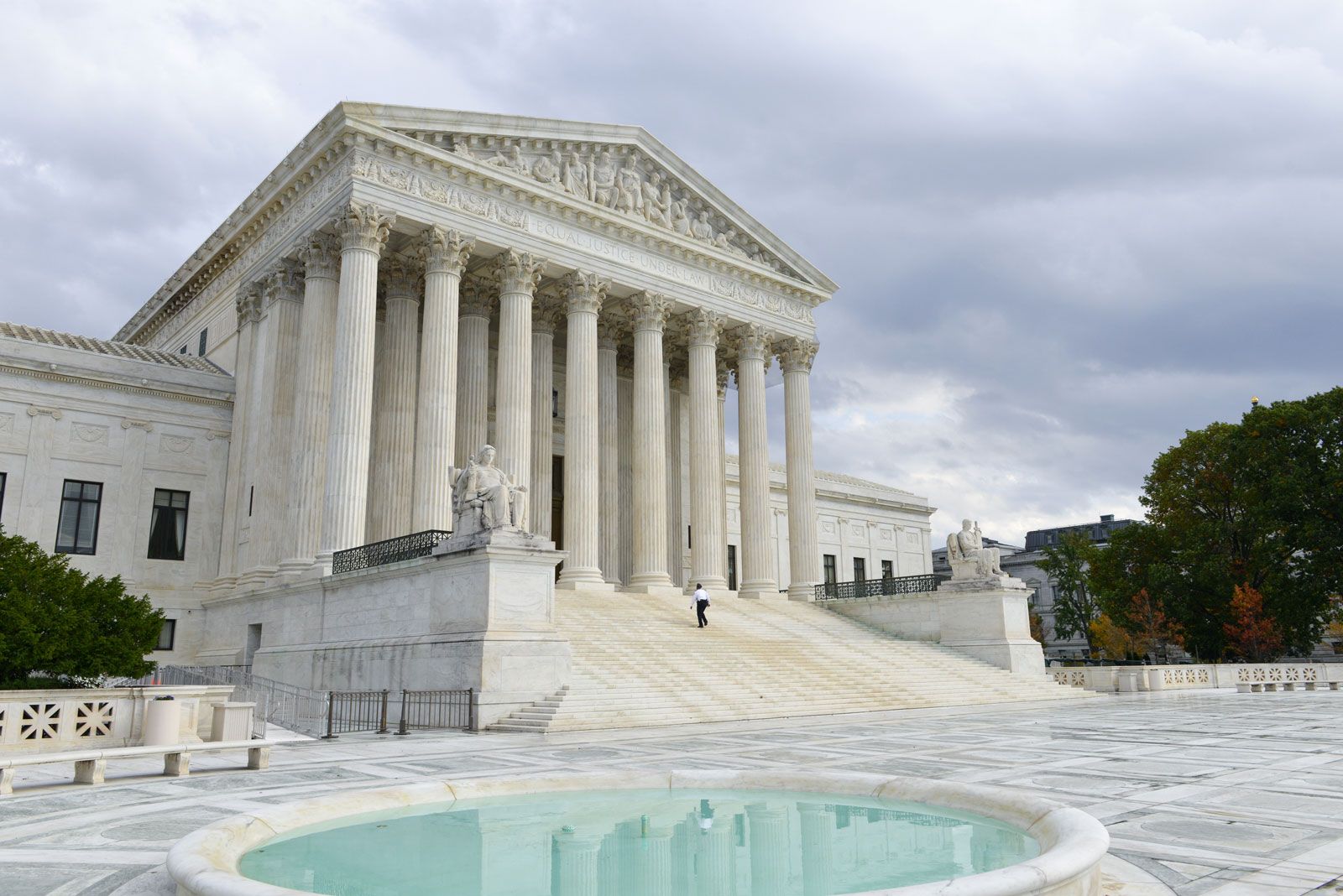
In a decision that could reshape the legal landscape surrounding election disputes, the U.S. Supreme Court voted 7–2 on January 14 to allow a Republican congressman to challenge an Illinois law that permits ballots to be counted for up to two weeks after Election Day. The ruling lowers a key procedural barrier that has often prevented candidates from bringing lawsuits over election rules, potentially opening the door to a new wave of legal challenges nationwide.
The case, Bost v. Illinois State Board of Elections, centers on Rep. Michael Bost of Illinois, who argued that the state’s extended ballot-counting period violates the U.S. Constitution and imposes concrete harms on candidates. In its decision, the Supreme Court held that Bost has “standing” to sue—meaning he has a sufficient personal stake in the outcome to pursue the case in federal court.
Standing is a foundational concept in American law. Courts require plaintiffs to demonstrate a real, personal injury, not merely a generalized grievance shared by the public at large. Lower courts had ruled that Bost’s status as a candidate and voter was not enough to meet that standard. The Supreme Court disagreed.
Chief Justice John Roberts authored the majority opinion, joined by six other justices. Justices Ketanji Brown Jackson and Sonia Sotomayor dissented.
“Candidates have a concrete and particularized interest in the rules that govern the counting of votes in their elections,” Roberts wrote, “regardless whether those rules harm their electoral prospects or increase the cost of their campaigns.”
He added that a candidate’s interest extends beyond personal advantage. “Their interest extends to the integrity of the election—and the democratic process by which they earn or lose the support of the people they seek to represent.”
Roberts concluded that “as a candidate for office, Congressman Bost has standing to challenge the rules that govern the counting of votes in his election.”
Bost filed the lawsuit alongside Laura Pollastrini and Susan Sweeney, Republican presidential elector nominees for the 2020 and 2024 elections. They argued that Illinois’s policy of counting ballots that arrive after Election Day undermines confidence in elections and conflicts with constitutional principles governing federal contests.
Bost’s petition emphasized that the extended counting period imposes real costs. According to his filing, candidates must maintain campaign infrastructure for an additional two weeks, including legal teams, staff, and monitoring efforts, to track incoming ballots and ensure compliance with election rules. He also argued that candidates have a direct stake in ensuring that ballots are “validly received” and “accurately counted.”
“For over 130 years, this Court has heard claims brought by federal candidates challenging state time, place, or manner regulations affecting their federal elections,” the petition stated. “Until recently, it was axiomatic that candidates had standing to challenge these regulations.”
That understanding had eroded in recent years. A federal district court dismissed Bost’s lawsuit in July 2023, ruling that he lacked standing. The court held that dissatisfaction with election procedures, even when voiced by a candidate, amounted to a generalized grievance shared by all voters.
In August 2024, the U.S. Court of Appeals for the Seventh Circuit affirmed that decision. The appellate court concluded that Bost had failed to show a “concrete and particularized injury” distinct from the public at large.
The Supreme Court’s ruling reversed that logic. It sent the case back to the Seventh Circuit “for further proceedings consistent with this opinion,” effectively reviving Bost’s challenge and establishing a new precedent for candidate-plaintiffs.
The decision has broad implications. By recognizing that candidates inherently suffer a personal, legal injury from the rules governing their elections, the Court has created a clearer path for office-seekers to contest election laws in federal court.
Supporters of the ruling argue that it strengthens election integrity by ensuring that questionable rules can be tested on their merits. Critics warn that it could flood courts with politically motivated lawsuits, destabilizing election administration and prolonging uncertainty after voting ends.
Justice Jackson’s dissent focused on those concerns. She warned that the majority’s approach departs from established standing doctrine and risks encouraging litigation that could interfere with the orderly conduct of elections.
“By carving out a bespoke rule for candidate-plaintiffs—granting them standing ‘to challenge the rules that govern the counting of votes,’ simply and solely because they are ‘candidates’ for office—the court now complicates and destabilizes both our standing law and America’s electoral processes,” Jackson wrote.
She argued that Bost failed to allege facts demonstrating a concrete injury under traditional legal standards. In her view, the majority’s decision replaces settled principles with a special category for candidates, inviting challenges based on political disagreement rather than genuine harm.
Justice Amy Coney Barrett agreed with the outcome but not the Court’s reasoning. In a separate concurring opinion, she argued that the case could have been resolved more narrowly.
“Rather than take this straightforward path, the court charts a novel one,” Barrett wrote. “I cannot join the court’s creation of a bespoke standing rule for candidates. Elections are important, but so are many things in life. We have always held candidates to the same standards as any other litigant.”
Her concurrence underscores a tension within the Court: while a majority agreed that Bost should be allowed to proceed, there was less consensus on how far the new rule should reach.
Outside the Court, conservative legal groups celebrated the decision as a watershed moment. Judicial Watch, which represents Bost, called it “the most important Supreme Court election law ruling in a generation.”
“This is a victory for every American who cares about election integrity,” said Judicial Watch President Tom Fitton. “Too many courts have denied candidates the standing to challenge unlawful election rules, such as the outrageous practice of counting ballots that arrive after Election Day. This ruling restores a critical safeguard.”
Bost echoed that sentiment, describing the decision as “a critically important step forward in the fight for election integrity and fair elections.”
“I look forward to continuing to pursue this case as we navigate the next stages of the legal process,” he said. “It’s vitally important that we restore the people’s trust in our elections.”
Other conservative legal advocates agreed. Michael O’Neill, vice president of legal affairs at the Landmark Legal Foundation, which filed a friend-of-the-court brief, said candidates are uniquely positioned to identify harm from improper voting laws.
“Political candidates, more than political parties and even more than the voters themselves, are most likely to be directly harmed when a state legislature enacts an improper voting law,” he said. “They are, therefore, entitled to the opportunity to challenge the legality and constitutionality of those state laws.”
Illinois election officials have not publicly responded in detail to the ruling. The state’s election board has previously defended the extended ballot-counting period as necessary to ensure that voters who mail ballots on time are not disenfranchised due to postal delays. Supporters of such policies argue that modern elections must accommodate real-world logistical challenges and that counting valid ballots after Election Day does not constitute fraud.
The Supreme Court’s decision does not resolve whether Illinois’s law is constitutional. It merely allows Bost’s challenge to proceed. The lower courts must now evaluate the merits of his claims, including whether the state’s policy violates federal law or the Constitution’s provisions governing elections.
Still, the broader impact is unmistakable. Candidates across the country now have a clearer legal pathway to contest state election rules, from mail-in ballot deadlines to signature verification procedures and vote tabulation methods.
As the nation heads into another election cycle, the ruling is likely to shape litigation strategies on both sides of the political spectrum. Supporters see it as a tool for accountability and transparency. Critics fear it will transform courts into battlegrounds for post-election disputes.
What is certain is that the Supreme Court has altered the balance between access to the courts and judicial restraint in election law. By recognizing candidates as inherently injured by the rules that govern their races, the Court has redefined who gets to challenge how American elections are run—and when.

Emily Johnson is a critically acclaimed essayist and novelist known for her thought-provoking works centered on feminism, women’s rights, and modern relationships. Born and raised in Portland, Oregon, Emily grew up with a deep love of books, often spending her afternoons at her local library. She went on to study literature and gender studies at UCLA, where she became deeply involved in activism and began publishing essays in campus journals. Her debut essay collection, Voices Unbound, struck a chord with readers nationwide for its fearless exploration of gender dynamics, identity, and the challenges faced by women in contemporary society. Emily later transitioned into fiction, writing novels that balance compelling storytelling with social commentary. Her protagonists are often strong, multidimensional women navigating love, ambition, and the struggles of everyday life, making her a favorite among readers who crave authentic, relatable narratives. Critics praise her ability to merge personal intimacy with universal themes. Off the page, Emily is an advocate for women in publishing, leading workshops that encourage young female writers to embrace their voices. She lives in Seattle with her partner and two rescue cats, where she continues to write, teach, and inspire a new generation of storytellers.