




NEW YORK — One of America’s most recognizable luxury retail conglomerates has filed for bankruptcy protection, marking one of the largest collapses in high-end retail since the COVID-19 pandemic and raising new questions about the future of traditional department stores.
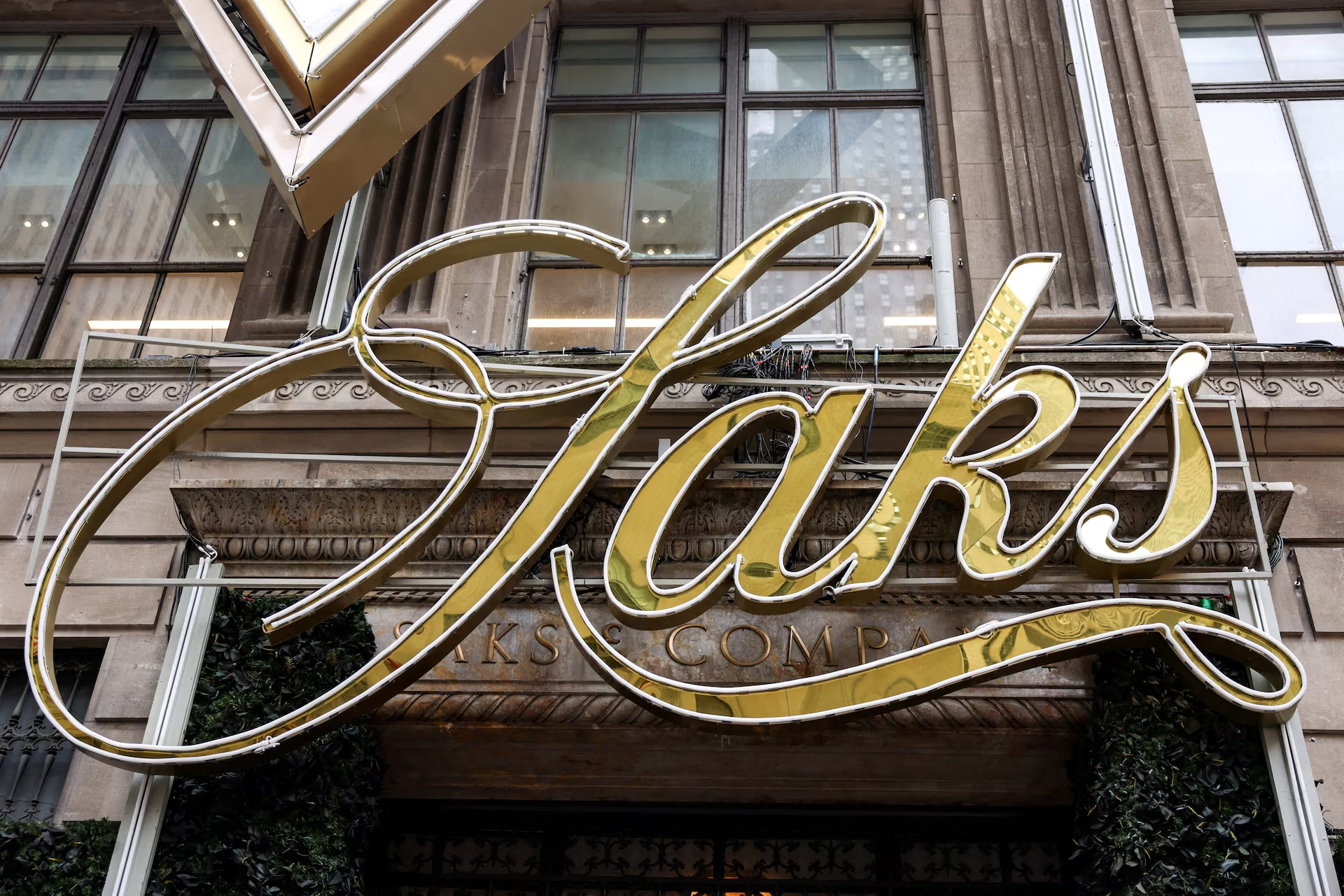
Saks Global, the parent company bringing together Saks Fifth Avenue, Bergdorf Goodman, and Neiman Marcus under a single corporate umbrella, filed for bankruptcy late Tuesday in U.S. Bankruptcy Court in Houston, Texas. The move comes barely a year after a high-profile deal merged the storied brands into what was intended to be a luxury retail powerhouse.
While the filing represents a dramatic turn for the company, Saks Global said its stores will remain open for now as it moves forward with a court-supervised restructuring process backed by fresh financing and a leadership shakeup.
A Sudden Fall After a Bold Bet
The bankruptcy filing follows a sweeping acquisition strategy that aimed to consolidate three of the most iconic names in American luxury retail. That strategy, however, left Saks Global carrying a heavy debt load at a time when the global luxury market was slowing and competition from online and direct-to-consumer brands was intensifying.
Court documents estimate the company’s assets and liabilities each fall between $1 billion and $10 billion, underscoring the scale of the restructuring now underway.
The filing initiates a process designed to give Saks Global time to negotiate with creditors, restructure its debt, or potentially sell parts — or all — of the company in an effort to avoid liquidation.
New Leadership at the Helm
Alongside the bankruptcy filing, Saks Global announced significant leadership changes. Former Neiman Marcus chief executive Geoffroy van Raemdonck has been appointed CEO, replacing Richard Baker, the executive who spearheaded the acquisition strategy that created the company.
In additional moves, Saks Global named Darcy Penick as chief commercial officer and Lana Todorovich as chief of global brand partnerships. Both executives previously held senior roles at Neiman Marcus and are seen as experienced operators in luxury retail.
The leadership overhaul signals an attempt to stabilize operations and restore confidence among vendors, lenders, and customers.
Emergency Financing Secured
To keep the business running during the bankruptcy process, Saks Global finalized a substantial financing package totaling $1.75 billion.
According to the company, the deal includes:
-
An immediate $1 billion cash infusion through a debtor-in-possession loan from an investor group
-
An additional $240 million available through an asset-backed loan
-
Up to $500 million in financing once the company successfully exits bankruptcy, expected later this year
The financing is intended to support ongoing operations, ensure vendors are paid, and maintain inventory flow as restructuring talks continue.
Luxury Brands Among Creditors
Court filings reveal that some of the world’s most prestigious luxury brands are among Saks Global’s unsecured creditors. Chanel and Gucci owner Kering are listed as being owed approximately $136 million and $60 million, respectively. Luxury conglomerate LVMH is also listed as an unsecured creditor.
In total, Saks Global estimates it has between 10,001 and 25,000 creditors, reflecting the vast network of designers, suppliers, landlords, and service providers tied to its operations.
The presence of such high-profile brands highlights how deeply intertwined Saks Global has been with the global luxury ecosystem — and how disruptive its financial troubles could be.
How the Neiman Marcus Deal Added Pressure
The seeds of Saks Global’s current crisis were planted with the 2024 acquisition of Neiman Marcus. The deal, orchestrated by Baker, was meant to create a dominant luxury retail platform capable of competing with both online players and international fashion houses selling directly to consumers.
The $2.7 billion transaction relied heavily on debt financing, with roughly $2 billion in borrowed funds and equity contributions from investors including Amazon, Salesforce, and Authentic Brands.
While ambitious, the deal left the company highly leveraged just as consumer spending patterns were shifting and luxury growth began to cool.
Supply Chain Struggles and Empty Shelves
As financial pressure mounted, Saks Global struggled to meet payment obligations to vendors. Some suppliers reportedly began withholding inventory, disrupting the company’s supply chain and leaving stores with thinner stock levels.
Shoppers encountering empty shelves or limited selections may have turned to competitors such as Bloomingdale’s, which reported strong sales in 2025. The loss of foot traffic only deepened Saks Global’s challenges.
Industry analysts noted that while affluent consumers continued to spend, many were choosing to shop elsewhere.
“High-income customers are still buying,” one retail analyst observed recently, “just not as much at Saks.”
Selling Assets to Stay Afloat
In recent months, Saks Global took steps to raise cash by selling assets. Last month, the company sold the real estate of the Neiman Marcus flagship store in Beverly Hills for an undisclosed sum. It had also explored selling a minority stake in Bergdorf Goodman, one of its most valuable and prestigious assets.
Despite these efforts, the company ultimately failed to make an interest payment of more than $100 million to bondholders on December 30, a key event that pushed it toward bankruptcy protection.
A Storied Legacy at Risk
Saks Fifth Avenue has long been synonymous with luxury, elegance, and exclusivity. Founded in 1867 by retail pioneer Andrew Saks, the brand became a destination for the rich and famous, serving icons from Hollywood royalty to international fashion elites.
Bergdorf Goodman and Neiman Marcus similarly built reputations as arbiters of luxury, shaping American fashion culture for more than a century.
The bankruptcy filing raises difficult questions about whether traditional department stores can survive in an era dominated by e-commerce, brand-owned boutiques, and shifting consumer habits.
What Bankruptcy Means Going Forward
The bankruptcy process gives Saks Global temporary protection from creditors while it works to restructure its finances. During this period, the company may renegotiate debt, close underperforming locations, sell assets, or seek a buyer.
If restructuring efforts fail, liquidation remains a possibility, though company officials say the goal is to emerge as a leaner, more sustainable luxury retailer.
For now, stores remain open and operations continue, but the coming months will be critical in determining whether the iconic brands can regain footing or become casualties of a rapidly changing retail landscape.
A Turning Point for Luxury Retail
Saks Global’s collapse underscores broader challenges facing luxury department stores, even as high-end spending persists. The shift toward digital shopping, direct brand engagement, and personalized experiences has put immense pressure on legacy retailers built around sprawling physical locations.
As the bankruptcy case unfolds, investors, designers, and consumers alike will be watching closely to see whether Saks Global can reinvent itself — or whether this filing marks the beginning of the end for a once-dominant force in American luxury retail.

Emily Johnson is a critically acclaimed essayist and novelist known for her thought-provoking works centered on feminism, women’s rights, and modern relationships. Born and raised in Portland, Oregon, Emily grew up with a deep love of books, often spending her afternoons at her local library. She went on to study literature and gender studies at UCLA, where she became deeply involved in activism and began publishing essays in campus journals. Her debut essay collection, Voices Unbound, struck a chord with readers nationwide for its fearless exploration of gender dynamics, identity, and the challenges faced by women in contemporary society. Emily later transitioned into fiction, writing novels that balance compelling storytelling with social commentary. Her protagonists are often strong, multidimensional women navigating love, ambition, and the struggles of everyday life, making her a favorite among readers who crave authentic, relatable narratives. Critics praise her ability to merge personal intimacy with universal themes. Off the page, Emily is an advocate for women in publishing, leading workshops that encourage young female writers to embrace their voices. She lives in Seattle with her partner and two rescue cats, where she continues to write, teach, and inspire a new generation of storytellers.