

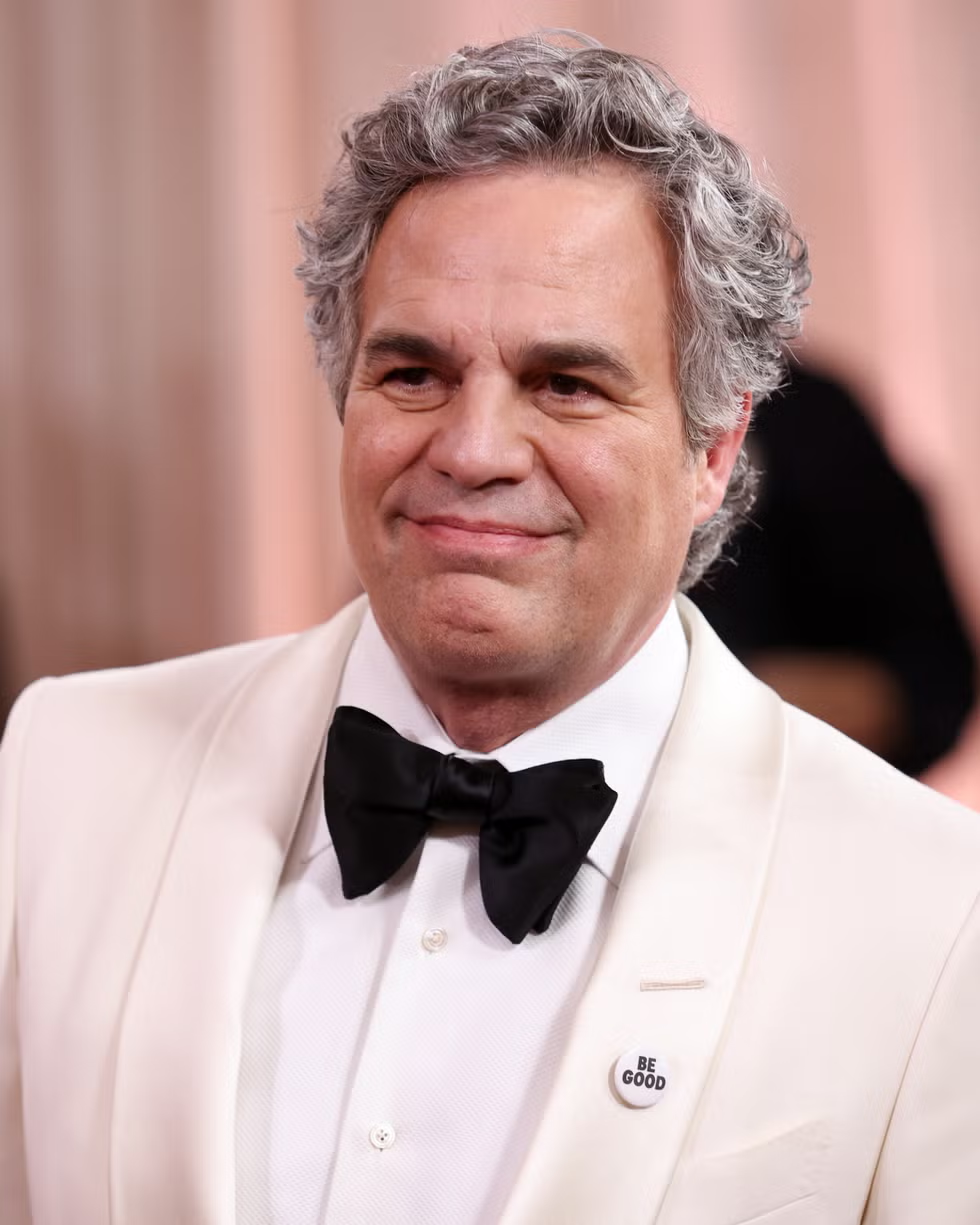
Actor Mark Ruffalo ignited controversy during the Golden Globes in Los Angeles after delivering a blistering critique of President Donald Trump, Vice President JD Vance, and the current administration, accusing the president of moral bankruptcy and leveling some of the harshest language heard on a Hollywood red carpet in years.
The Marvel star was among several celebrities wearing a small white pin emblazoned with the words “BE GOOD” as they arrived at the Beverly Hills Hotel for the annual awards ceremony. The pins were intended as a gesture of solidarity following the fatal shooting of Renée Nicole Good, a 37-year-old woman who was killed by an Immigration and Customs Enforcement officer in Minneapolis last week. The badge has since become a symbol of protest for activists and public figures who say recent events reflect a disturbing shift in American values.
When asked about the pin by reporters, Ruffalo did not hesitate to explain its meaning or expand into a broader condemnation of the political climate in the United States.
“This is for Renée Nicole Good, who was murdered,” he said. “It’s also for people in the United States who are terrorized and scared today. I’m one of them.”
From there, the actor launched into a forceful critique of the administration, singling out both Trump and Vice President JD Vance. Ruffalo accused Vance of misleading the public about ongoing events and painted a bleak picture of what he believes the country has become.
“We have a vice president who’s lying about what’s happening,” Ruffalo said. “We’re in the middle of a war with Venezuela that we illegally invaded. [Trump’s] telling the world that international law doesn’t matter to him.”
Ruffalo went on to argue that the president’s personal history makes him unfit to serve as a moral authority on the global stage. “The only thing that matters to him is his own morality,” the actor continued. “But the guy is a convicted felon; a convicted rapist.”
He then escalated his rhetoric even further, declaring, “He’s a pedophile. He’s the worst human being. If we’re relying on this guy’s morality for the most powerful country in the world, then we’re all in a lot of trouble.”
The remarks quickly spread across social media and cable news, drawing both praise and outrage. Supporters hailed Ruffalo for “speaking truth to power,” while critics accused him of reckless exaggeration and defamation.
It is important to note that Trump has never been charged with, nor convicted of, any crime involving pedophilia. In May 2024, he was convicted on 34 felony counts related to falsifying business records. That same year, a civil jury found him liable for sexually abusing writer E. Jean Carroll in the 1990s, a verdict that resulted in substantial damages. Because the Carroll case was civil rather than criminal, it did not produce a criminal conviction. Ruffalo’s comments reflect his personal views and rhetoric rather than established legal findings.
Still, the actor made clear that his outrage stems from what he perceives as a fundamental erosion of American ideals.
“I love this country,” Ruffalo said. “And what I’m seeing here happening is not America.”
The “BE GOOD” pins worn by Ruffalo and others were organized by a coalition of advocacy groups, including the American Civil Liberties Union, Move On, the National Domestic Workers Alliance, Working Families Power, and Maremoto. In a joint statement, the organizations said the campaign was created to honor both Renée Good and Keith Porter, another civilian who was fatally shot by an off-duty ICE officer in Los Angeles on December 31.
“The #BeGood campaign aims to honor Renée Macklin Good and Keith Porter while also reminding us what it means to be good to one another in the face of such horror—to be a good citizen, neighbor, friend, ally and human,” the statement read.
Porter’s death has also sparked controversy. Authorities said he was holding a gun at the time of the shooting in Northridge, California, a claim his family has strongly disputed. Together, the two cases have become rallying points for critics of federal law enforcement practices and immigration policy.
Ruffalo was not alone in using the Golden Globes as a platform for protest. Comedian Wanda Sykes also wore the pin and offered her own blunt assessment of the administration when questioned on the red carpet.
“It’s awful what they are doing to people,” Sykes said. “We need to shut this rogue government down.”
While Hollywood has long been associated with progressive politics, the tone this year felt sharper and more urgent than in previous award seasons. Rather than subtle symbolism or carefully worded statements, several stars appeared determined to confront the political moment directly.
For Ruffalo, that urgency seemed deeply personal. He framed his comments not as partisan talking points but as a response to fear and moral distress.
“There are people in this country who feel hunted,” he said. “Who feel like their government sees them as disposable. That’s not who we’re supposed to be.”
The administration has defended its actions in both Minneapolis and Los Angeles, with officials stating that the shootings occurred in self-defense. In the Minneapolis case, the White House described Good as a “domestic terrorist,” a characterization that has further inflamed tensions and fueled backlash from civil rights groups.
Ruffalo’s remarks reflect a broader frustration among critics who argue that the language and policies of the current administration have normalized dehumanization and violence. To them, the “BE GOOD” pin is less a slogan than a plea for a return to basic decency.
Yet the actor’s most extreme statements have also raised questions about the role of celebrities in political discourse. Even some who share his opposition to Trump have expressed discomfort with the use of terms like “pedophile,” arguing that such language risks undermining legitimate criticism by blurring the line between documented facts and rhetorical attack.
Defenders counter that Ruffalo was speaking emotionally, in a moment shaped by grief and anger over recent deaths. They argue that raw honesty, even when uncomfortable, is preferable to polite silence in the face of injustice.
Whether seen as courageous or reckless, Ruffalo’s comments ensured that the Golden Globes would be remembered not only for fashion and trophies, but for a moment when Hollywood’s political conscience erupted in full view of the cameras.
As the ceremony unfolded inside, the red carpet outside became an impromptu stage for protest. In that space, amid flashing cameras and designer gowns, a small white pin carried a heavy message: that for many Americans, and many in the entertainment industry, the country feels like it is at a moral crossroads.
Ruffalo’s closing words captured that sense of alarm. “If we’re relying on this guy’s morality for the most powerful country in the world,” he warned, “then we’re all in a lot of trouble.”
For supporters, it was a rallying cry. For critics, an overreach. For everyone else, it was a stark reminder that the divide in American public life now runs straight through even its most glamorous stages.

Emily Johnson is a critically acclaimed essayist and novelist known for her thought-provoking works centered on feminism, women’s rights, and modern relationships. Born and raised in Portland, Oregon, Emily grew up with a deep love of books, often spending her afternoons at her local library. She went on to study literature and gender studies at UCLA, where she became deeply involved in activism and began publishing essays in campus journals. Her debut essay collection, Voices Unbound, struck a chord with readers nationwide for its fearless exploration of gender dynamics, identity, and the challenges faced by women in contemporary society. Emily later transitioned into fiction, writing novels that balance compelling storytelling with social commentary. Her protagonists are often strong, multidimensional women navigating love, ambition, and the struggles of everyday life, making her a favorite among readers who crave authentic, relatable narratives. Critics praise her ability to merge personal intimacy with universal themes. Off the page, Emily is an advocate for women in publishing, leading workshops that encourage young female writers to embrace their voices. She lives in Seattle with her partner and two rescue cats, where she continues to write, teach, and inspire a new generation of storytellers.