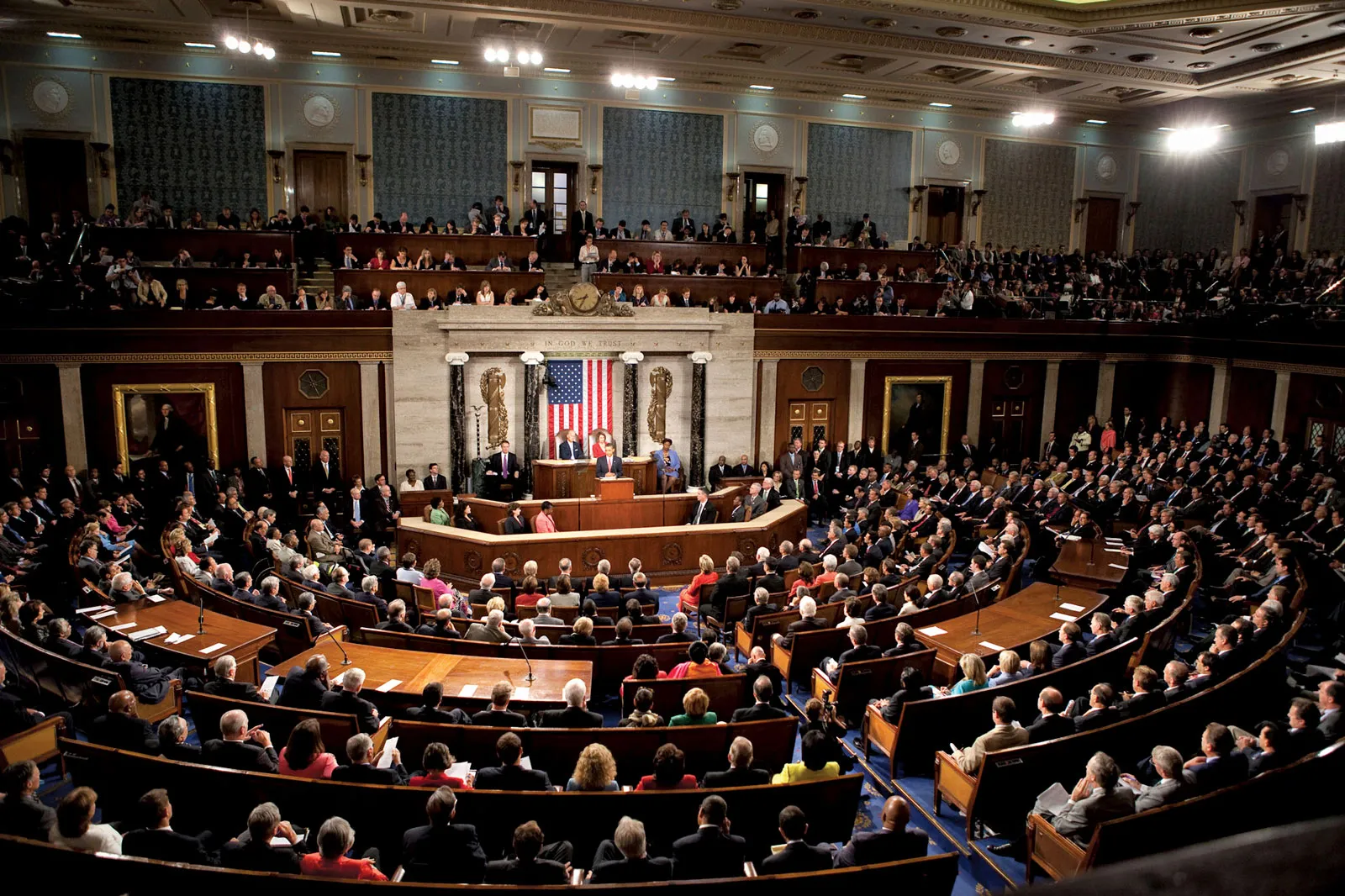
On January 8, 2026, the U.S. House of Representatives took up a high-stakes vote that set an early tone for how Congress and the White House might clash during President Donald Trump’s second term. In a rare demonstration of legislative pushback, lawmakers attempted to override two vetoes issued by the president at the end of 2025—efforts that ultimately failed as most members of the House stuck with the executive branch.
The outcome was more than a procedural moment. It reflected fractures within Republican ranks and underscored ongoing debates about federal power, spending priorities, and congressional authority—all in the earliest days of a new administration cycle.
The Vetoes That Sparked a Congressional Test
In late December 2025, President Trump used his veto power for the first time in his second term to block two bipartisan bills that had cleared both the House and Senate nearly unanimously.
One of these measures would have authorized federal investment in a significant water pipeline project in southeastern Colorado, intended to provide clean drinking water to tens of thousands of residents in rural communities. The other sought to transfer a parcel of land within Everglades National Park into the Miccosukee Indian Reservation—a move its backers said would bolster tribal sovereignty and enhance environmental stewardship.
Both vetoes surprised lawmakers who thought the measures were uncontroversial and already supported across party lines. The decisions drew criticism from both sides of the aisle, with opponents accusing the White House of political retaliation and disconnected policymaking.
How the Override Attempts Unfolded
Under the Constitution, Congress can override a presidential veto—but only with a two-thirds majority in both the House and the Senate. That threshold is deliberately high and rarely met.
On January 8, the House held back-to-back votes to override each veto.
-
For the Colorado water pipeline bill, the vote was 248 in favor to 177 opposed, shy of the roughly 290 votes needed.
-
On the Everglades land transfer, the override effort also fell short; the tally similarly did not reach the required supermajority.
While dozens of Republicans broke with the president and voted to override—including 35 for the Colorado bill and 24 for the Everglades measure—their numbers were not sufficient. Democrats also supported the overrides strongly, but party unity alone could not meet the constitutional bar.
The Colorado Water Pipeline Dispute
The vetoed pipeline bill was intended to finish the Arkansas Valley Conduit, a long-planned infrastructure project that would deliver clean water to communities long struggling with shortages and rising costs.
Supporters, including lawmakers from both parties, argued that federal investment was critical to ensure water security for residents in rural parts of the state. For many, the project was not just an infrastructure initiative but a fulfillment of decades-long commitments from previous administrations.
In vetoing the bill, the president framed it as fiscal overreach, arguing that federal taxpayers should not shoulder the costs of local water initiatives and criticizing what he described as unchecked spending.
This decision drew sharp rebukes from some Colorado politicians, who said withholding support jeopardized essential services and ignored the urgent needs of their communities.
Tribal Land and Everglades Politics
The second vetoed bill focused on expanding the Miccosukee Reserved Area within the Florida Everglades. Its supporters, including tribal leaders and environmental advocates, said the change would recognize long-overdue land rights and help protect sensitive ecosystems.
Environmental groups argued that tribal stewardship could enhance conservation efforts, blurring the lines between sovereignty and ecological protection.
Yet, in his veto messages, the president raised concerns that transferring lands from national park boundaries set a risky precedent and that federal land management should not be altered without broader legislative frameworks.
Political Fault Lines Within the GOP
For Republicans, the override votes revealed internal divisions. Some members from the affected states openly questioned why they should support the president over long-standing local priorities. Others, wary of alienating the White House or jeopardizing broader party unity, ultimately sided with the vetoes.
Democrats seized the moment to argue that the vetoes—and the House’s failure to override them—highlighted a Trump administration willing to block bipartisan solutions and centralize power in the executive branch. One senior Democratic figure framed the debate as central to whether Congress could still function as a co-equal branch of government.
What This Means Moving Forward
Although neither override succeeded, the January 8 vote served as an early litmus test for congressional willingness to challenge the president on bipartisan priorities. That alone was significant: several Republicans voting against the president was unusual so early in his term.
Political analysts generally agree that overcoming a presidential veto remains difficult in a narrowly divided legislature, particularly when the president’s party controls one chamber. But the mere presence of substantial opposition suggests an evolving dynamic in which rank-and-file lawmakers weigh local interests against party loyalty.
Broader Stakes and What to Watch
The failure to override these vetoes carries implications well beyond these two bills. It may embolden an administration inclined to use the veto power aggressively on future spending, environmental, or infrastructure proposals.
Conversely, the debate signals that lawmakers are increasingly willing to test boundaries—even if they fall short of constitutional thresholds—when local priorities or bipartisan consensus is at stake.
As 2026 progresses, attention will focus on whether Congress can build broader coalitions on contentious issues or if executive authority increasingly sets the agenda. For now, January 8 stands as an early encounter in a potentially long journey of institutional negotiation and political recalibration.