


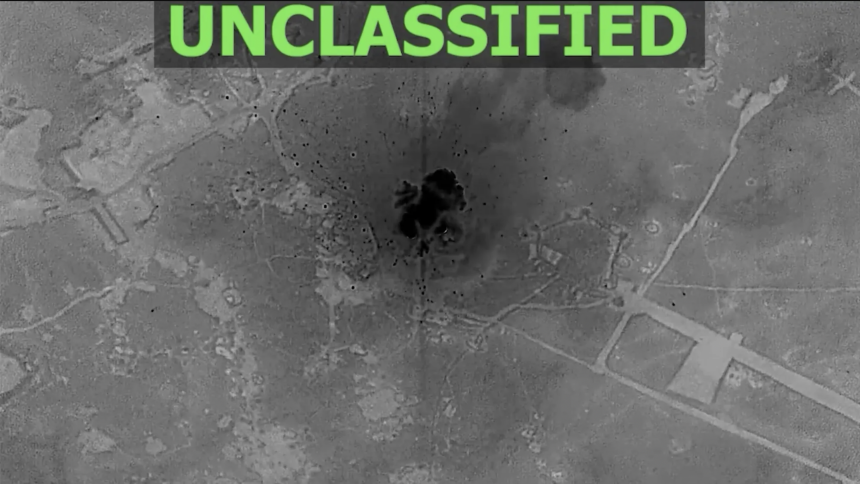
The United States carried out a series of airstrikes against ISIS positions in Syria on Saturday, January 10, 2026, in retaliation for the December 13 deaths of three Americans, including two Iowa National Guard soldiers and their civilian interpreter. The strikes were part of Operation Hawkeye Strike, which began on December 19, and reflect a continued U.S. commitment to targeting terrorist networks that threaten American and allied personnel in the region.
According to U.S. Central Command, multiple precision strikes were conducted across several ISIS-controlled locations in Syria at approximately 12:30 p.m. EST. The targeted attacks aimed to disrupt the operational capabilities of the terrorist organization, destroy weapons caches, and neutralize both senior leaders and lower-ranking operatives. A U.S. official, speaking on condition of anonymity due to the sensitive nature of military operations, noted that these missions were made possible by growing cooperation between U.S. forces and Syria’s relatively new government, enabling operations in areas previously inaccessible to American forces.
The strikes follow an ambush near the ancient city of Palmyra on December 13, 2025, which claimed the lives of Sergeant Edgar Brian Torres Tovar, 25, of Des Moines, Iowa; Sergeant William Nathaniel Howard of Marshalltown, Iowa; and a civilian interpreter from Michigan. Three additional Iowa National Guard members and members of Syrian security forces sustained injuries during the attack. Authorities reported that the gunman, who was killed during the incident, had recently been reassigned from Syria’s Internal Security forces amid suspicions of ISIS affiliation, though the terrorist group has not publicly claimed responsibility.
Operation Hawkeye Strike, which began six weeks prior, has already involved eleven missions across central Syria, striking 70 targets and dismantling four ISIS weapons caches. The U.S. maintains a force of roughly 1,000 troops in Syria, working alongside Syrian forces to root out extremist networks. U.S. officials emphasize that these actions are part of a broader strategic commitment to protect American and partner forces, prevent future attacks, and eliminate the operational capabilities of ISIS in the region.
Admiral Brad Cooper, head of U.S. Central Command, highlighted the significance of these operations. “We will not relent,” Cooper said in a statement. “We are steadfast in our commitment to working with regional partners to root out the ISIS threat posed to U.S. and regional security.” He added that U.S. forces would continue to hunt down terrorist operatives, dismantle ISIS networks, and collaborate with local partners to prevent the resurgence of the organization. The Admiral underscored the ongoing nature of the campaign, stressing that U.S. actions in Syria are part of a sustained, long-term effort to degrade extremist groups threatening regional stability.
President Donald Trump, who has repeatedly emphasized a hardline approach to terrorism, responded to the news via his social media platform, Truth Social. Three hours after the strikes, he posted: “The United States of America is the Hottest and most Successful Country anywhere in the WORLD!!!” While Trump did not provide further commentary on the military operations, his statement reflects the administration’s framing of the strikes as a demonstration of American strength and resolve in the face of terrorist threats.
The U.S. strikes also coincide with high-level diplomatic engagement. U.S. Special Envoy for Syria, Tom Barrack, recently met with Syrian President Ahmed al-Sharaa, Foreign Minister Asaad al-Shaibani, and members of their team in Damascus to discuss ongoing developments in Aleppo and broader security cooperation. These discussions have reportedly facilitated greater coordination between U.S. and Syrian forces, allowing American military assets to engage ISIS operatives more effectively in previously inaccessible areas.
The retaliatory strikes in Syria highlight the broader U.S. military strategy in the Middle East, combining targeted air operations, intelligence gathering, and partnerships with regional forces to combat terrorist networks. This approach builds upon the initial December 19 strikes, which reportedly resulted in the deaths of at least seven ISIS fighters and the capture of roughly a dozen others. By systematically targeting ISIS infrastructure and personnel, U.S. forces aim to prevent the group from reconstituting and launching further attacks against American or allied interests.
The December 13 ambush that prompted the strikes has been described as a coordinated attack by an ISIS-affiliated individual. While the gunman had connections to Syrian security forces, officials have maintained that the attack was orchestrated by the terrorist network rather than the Syrian government. President Trump, addressing the deaths at the time, stated: “We had three great patriots terminated by bad people and not the Syrian government—it was ISIS.” The administration framed the strikes as both a punitive and preventative measure, signaling to ISIS that attacks on U.S. personnel will be met with decisive retaliation.
The operations also underscore the continued challenges faced by U.S. forces operating in Syria, a complex theater where multiple state and non-state actors coexist. American military officials must navigate intricate relationships with Syrian authorities, regional partners, and local security forces while maintaining operational security and minimizing civilian casualties. The recent strikes demonstrate the U.S. commitment to maintaining pressure on ISIS, even in regions where traditional partnerships are evolving.
Central Command’s statement emphasized the strategic and moral rationale behind the strikes. “The strikes today targeted ISIS throughout Syria as part of our ongoing commitment to root out Islamic terrorism against our warfighters, prevent future attacks, and protect American and partner forces in the region,” the statement read. The Pentagon has repeatedly highlighted the importance of offensive operations to degrade terrorist networks and reassure both domestic and allied audiences that the U.S. is actively defending its personnel abroad.
While the U.S. military operations have been largely successful in eliminating immediate threats, officials caution that the campaign is ongoing and that ISIS remains a persistent challenge in the region. The combination of airstrikes, intelligence collaboration, and ground-level cooperation with Syrian and regional forces is intended to create long-term disruption to the group’s capabilities, limiting its ability to plan or execute further attacks.
The strikes have sparked a mix of responses internationally and domestically. Supporters of the administration argue that decisive military action is necessary to safeguard American lives and demonstrate U.S. commitment to counterterrorism. Critics caution that prolonged military engagement in Syria carries risks of escalation and underscores the delicate balance of operating in a volatile geopolitical environment. Nevertheless, the U.S. remains committed to both retaliation for attacks on its personnel and prevention of future terrorist activity.
With Operation Hawkeye Strike continuing and U.S. forces maintaining a significant presence in Syria, the recent airstrikes signal that the United States will respond forcefully to any threat against its citizens. By combining military precision, regional coordination, and strategic messaging, the administration aims to diminish ISIS’s operational capabilities while reinforcing a broader narrative of American resolve in confronting terrorism globally.
The deaths of Sergeant Torres Tovar, Sergeant Howard, and their interpreter have catalyzed renewed attention on the risks faced by U.S. personnel in conflict zones. The administration’s response underscores a zero-tolerance policy toward attacks on American service members and highlights the continuing need for vigilance, intelligence gathering, and swift military action against terrorist threats. As U.S. forces continue to engage ISIS and protect personnel abroad, the strikes mark a key milestone in an ongoing campaign to ensure both justice for the fallen and the disruption of extremist networks threatening regional and national security.

Emily Johnson is a critically acclaimed essayist and novelist known for her thought-provoking works centered on feminism, women’s rights, and modern relationships. Born and raised in Portland, Oregon, Emily grew up with a deep love of books, often spending her afternoons at her local library. She went on to study literature and gender studies at UCLA, where she became deeply involved in activism and began publishing essays in campus journals. Her debut essay collection, Voices Unbound, struck a chord with readers nationwide for its fearless exploration of gender dynamics, identity, and the challenges faced by women in contemporary society. Emily later transitioned into fiction, writing novels that balance compelling storytelling with social commentary. Her protagonists are often strong, multidimensional women navigating love, ambition, and the struggles of everyday life, making her a favorite among readers who crave authentic, relatable narratives. Critics praise her ability to merge personal intimacy with universal themes. Off the page, Emily is an advocate for women in publishing, leading workshops that encourage young female writers to embrace their voices. She lives in Seattle with her partner and two rescue cats, where she continues to write, teach, and inspire a new generation of storytellers.