

The television world has lost one of its quietly enduring figures, an actor whose face was instantly recognizable to generations of Western fans and whose career, though not always in the spotlight, left a lasting impression on one of America’s most iconic shows.
News of his passing emerged this week through a family obituary, confirming that the veteran performer died on December 18, just weeks before his 84th birthday. The announcement has prompted an outpouring of tributes from classic television enthusiasts, historians, and former colleagues who remember him as a steady, warm presence during a golden age of network television.
For many viewers, his legacy is inseparable from the long-running Western drama that helped define American television in the 1950s and 1960s. But his journey to that role was anything but predictable.
A Young Performer Finds His Path
Born and raised in Los Angeles, the future actor grew up surrounded by the creative energy of Hollywood but did not immediately pursue a conventional show-business path. While still in high school, he discovered a love for performance through a satirical variety show that happened to feature material inspired by the very Western series that would later make him famous.
After graduating, he attended college for a year before taking time to work as a lifeguard. Friends and acquaintances from that period later recalled him as athletic, thoughtful, and quietly determined — someone who enjoyed the discipline of physical work but remained drawn to storytelling and performance.
That pull eventually led him back toward acting.
Early Roles and Breakthrough Opportunities
His first on-screen appearance came in 1964, when he landed an uncredited role in the film Ensign Pulver. Though brief, it opened the door to television casting offices, where his tall frame, calm demeanor, and natural screen presence quickly caught attention.
That same year, he appeared on Bewitched, portraying a college basketball star named Monster — a role that showcased both his physical stature and his light comedic touch. Standing at 6’4”, he had a commanding presence that translated well to camera.
Guest appearances soon followed on shows such as The Baileys of Balboa and The Bing Crosby Show, placing him steadily within Hollywood’s working-actor community.
By 1965, his career reached a new level when he appeared in the Frank Sinatra–directed anti-war film None But the Brave, and later that year in the Western series Rawhide as Billy Wallace.
But it was another Western that would ultimately define his legacy.
A Return That Changed Everything
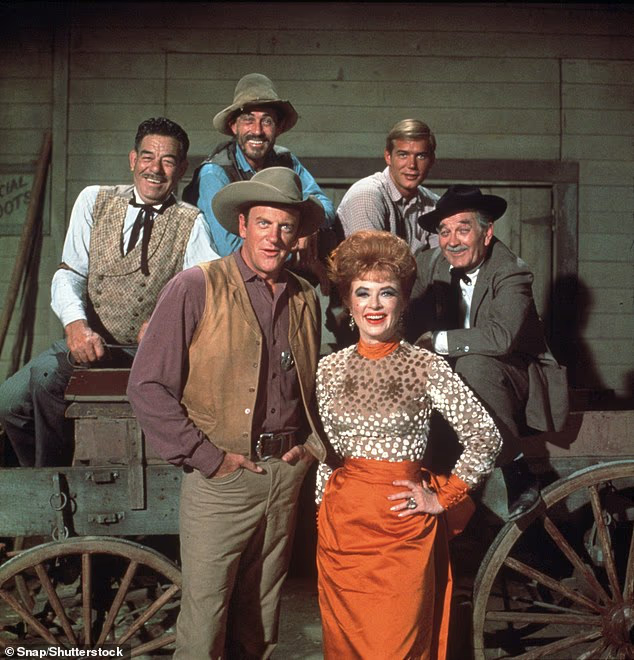
He first appeared on the legendary series Gunsmoke in February 1965, initially playing a character named Ben Lukens. At just 23 years old, he brought youthful energy to a show already rich with seasoned performers.
Producers took notice.
Not long after, he returned to the series in a new role — one that would become his most remembered performance. He was cast as Deputy Marshal Thad Greenwood, a steady and likable lawman who quickly earned affection from viewers.
Over the next two years, he appeared in 50 episodes, remaining with the show until September 1967. His character provided balance to the cast, embodying loyalty, courage, and quiet integrity — traits that resonated deeply with fans.
It was during this period that he became a familiar face in millions of living rooms across America.
The Name Behind the Badge
Midway through the tributes and remembrances, the actor’s name returned to the forefront of public memory.
He was Roger Ewing.
Roger Ewing, best known for his role as Deputy Marshal Thad Greenwood on Gunsmoke, had died at the age of 83.
For longtime fans of the series, the news felt like the closing of another chapter in television history.
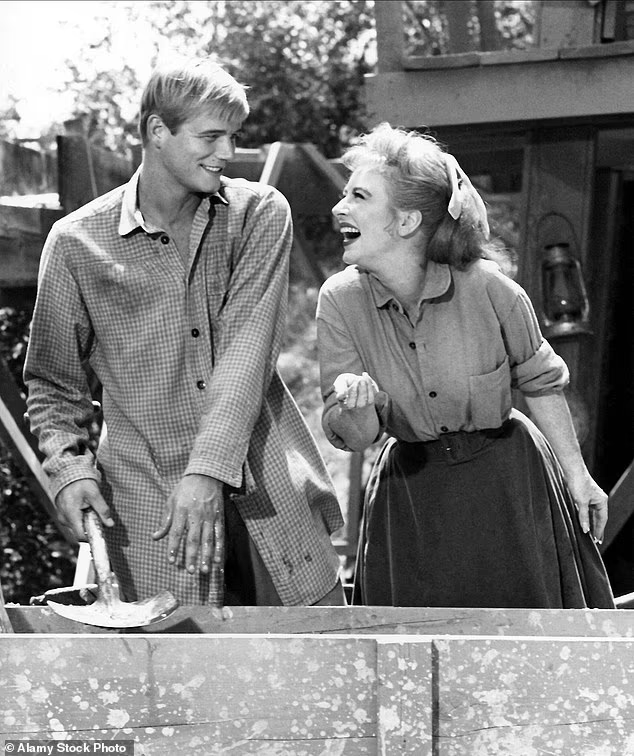
A Career Beyond the Badge
Although Gunsmoke defined much of his public image, Ewing continued to work steadily after leaving the series.
In 1967, he appeared on Mothers-in-Law, and in 1969 he made a memorable appearance on The Dating Game, where he pursued actress Lindsay Wagner — a moment that later delighted classic TV fans when rediscovered.
His film work included Smith! in 1969 and Play It as It Lays in 1972. His final television role came in 1970 on Death Valley Days, bringing his acting career to a gentle close.
Unlike many performers who struggle with leaving the spotlight, Ewing embraced a new chapter.
A Life Behind the Lens
After stepping away from acting, Ewing reinvented himself as a photographer. He traveled extensively, capturing landscapes and people across Europe, the South Pacific, Mexico, and Russia.
Friends described him as deeply observant and reflective during this period of his life. Photography, they said, allowed him to continue telling stories — just without a script.
His work reflected a love of culture, history, and human expression, and he reportedly found great fulfillment in this quieter creative pursuit.
Civic Engagement and Political Interest
Ewing also developed a strong interest in civic life. In 2003, he ran for a city council seat in Morro Bay, California, demonstrating his commitment to community involvement and public service.
Though he never sought fame again, he remained respected among those who knew him for his integrity, curiosity, and willingness to engage thoughtfully with the world around him.
A Private Personal Life
Roger Ewing never married and did not have children. Those close to him said he valued independence and friendship, maintaining close ties with family and longtime companions.
In later years, he lived a largely private life, rarely granting interviews and preferring to let his work speak for itself.
Tributes From Fans
Since news of his death became public, social media and fan forums have filled with tributes.
Many recalled watching him on Gunsmoke with parents or grandparents, describing his character as one of the show’s most quietly admirable figures. Others praised his calm presence and natural sincerity.
“He wasn’t flashy, but he felt real,” one fan wrote. “That’s why people loved him.”
Another added: “He made you believe in the goodness of the character he played.”
Remembering a Television Era
Roger Ewing’s death marks the loss of another figure from the era when television Westerns dominated American entertainment and actors became household companions rather than distant celebrities.
He represented a generation of performers who built careers on consistency, professionalism, and humility — qualities that often outlast fame itself.
Though he never sought the spotlight in later years, his legacy endures in reruns, archival clips, and the memories of viewers who grew up watching him ride across dusty streets of fictional frontier towns.
A Quiet Goodbye
According to his family, Ewing passed peacefully. No cause of death was publicly disclosed.
He is survived by relatives who have asked for privacy while celebrating a life filled with creativity, curiosity, and quiet accomplishment.
As fans continue to revisit his work, one thing remains clear: Roger Ewing may have stepped away from the screen decades ago, but his presence never truly faded.
In the world of classic television, his badge, his smile, and his steady gaze will always remain part of the story.

Emily Johnson is a critically acclaimed essayist and novelist known for her thought-provoking works centered on feminism, women’s rights, and modern relationships. Born and raised in Portland, Oregon, Emily grew up with a deep love of books, often spending her afternoons at her local library. She went on to study literature and gender studies at UCLA, where she became deeply involved in activism and began publishing essays in campus journals. Her debut essay collection, Voices Unbound, struck a chord with readers nationwide for its fearless exploration of gender dynamics, identity, and the challenges faced by women in contemporary society. Emily later transitioned into fiction, writing novels that balance compelling storytelling with social commentary. Her protagonists are often strong, multidimensional women navigating love, ambition, and the struggles of everyday life, making her a favorite among readers who crave authentic, relatable narratives. Critics praise her ability to merge personal intimacy with universal themes. Off the page, Emily is an advocate for women in publishing, leading workshops that encourage young female writers to embrace their voices. She lives in Seattle with her partner and two rescue cats, where she continues to write, teach, and inspire a new generation of storytellers.