


A recent U.S. Supreme Court ruling has sent ripples through the veterans’ community, quietly redefining how disability claims can be reviewed when evidence is evenly balanced. While the case received far less public attention than major political or social disputes, its impact could affect thousands of current and future veterans seeking compensation for service-related injuries and illnesses.
At the center of the decision is a long-standing principle known as the “benefit-of-the-doubt” rule, which requires the Department of Veterans Affairs (VA) to approve a claim when the evidence for and against it is roughly equal. For decades, that rule has been seen as a cornerstone of veterans’ law, designed to recognize that military service often leaves behind injuries that are difficult to document with perfect clarity.
But in a 7–2 decision, the Supreme Court ruled that the U.S. Court of Appeals for Veterans Claims does not generally need to conduct an independent review of how the VA applies that rule. Instead, the veterans court may limit its role to checking for clear legal or factual errors.
Supporters of the ruling argue that it preserves judicial efficiency and respects the expertise of VA adjudicators. Critics say it weakens one of the most important protections veterans have in the disability system.
What the Court Actually Decided
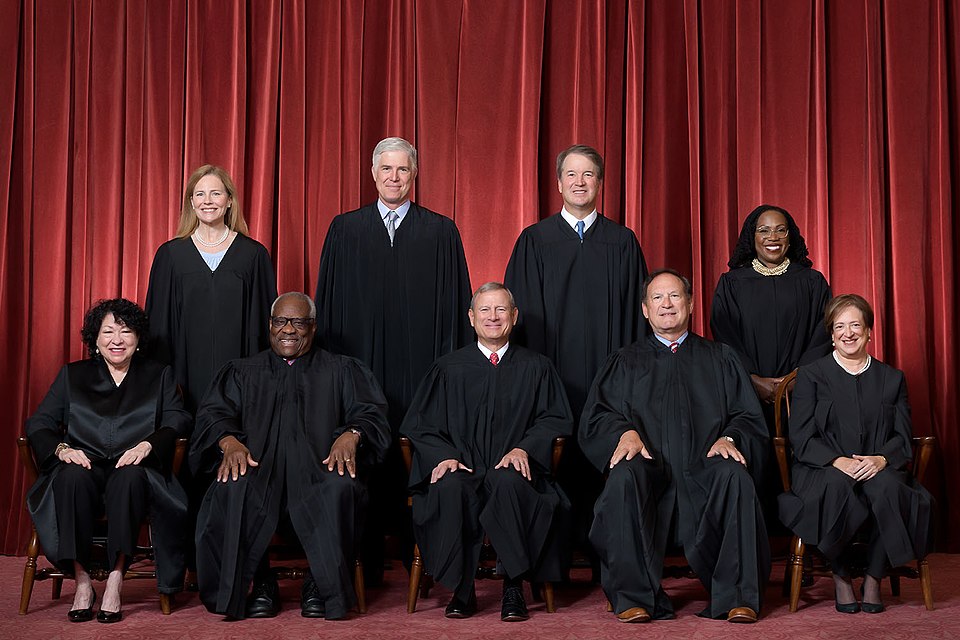
Justice Clarence Thomas, writing for the majority, explained that the veterans court is not legally required to re-weigh evidence under the benefit-of-the-doubt standard in most cases. Instead, the court must review legal questions from the beginning and factual findings only for “clear error.”
In simpler terms, the veterans court does not have to second-guess how the VA balanced evidence unless there is an obvious mistake.
Thomas emphasized that determining whether evidence is in “approximate balance” is primarily a factual judgment, and appellate courts traditionally defer to those findings unless they are plainly wrong.
This approach, he wrote, aligns with how courts review similar agency decisions across the federal system.
The Veterans Behind the Case
The case, Bufkin v. Collins, involved two former service members whose claims were denied under the VA system.
One was Joshua Bufkin, who served in the Air Force from 2005 to 2006. Years after leaving the service, Bufkin applied for disability benefits for post-traumatic stress disorder. He argued that his mental health struggles were tied to his time in uniform, including stress related to his military training and personal circumstances.
However, VA doctors disagreed about whether he met the criteria for PTSD and whether his condition was truly connected to his service. Because of those disagreements, the VA denied his claim.
The second veteran, Norman Thornton, served in the Army from 1988 to 1991 and deployed during the Persian Gulf War. He was initially granted a 10 percent disability rating for PTSD, later raised to 50 percent. Thornton appealed, arguing his condition warranted an even higher rating.
In both cases, the Board of Veterans’ Appeals concluded that the evidence did not justify approval beyond what had already been granted or denied.
When the cases reached the Veterans Court of Appeals, the judges reviewed them for errors but did not perform a fresh benefit-of-the-doubt analysis. The Federal Circuit later agreed that this limited review was legally sufficient.
That set the stage for the Supreme Court.
What the Veterans Argued
Bufkin and Thornton argued that Congress clearly intended veterans to receive the benefit of the doubt whenever evidence was evenly balanced. They said appellate courts should actively review whether the VA applied that rule correctly, not simply look for obvious mistakes.
In their view, without meaningful review, the rule risks becoming symbolic rather than protective.
They pointed to congressional concern that the Veterans Court had been too deferential to the VA in the past and argued that lawmakers wanted stronger judicial oversight.
Why the Majority Disagreed
Justice Thomas wrote that the veterans failed to show a legal requirement for broader review. He concluded that the benefit-of-the-doubt decision is largely factual, and therefore subject only to clear-error review.
“After closely examining the way in which the VA conducts the approximate balance inquiry,” Thomas wrote, “we conclude it is a predominantly factual question.”
In effect, the majority ruled that unless the VA’s reasoning is plainly unreasonable or unsupported, appellate courts should not step in.
The Dissent
Justices Ketanji Brown Jackson and Neil Gorsuch dissented.
Jackson argued that Congress clearly intended veterans to receive special protection in close cases and that the majority’s approach undermines that intent. She warned that the ruling risks turning the benefit-of-the-doubt rule into an empty promise.
“The court today concludes that Congress meant nothing when it inserted this language into law,” she wrote, saying the Veterans Court should not simply defer to the VA’s conclusions.
Her dissent reflected a broader concern shared by many veterans’ advocates: that without meaningful review, the VA’s decisions may go largely unchecked.
Why This Matters to Veterans
For veterans navigating the disability system, this ruling could make appeals more difficult. Even if evidence appears evenly balanced, appellate courts may now be less willing to intervene unless a clear error is shown.
That places greater importance on the initial stages of the VA claims process, where evidence is gathered, medical opinions are written, and credibility is assessed.
Advocates say veterans may need to be even more thorough in documenting service connections, symptoms, and medical history to avoid close calls that could be difficult to challenge later.
Reactions From the Veterans Community
Veterans’ organizations have expressed concern that the decision tilts the system further in favor of the government.
Some advocates argue that veterans already face an uphill battle proving service connections, especially for mental health conditions, toxic exposure, and delayed-onset illnesses. They fear the ruling will discourage appeals and leave deserving veterans without benefits.
Others, however, note that the decision does not eliminate the benefit-of-the-doubt rule itself. The VA is still required to apply it. The ruling only limits how aggressively appellate courts must review its use.
Supporters of the decision argue that excessive judicial intervention could slow the system even more, increasing backlogs and delays for all claimants.
The Bigger Legal Picture
This ruling fits into a broader trend in which the Supreme Court has emphasized deference to administrative agencies and factual findings, unless Congress clearly instructs otherwise.
It also reflects ongoing tension between efficiency and fairness in the veterans’ benefits system — a system designed to be non-adversarial, yet increasingly complex.
What Veterans Can Do Now
Experts advise veterans to:
-
Gather strong medical opinions that clearly link conditions to service.
-
Keep detailed records of symptoms and treatment.
-
Seek assistance from accredited veterans service organizations or attorneys.
-
Be prepared that appeals may hinge more on proving clear factual errors than on close evidentiary balance.
Final Thoughts
The Supreme Court’s decision may not make headlines like landmark civil rights or election cases, but for veterans seeking recognition of their sacrifices, it carries lasting consequences.
The benefit-of-the-doubt rule remains part of the law — but how powerfully it protects veterans now depends more than ever on how convincingly they can build their cases before they ever reach an appellate judge.
For many veterans, that reality may feel like another battle after the one they already fought in uniform.

Emily Johnson is a critically acclaimed essayist and novelist known for her thought-provoking works centered on feminism, women’s rights, and modern relationships. Born and raised in Portland, Oregon, Emily grew up with a deep love of books, often spending her afternoons at her local library. She went on to study literature and gender studies at UCLA, where she became deeply involved in activism and began publishing essays in campus journals. Her debut essay collection, Voices Unbound, struck a chord with readers nationwide for its fearless exploration of gender dynamics, identity, and the challenges faced by women in contemporary society. Emily later transitioned into fiction, writing novels that balance compelling storytelling with social commentary. Her protagonists are often strong, multidimensional women navigating love, ambition, and the struggles of everyday life, making her a favorite among readers who crave authentic, relatable narratives. Critics praise her ability to merge personal intimacy with universal themes. Off the page, Emily is an advocate for women in publishing, leading workshops that encourage young female writers to embrace their voices. She lives in Seattle with her partner and two rescue cats, where she continues to write, teach, and inspire a new generation of storytellers.