

MINNEAPOLIS — Minnesota Governor Tim Walz raised serious concerns Thursday over the integrity of the federal investigation into the fatal shooting of a 37-year-old woman by a U.S. Immigration and Customs Enforcement officer, warning that the process risks losing public trust if state authorities are excluded.
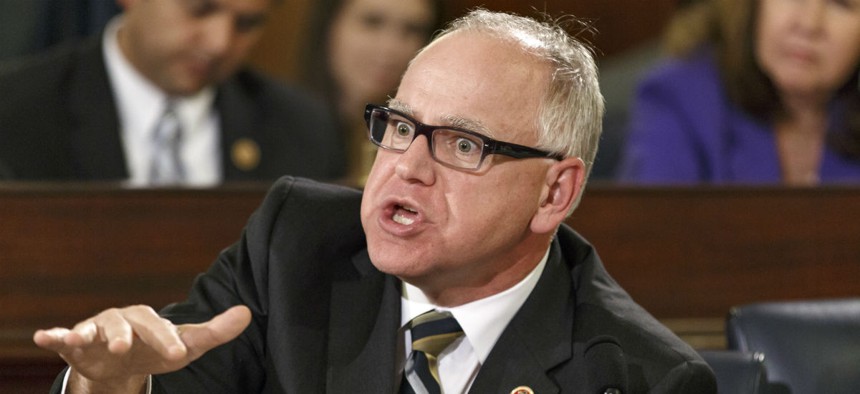
Speaking at a news conference, Walz said the Trump administration has blocked Minnesota investigators from participating in the inquiry, despite an initial expectation of a joint investigation. The Minnesota Bureau of Criminal Apprehension (BCA) has since confirmed that the FBI denied it access to evidence related to the shooting, which occurred Wednesday during ICE operations in Minneapolis.
Walz argued that without the involvement of state investigators, Minnesotans will struggle to view the outcome as impartial or legitimate.
“It is extremely difficult to believe this investigation will result in a fair outcome when Minnesota has been shut out,” Walz said, emphasizing that public confidence depends on transparency and shared oversight.
Federal Control Raises Tensions
The FBI declined to comment publicly on the BCA’s assertion that state officials were blocked from accessing investigative materials. However, the dispute has escalated tensions between state leaders and federal authorities at a moment when emotions remain raw following the woman’s death.
The shooting has already become a flashpoint in a broader national debate over federal immigration enforcement and the use of force by law enforcement officers. President Donald Trump and Homeland Security Secretary Kristi Noem have both issued strong public statements describing the woman’s actions as violent and deliberate, characterizing the incident as an act of domestic terrorism.
Walz sharply criticized those statements, arguing that senior officials have prematurely framed the narrative before the facts have been fully examined.
“When people at the highest levels of power have already declared what happened and who is at fault, it undermines the credibility of the investigation from the outset,” Walz said.
Disputed Accounts of the Shooting
Federal officials have said the woman, identified as Renee Good, attempted to strike an ICE officer with her vehicle, prompting the agent to fire in self-defense. President Trump echoed that version of events on social media, describing Good as a “professional agitator” who deliberately ran over an officer.
However, eyewitness video circulating publicly has fueled debate about whether the situation unfolded as definitively as federal officials have claimed. The footage has prompted questions from legal experts and former law enforcement officials about whether the use of lethal force complied with agency policy.
A retired ICE agent with decades of federal law enforcement experience told CBS News that the video raises serious concerns, particularly given the strict limitations under which ICE and Department of Homeland Security officers are permitted to fire at moving vehicles.
Federal policy generally restricts such actions to scenarios where there is an imminent threat of death or serious bodily harm and no reasonable alternative. Whether those conditions were met remains at the center of the dispute.
State Officials Cite Lack of Access
Bob Jacobsen, commissioner of the Minnesota Department of Public Safety, said state authorities were initially led to believe the investigation would be conducted jointly, a practice that has been followed in previous officer-involved shootings involving federal agents.
Instead, Jacobsen said, the FBI has shared no investigative reports, physical evidence, or witness statements with the BCA.
“Without cooperation from the federal government, it becomes extraordinarily difficult — if not impossible — for the state to conduct a thorough and independent investigation,” Jacobsen said.
He warned that the lack of access could prevent state prosecutors from making an informed decision about whether criminal charges are warranted.
“As a public safety professional, I am not prepared to draw conclusions about fault,” Jacobsen said. “But without evidence, witness access, and officer interviews, no prosecutor could responsibly assess whether a crime occurred.”
Political Pressure and Public Trust
Walz emphasized that his concerns are not about prejudging the ICE officer’s actions, but about ensuring procedural fairness. He said the appearance of bias — fueled by early political statements from Washington — has already damaged public confidence.
The governor singled out remarks by Secretary Noem, who labeled the shooting an act of domestic terrorism within hours of the incident, and said such language amounted to reaching a verdict before investigators completed their work.
“When the secretary of homeland security publicly defines the outcome before evidence is reviewed, it creates the perception that the process is rigged,” Walz said.
He added that Minnesotans expect accountability regardless of whether the officer’s actions are ultimately deemed justified.
FBI Investigation Continues
A source familiar with the federal investigation said the FBI is actively interviewing eyewitnesses and officers involved in the incident and is reviewing video footage from multiple angles to reconstruct a detailed timeline of events.
According to the source, once the investigation is complete, the evidence will be forwarded to the U.S. Attorney’s Office in Minnesota and the Department of Homeland Security, which employs the officer.
Border enforcement chief Tom Homan declined to comment on the specifics of the case, saying he would wait for the investigation to conclude before drawing conclusions.
Walz acknowledged that a federal investigation is necessary but insisted that excluding the state undermines transparency and accountability.
“We don’t want a predetermined outcome,” he said. “We want a complete, credible investigation that people can trust.”
Uncertain Path Forward
As protests and public scrutiny continue, the standoff between Minnesota officials and federal authorities shows no immediate signs of resolution. Walz urged federal agencies to reconsider their position and allow state investigators to participate, warning that failure to do so will deepen skepticism and division.
“This is not about politics,” Walz said. “It’s about whether people believe the system works fairly — especially when someone has lost their life.”
For now, the investigation remains solely under federal control, leaving state officials and much of the public waiting for answers amid growing controversy.

Emily Johnson is a critically acclaimed essayist and novelist known for her thought-provoking works centered on feminism, women’s rights, and modern relationships. Born and raised in Portland, Oregon, Emily grew up with a deep love of books, often spending her afternoons at her local library. She went on to study literature and gender studies at UCLA, where she became deeply involved in activism and began publishing essays in campus journals. Her debut essay collection, Voices Unbound, struck a chord with readers nationwide for its fearless exploration of gender dynamics, identity, and the challenges faced by women in contemporary society. Emily later transitioned into fiction, writing novels that balance compelling storytelling with social commentary. Her protagonists are often strong, multidimensional women navigating love, ambition, and the struggles of everyday life, making her a favorite among readers who crave authentic, relatable narratives. Critics praise her ability to merge personal intimacy with universal themes. Off the page, Emily is an advocate for women in publishing, leading workshops that encourage young female writers to embrace their voices. She lives in Seattle with her partner and two rescue cats, where she continues to write, teach, and inspire a new generation of storytellers.