


A simmering political controversy in the Upper Midwest has erupted into a national flashpoint, pulling in federal investigators, state officials, and senior figures in Washington. What began as a series of online allegations has rapidly escalated into a broader debate over government oversight, accountability, and leadership at the highest levels of state government.
At the center of the storm is a growing investigation into alleged misuse of public funds tied to social service programs—an issue that critics say points to systemic failures rather than isolated misconduct. Supporters of the state’s leadership insist the situation is being distorted for political gain, while opponents argue the controversy exposes deep flaws that demand immediate consequences.
The tension reached a new level this week after remarks made during a nationally televised interview, when a senior administration official delivered a blunt assessment that reverberated across social media and cable news alike.
Allegations That Sparked Federal Scrutiny
The controversy traces back to claims of widespread fraud involving state-backed funding intended for childcare and welfare-related services. According to allegations circulating online and now under formal review, millions of dollars were directed to organizations that appeared to provide little or no actual service.
One viral video in particular drew widespread attention. It showed what appeared to be a largely inactive daycare facility in Minneapolis that, according to the claims, had received substantial public funding. The footage raised immediate questions about how such organizations were vetted, monitored, and allowed to continue receiving taxpayer dollars.
Within days, federal authorities confirmed that probes were underway to determine whether criminal activity had occurred. Investigators are reportedly examining financial records, licensing documentation, and oversight procedures to assess whether fraud, misrepresentation, or negligence played a role.
State Leaders Push Back
Officials in the governor’s office moved quickly to respond, rejecting accusations that the administration ignored or enabled wrongdoing. In a series of statements, the governor emphasized that state agencies had already been working to identify and stop fraudulent activity.
“We take any misuse of public funds seriously,” the governor said in one response. “Our administration has strengthened oversight, referred suspicious cases for investigation, and cooperated fully with federal authorities.”
Supporters echoed that defense, arguing that fraud can occur in any large system and that identifying it demonstrates vigilance rather than failure. They also cautioned against conflating allegations with proven wrongdoing, urging patience as investigations unfold.
A National Voice Enters the Debate
Despite those reassurances, the issue soon leapt beyond state borders. During a Fox News appearance, the vice president addressed the controversy directly, offering a sharply worded critique that intensified the political fallout.
Without mincing words, he accused the governor of failing to get a handle on what he described as “widespread welfare fraud,” framing the issue as emblematic of broader governance problems.
Federal investigators, he said, would “get to the root of the problem,” adding that anyone found responsible would be prosecuted to the fullest extent of the law. The administration, he stressed, would not tolerate theft or abuse of programs designed to help vulnerable families.
The Four Words That Set Off a Firestorm
The moment that dominated headlines, however, came when the vice president was asked what should happen next. His response—just four words long—was unambiguous: the governor should resign.
Those four words ricocheted across the political landscape, instantly becoming a rallying cry for critics and a lightning rod for defenders. Within hours, lawmakers, activists, and commentators weighed in, some applauding the bluntness, others calling it reckless and premature.
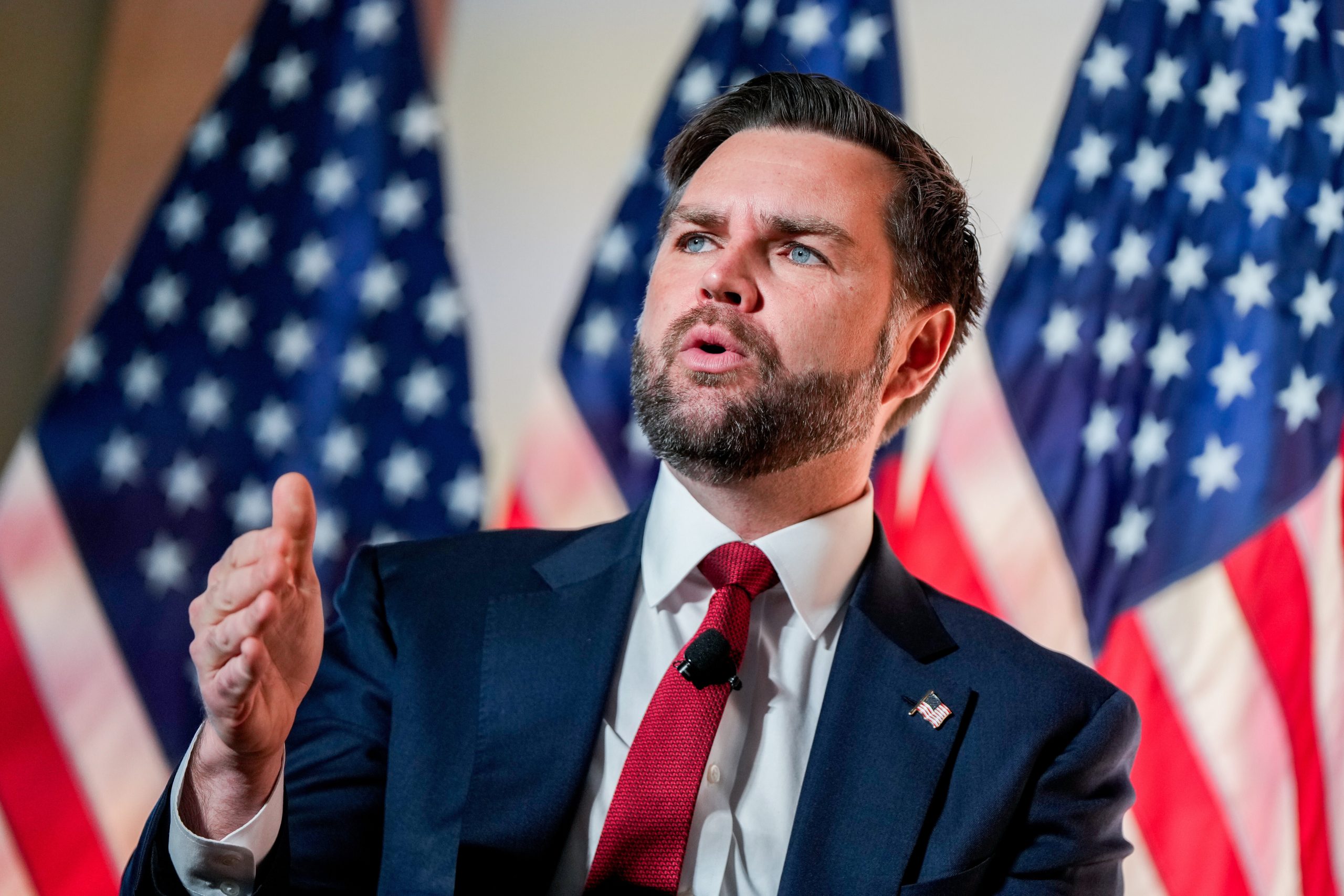
It was at this point that the vice president, JD Vance, became inseparably linked to the controversy, with his remarks reframing what had been a regional issue into a national test of political accountability.
Fallout and Political Reactions
Reaction from across the political spectrum was swift and polarized. Conservative lawmakers praised the vice president for “telling the truth plainly,” arguing that leadership requires accepting responsibility when systems fail.
“Taxpayers deserve better,” one critic said. “If millions can disappear under your watch, accountability has to start at the top.”
On the other side, allies of the governor accused Vance of exploiting an ongoing investigation for political advantage. They argued that calling for resignation before the completion of federal probes undermines due process and risks politicizing law enforcement.
“This is about scoring points, not solving problems,” one state legislator said. “Investigations should run their course, free from political pressure.”
The Governor’s Defense
In multiple appearances and statements, the governor rejected calls to step down, insisting that his administration had acted responsibly.
He pointed to task forces formed to review welfare programs, audits initiated in response to red flags, and cooperation with federal agencies as evidence of proactive leadership. Far from ignoring the issue, he said, the state had been confronting it head-on.
“We are not sweeping anything under the rug,” he said. “We are fixing problems, protecting taxpayers, and ensuring aid reaches the people who actually need it.”
The governor also warned that resigning amid an investigation could destabilize ongoing reforms and disrupt services relied upon by thousands of families.
Broader Implications for Welfare Oversight
Beyond the immediate political drama, the controversy has reignited a longstanding national debate over welfare administration. Critics argue that decentralized systems with limited oversight create opportunities for abuse, while defenders say most recipients and providers operate honestly and that fraud rates are often exaggerated.
Experts note that welfare programs involve complex networks of contractors, nonprofits, and local agencies, making oversight challenging even under strong leadership. When failures occur, determining whether they stem from corruption, mismanagement, or systemic design flaws can take months or years.
The current investigation may ultimately lead to policy changes, including tighter auditing requirements, more frequent inspections, and stricter eligibility standards for organizations receiving public funds.
Federal Investigations Continue
For now, the focus remains on the ongoing probes. Federal investigators have not announced charges, named suspects, or provided a timeline for conclusions. Officials emphasize that investigations of this scope require careful review of evidence and financial records.
Still, the vice president’s comments have raised expectations that the administration will pursue the matter aggressively. Supporters of that approach argue it sends a clear signal that fraud will not be tolerated. Critics worry it could create pressure to reach conclusions before all facts are known.
What Comes Next
As the controversy unfolds, several outcomes remain possible. Investigators could uncover evidence of large-scale fraud implicating multiple actors, validating critics’ claims and increasing pressure on state leadership. Alternatively, the probes could reveal more limited misconduct, shifting attention toward targeted reforms rather than political consequences.
In the meantime, the governor faces a delicate balancing act: defending his record without appearing dismissive of legitimate concerns, while navigating a national spotlight that shows no sign of fading.
What is clear is that a few words spoken on national television have transformed a complex policy issue into a defining political moment—one that could shape careers, elections, and the future of welfare oversight long after the investigations conclude.

Emily Johnson is a critically acclaimed essayist and novelist known for her thought-provoking works centered on feminism, women’s rights, and modern relationships. Born and raised in Portland, Oregon, Emily grew up with a deep love of books, often spending her afternoons at her local library. She went on to study literature and gender studies at UCLA, where she became deeply involved in activism and began publishing essays in campus journals. Her debut essay collection, Voices Unbound, struck a chord with readers nationwide for its fearless exploration of gender dynamics, identity, and the challenges faced by women in contemporary society. Emily later transitioned into fiction, writing novels that balance compelling storytelling with social commentary. Her protagonists are often strong, multidimensional women navigating love, ambition, and the struggles of everyday life, making her a favorite among readers who crave authentic, relatable narratives. Critics praise her ability to merge personal intimacy with universal themes. Off the page, Emily is an advocate for women in publishing, leading workshops that encourage young female writers to embrace their voices. She lives in Seattle with her partner and two rescue cats, where she continues to write, teach, and inspire a new generation of storytellers.