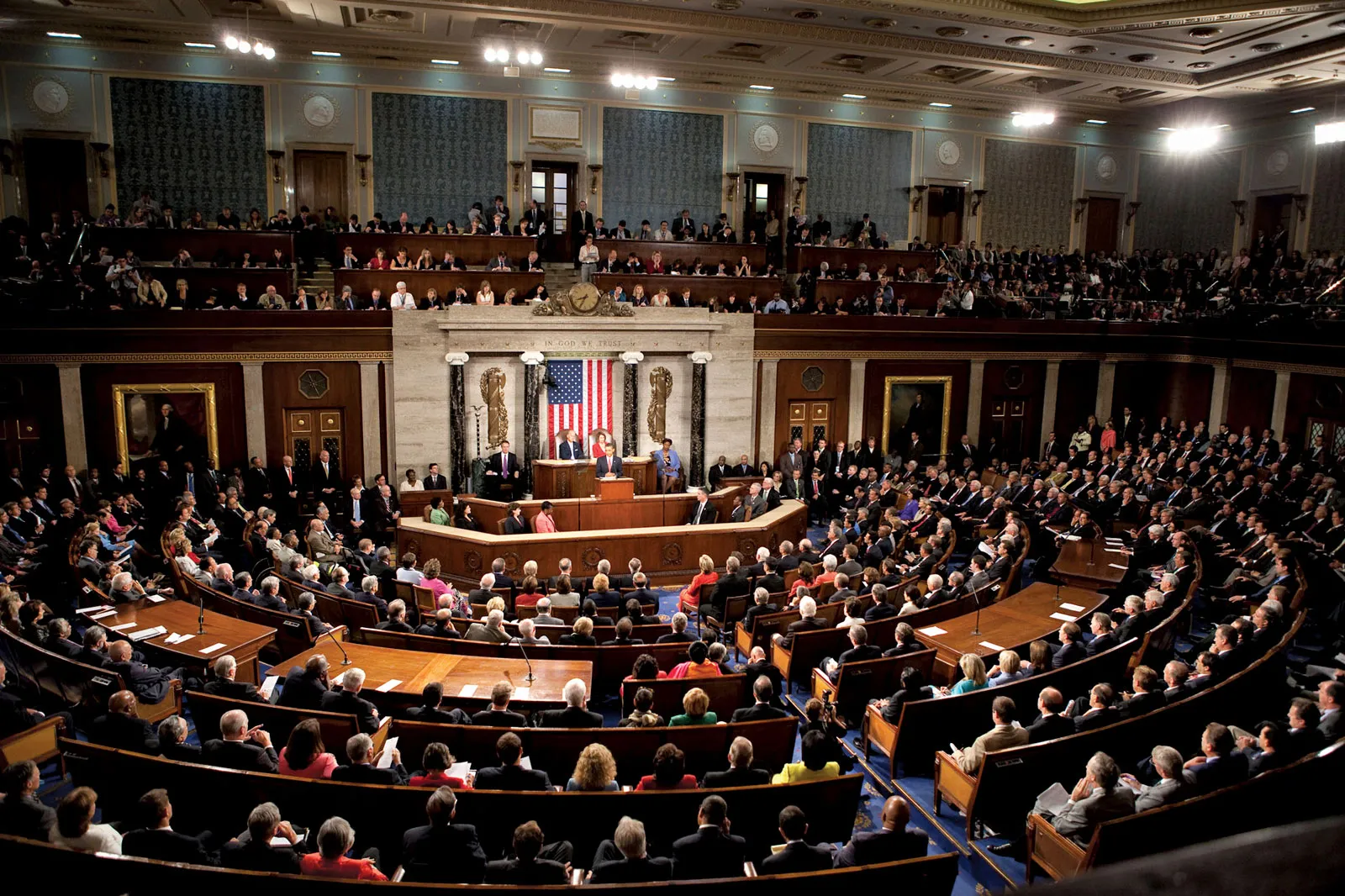
The U.S. House of Representatives is preparing for a consequential vote on Jan. 8 that could set the tone for relations between Congress and the White House in President Donald Trump’s second term. Lawmakers will decide whether to attempt to override two presidential vetoes issued at the end of 2025—Trump’s first vetoes since returning to office.
The vote will test not only the strength of Republican unity in Congress, but also the willingness of Democrats and moderate Republicans to challenge the president early in his term on issues that blend infrastructure funding, environmental protection, tribal sovereignty, and executive authority.
The Vetoes That Sparked the Showdown
Trump issued the vetoes on Dec. 31, rejecting two separate pieces of legislation that had previously passed both chambers of Congress with bipartisan support.
One bill would have authorized federal funding to support a water pipeline project in Colorado designed to serve tens of thousands of residents. Supporters of the measure argued the pipeline was critical to ensuring long-term water security for fast-growing communities facing increasing strain from drought, population growth, and aging infrastructure.
The second vetoed bill focused on land management in South Florida. It would have added a parcel of federally controlled land within Everglades National Park to the Miccosukee Indian Reservation, a move backed by tribal leaders and environmental advocates who said it would strengthen tribal sovereignty while preserving sensitive wetlands.
Trump rejected both measures, arguing they were fiscally irresponsible and raised broader concerns about federal land policy and precedent.
What Happens Next
Under the U.S. Constitution, Congress can override a presidential veto—but only with a two-thirds majority vote in both the House and the Senate. That high threshold makes successful overrides relatively rare, especially in a sharply divided political climate.
House leaders have scheduled the votes for Jan. 8, marking one of the earliest veto challenges of a new presidential term in recent history. Even if the House were to muster the necessary votes, the measures would still face an uphill battle in the Senate, where margins are tight and party discipline has become increasingly important.
Still, supporters of the legislation say the attempt itself matters.
“This is about Congress asserting its constitutional role,” said one lawmaker familiar with the discussions. “Even if the override fails, it sends a message about priorities and accountability.”
The Colorado Pipeline Dispute
The vetoed Colorado measure was framed by its sponsors as a practical infrastructure solution rather than a partisan statement. The pipeline project aimed to modernize water delivery systems in a region that has experienced recurring shortages and mounting pressure on existing supplies.
Backers emphasized that the project would benefit rural and suburban communities alike, support economic growth, and reduce long-term costs associated with emergency water measures.
Trump, however, criticized the bill as an example of what he has repeatedly called “unchecked federal spending.” In his veto message, he argued that water infrastructure should be handled primarily at the state and local level, and that the federal government should not be expected to underwrite projects without stricter oversight and cost controls.
The veto has drawn criticism from some Western lawmakers, including Republicans, who say water scarcity is a national issue requiring federal involvement.
Everglades Land and Tribal Sovereignty
The second vetoed bill has proven even more politically sensitive. The legislation would have transferred a specific parcel of land within Everglades National Park to the Miccosukee Tribe, formalizing what supporters describe as a long-overdue recognition of tribal land rights.
Tribal leaders argued the land transfer would not undermine environmental protections and could, in fact, enhance conservation efforts through traditional land stewardship practices.
Environmental groups largely supported the measure, saying the Miccosukee have a strong track record of protecting the Everglades ecosystem.
Trump’s veto message raised concerns about setting a precedent for altering the boundaries of national parks and questioned whether such transfers could weaken federal protections in the future. He also argued that Congress should take a more comprehensive approach to federal land management rather than approving what he described as “piecemeal” changes.
Political Stakes for Both Parties
For Republicans, the upcoming vote presents a delicate balancing act. Party leaders must decide whether to stand firmly behind the president or allow members from affected states to break ranks.
Some GOP lawmakers from Colorado and Florida have expressed frustration privately, noting that both measures had local support and were not framed as ideological fights when they passed earlier.
Democrats, meanwhile, see the vetoes as an opportunity to draw contrasts between congressional priorities and the administration’s agenda. Several Democratic leaders have argued that the vetoes show Trump is willing to block bipartisan solutions in favor of consolidating executive power.
“This is about whether Congress can still function as a coequal branch of government,” one senior Democrat said.
Likelihood of an Override
Despite the rhetoric, most political analysts say the chances of successfully overriding either veto remain slim. Securing two-thirds support in the House would require a significant number of Republicans to vote against the president—an outcome that remains unlikely so early in his term.
The Senate poses an even greater challenge, where achieving a two-thirds majority would likely require near-unanimous Democratic support plus a substantial bloc of Republicans.
Still, lawmakers involved in the effort say the votes will serve as a litmus test for where Congress stands and how willing it is to push back against the White House.
Broader Implications
Beyond the immediate fate of the two bills, the veto votes carry broader implications for governance over the next four years.
Trump has made clear that he intends to use his veto power aggressively if he believes legislation conflicts with his priorities. An early failure by Congress to mount a serious challenge could embolden the administration to take a harder line on future spending, environmental, and infrastructure bills.
Conversely, even a close override vote could signal that lawmakers are prepared to assert themselves on issues with strong local or bipartisan backing.
What to Watch on Jan. 8
As the House prepares to vote, attention will focus on several key questions:
-
How many Republicans break with the president?
-
Do lawmakers frame their votes around local interests or national principles?
-
Does the margin of the vote suggest future veto challenges could gain traction?
While the outcome may not change the law immediately, the vote will offer one of the first clear indicators of how Congress and the White House will navigate power, policy, and political pressure in Trump’s second term.
For now, both sides are digging in, with Jan. 8 shaping up to be an early test of political will on Capitol Hill.

Emily Johnson is a critically acclaimed essayist and novelist known for her thought-provoking works centered on feminism, women’s rights, and modern relationships. Born and raised in Portland, Oregon, Emily grew up with a deep love of books, often spending her afternoons at her local library. She went on to study literature and gender studies at UCLA, where she became deeply involved in activism and began publishing essays in campus journals. Her debut essay collection, Voices Unbound, struck a chord with readers nationwide for its fearless exploration of gender dynamics, identity, and the challenges faced by women in contemporary society. Emily later transitioned into fiction, writing novels that balance compelling storytelling with social commentary. Her protagonists are often strong, multidimensional women navigating love, ambition, and the struggles of everyday life, making her a favorite among readers who crave authentic, relatable narratives. Critics praise her ability to merge personal intimacy with universal themes. Off the page, Emily is an advocate for women in publishing, leading workshops that encourage young female writers to embrace their voices. She lives in Seattle with her partner and two rescue cats, where she continues to write, teach, and inspire a new generation of storytellers.