Donald Trump delivered exactly what many Republican lawmakers have come to expect from him: an unscripted, theatrical performance that blurred the line between political messaging and personal entertainment. Speaking at the GOP’s annual retreat at the Kennedy Center in Washington, D.C., the president set off waves of laughter, applause, and surprise when he revealed a candid — and somewhat humorous — truth about life behind the scenes of his public persona.
According to Trump, his wife, First Lady Melania Trump, has strong feelings about some of the most recognizable elements of his rally-style speeches. And while critics might assume she objects to his sharp rhetoric or political attacks, Trump told the audience it was something far more physical that irritates her most: his exaggerated gestures, weight-lifting imitations, and signature on-stage dancing.
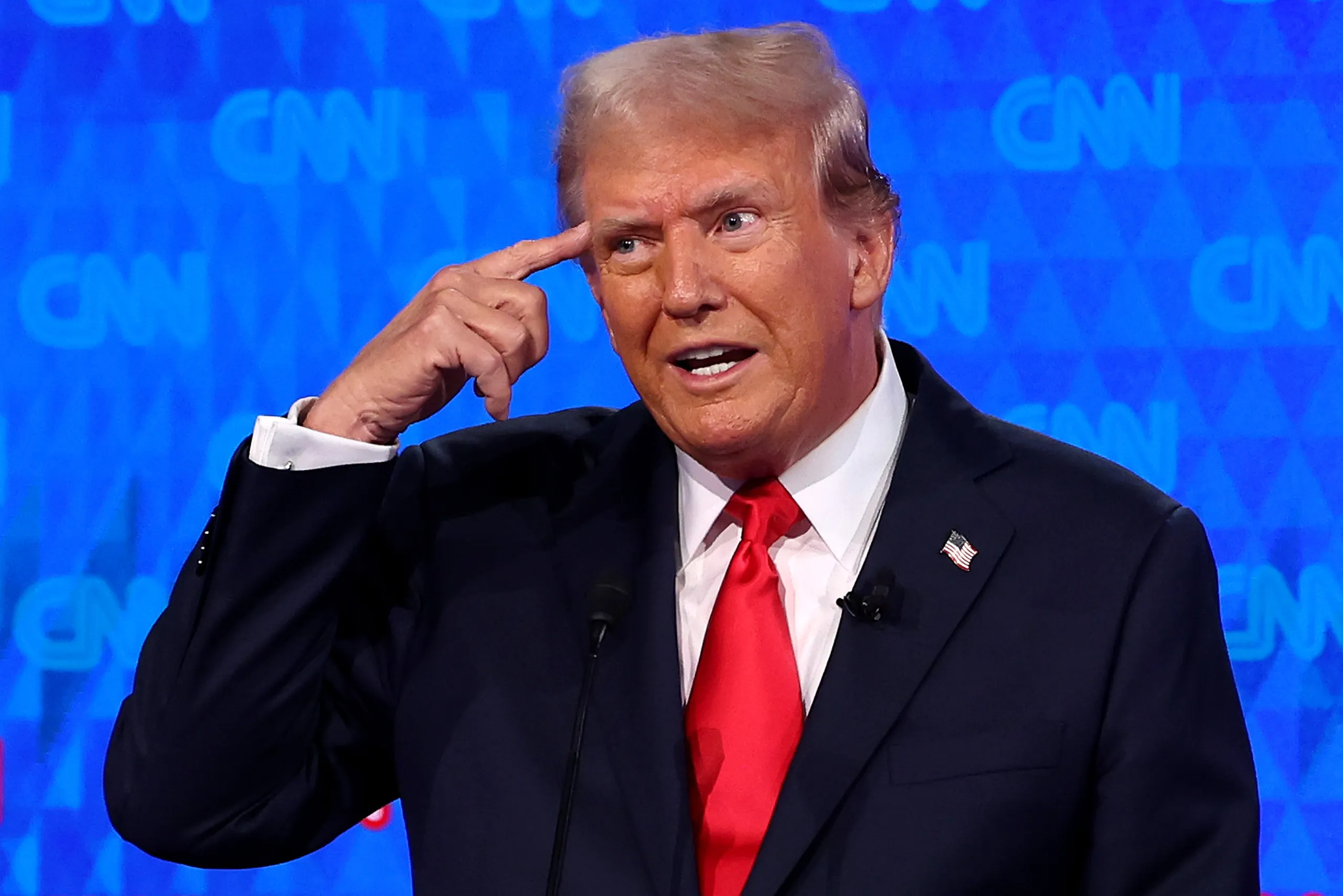
“My wife hates when I do this,” Trump confessed to the room of Republican lawmakers, pausing mid-speech as he mimed lifting an invisible barbell. He described Melania as “a very classy person” who has repeatedly urged him to tone it down, telling him that such displays are “not presidential.”
The remark drew immediate laughter and cheers from the audience, many of whom have seen Trump perform the same gestures dozens of times at rallies across the country. The president appeared amused by the contrast between his wife’s refined sensibilities and the enthusiastic reactions he receives from his supporters.
Trump said he pushed back on Melania’s criticism by reminding her that he had already achieved the presidency while doing exactly what she disliked. According to him, she pleaded again, calling the weight-lifting routine “terrible” and urging him to stop. The president, however, seemed unmoved — especially given the response he was receiving in the room.
The moment came as Trump revisited one of his most controversial talking points: his opposition to allowing transgender athletes who were born male to compete in women’s sports. As he addressed the issue, he launched into a dramatic reenactment meant to illustrate what he views as unfair competition, portraying a female athlete struggling to lift heavy weights while a transgender competitor succeeds effortlessly.
Initially, Trump offered a restrained version of the bit, acknowledging his wife’s disapproval. But moments later, he changed his mind.
“I want to be more effusive,” he said, before fully committing to the performance.
This time, the president exaggerated every movement — sticking out his tongue, huffing and puffing, and pretending to strain under the weight before theatrically dropping the imaginary barbell to the floor. The crowd erupted. Republican lawmakers clapped, laughed, and cheered, clearly energized by the spectacle.
The revelation about Melania’s objections did not stop there. Trump also admitted that the First Lady dislikes his now-famous dance routine, typically performed to the Village People’s “Y.M.C.A.” at the end of rallies and major appearances. The fist-pumping, arm-swinging dance has become one of Trump’s most recognizable trademarks, often going viral online and drawing massive crowd participation.
According to Trump, Melania has repeatedly told him that the dancing undermines the dignity of the presidency. He recounted telling her that supporters “really like it,” only to be met with her blunt assessment that they are “just being nice.”
“That’s not right,” Trump told the GOP crowd, insisting that venues “go crazy” when he dances. The audience response appeared to validate his claim.
The exchange highlighted a rare glimpse into the private dynamic between the president and the First Lady — one marked by contrasting styles and sensibilities. Melania Trump has long maintained a reserved, carefully controlled public image, often standing silently beside her husband as he commands attention. Trump’s admission reinforced that divide, portraying her as an internal voice of restraint amid his unfiltered political theatrics.
The timing of the remarks was notable. The GOP retreat coincided with the fifth anniversary of the January 6, 2021 Capitol riot — a date that remains politically sensitive for Republicans. Yet inside the Kennedy Center, the mood was far from somber. Trump’s speech was loose, meandering, and intentionally off-script, blending policy, personal anecdotes, and entertainment in a way that has become his hallmark.
At several points, the president acknowledged that he had strayed from prepared remarks, but framed that spontaneity as a strength rather than a liability. Toward the end of the speech, he told lawmakers that what he had given them was not a traditional address, but a “roadmap to victory.”
“You have so many good nuggets,” Trump said. “If you can sell them, we’re going to win.”
The underlying political objective was clear. With midterm elections looming in 2026, Republicans face historical headwinds that often cost the party in power control of Congress. Trump used the retreat to energize lawmakers, encourage aggressive messaging, and reinforce issues he believes resonate most strongly with voters.
Interestingly, despite his enthusiasm for the transgender athlete issue, Trump advised Republicans to keep the topic largely out of the spotlight during most of the campaign. He argued that Democrats might attempt to soften or reverse their positions if given enough time.
“I want to start bringing it up about a week before the election,” Trump said, explaining that he did not want Democrats to “correct themselves.” He warned that such a shift could be politically damaging for Republicans if it blunted one of their strongest cultural arguments.
Throughout the speech, Trump repeatedly returned to sports — a subject he clearly enjoys discussing. He declared himself “a big sports person” and singled out Ohio Congressman Jim Jordan, praising his background as an All-American wrestler at Ohio State University.
Yet even the compliment took a familiar Trumpian turn. The president joked about Jordan’s appearance, suggesting that his wrestler’s “cauliflower ear” — a common condition among grapplers — seemed to have improved over time, possibly due to cosmetic work. The comment drew laughter, underscoring Trump’s tendency to blend praise with teasing.
Golf, Trump’s favorite pastime, also made an appearance. He described his approach as “speed golf,” claiming it is more efficient and enjoyable. In typical fashion, he immediately contradicted his own self-deprecation, asserting that he is actually a very good golfer and boasting about victories over others in the room.
Despite claiming he rarely gets to play, Trump spends many weekends at his golf courses, a fact frequently noted by critics but brushed aside during the speech.
As the address came to a close, Trump once again ignored Melania’s advice. The opening notes of “Y.M.C.A.” played, and the president launched into his trademark dance, pumping his fists and swaying his arms as the crowd cheered.
For Republican lawmakers, the performance encapsulated both the appeal and the risk of Trump’s leadership style. His ability to command attention and energize a room remains unmatched within the party. At the same time, the very traits that excite his base — spontaneity, provocation, and spectacle — continue to divide opinion beyond it.
Still, inside the Kennedy Center, there was little doubt about where the audience stood. Trump’s candid confession about his wife’s frustrations only seemed to make him more relatable, reinforcing the image of a president who remains unapologetically himself, regardless of criticism — even when it comes from the First Lady.
Whether Melania approves or not, Trump made it clear: the gestures, the jokes, and the dancing are here to stay.

Emily Johnson is a critically acclaimed essayist and novelist known for her thought-provoking works centered on feminism, women’s rights, and modern relationships. Born and raised in Portland, Oregon, Emily grew up with a deep love of books, often spending her afternoons at her local library. She went on to study literature and gender studies at UCLA, where she became deeply involved in activism and began publishing essays in campus journals. Her debut essay collection, Voices Unbound, struck a chord with readers nationwide for its fearless exploration of gender dynamics, identity, and the challenges faced by women in contemporary society. Emily later transitioned into fiction, writing novels that balance compelling storytelling with social commentary. Her protagonists are often strong, multidimensional women navigating love, ambition, and the struggles of everyday life, making her a favorite among readers who crave authentic, relatable narratives. Critics praise her ability to merge personal intimacy with universal themes. Off the page, Emily is an advocate for women in publishing, leading workshops that encourage young female writers to embrace their voices. She lives in Seattle with her partner and two rescue cats, where she continues to write, teach, and inspire a new generation of storytellers.