



Around 2,500 jobs are now under threat after two major high street retailers were placed into administration, marking one of the most significant retail collapses of the early months of 2026 and deepening concerns about the future of physical shopping in the UK.
The announcement, made late Monday evening, sent shockwaves through the retail sector and left thousands of employees uncertain about their futures. The move follows months of financial distress, falling footfall, and deteriorating consumer confidence that proved impossible to overcome despite repeated rescue efforts.
Industry analysts say the development underscores how even long-established and well-recognized brands are no longer insulated from the pressures reshaping Britain’s shopping streets.
A Sudden Blow for Thousands of Workers
For staff, the news came with little warning. While many were aware that trading conditions had become increasingly difficult, few expected administration to arrive so abruptly at the start of the new year.
Workers across stores, distribution centers, and head offices were informed that insolvency proceedings had been initiated, placing their roles in jeopardy while administrators assess whether parts of the businesses can be salvaged.
The companies’ owner described the decision as “very sad,” emphasizing that it was made only after exhausting all realistic alternatives.
“This has been a very tough decision,” a spokesperson said. “We worked intensively in an effort to save both businesses, including last-ditch rescue attempts, but neither has a realistic possibility of trading profitably again.”
A Perfect Storm on the High Street
The collapse reflects broader challenges facing brick-and-mortar retail, which has been battered by a convergence of economic and structural pressures.
Retailers have struggled with:
-
Declining footfall, particularly during the 2025 Christmas season
-
Weak consumer confidence amid cost-of-living pressures
-
Rising energy, rent, and staffing costs
-
Competition from online retailers and fast-fashion platforms
-
Shifts in how younger consumers shop
Recent retail data showed an “alarming” drop in pre-Christmas shopping traffic, traditionally the most important period for many chains. Even aggressive discounting failed to generate sufficient sales momentum.
“The climate on the high street remains extremely challenging,” the owner said. “Many established and much-loved businesses are suffering badly.”
Administration: What It Means
Administration does not automatically mean immediate closure, but it places the fate of the companies in the hands of insolvency practitioners. Their task is to protect creditors while determining whether the businesses—or parts of them—can be restructured, sold, or wound down.
Possible outcomes include:
-
Closure of underperforming stores
-
Significant job losses
-
Sale of brand names or intellectual property
-
A slimmed-down relaunch under new ownership
For employees, the coming weeks will be decisive as administrators review store-by-store performance and cost structures.
The Retailers Revealed
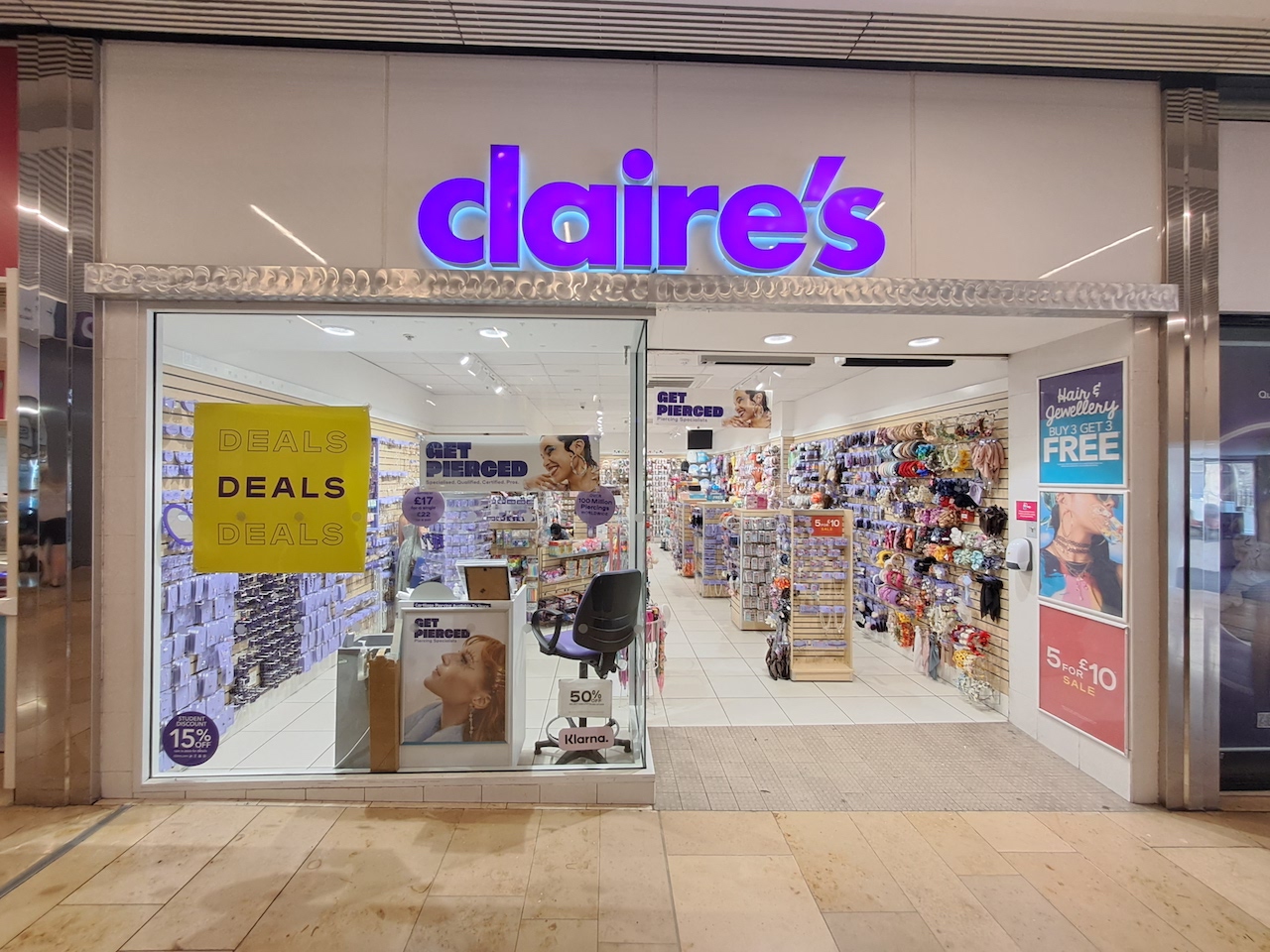
The two chains placed into administration are Claire’s and The Original Factory Shop, both long-standing names that have been fixtures of British shopping streets for decades.

A Brand That Defined a Generation
Founded in 1961, Claire’s became a cultural touchstone for generations of young shoppers. Known for affordable jewelry, accessories, and ear piercing services, the brand carved out a niche as a rite of passage for teenagers and pre-teens.
Its brightly lit stores, packed with glittery earrings, bracelets, and novelty accessories, were once ubiquitous in shopping centers and high streets across the UK and Ireland.
But the very audience that fueled Claire’s rise has also contributed to its decline. Younger consumers increasingly favor online platforms, social media-driven brands, and fast-fashion marketplaces, reducing reliance on traditional physical stores.
Claire’s financial troubles were not new. The company filed for bankruptcy protection in 2018 and again last year, restructuring its debts while continuing to operate. Despite those efforts, profitability remained elusive as costs rose faster than sales.
Discount Retail Not Immune
The Original Factory Shop (often referred to as TOFS) has long positioned itself as a value-driven retailer, selling discounted clothing, homeware, toys, and seasonal goods—particularly in smaller towns and rural areas.
For many communities, TOFS stores were not just shopping destinations but major local employers. However, discount retail has not been immune to the same pressures affecting the broader sector.
Inflation eroded margins, while customers—already drawn by low prices—became even more cautious with discretionary spending. The result was a business model increasingly difficult to sustain.
Legacy Issues and Structural Weaknesses
The owner noted that both retailers entered its ownership already in a vulnerable state, with legacy issues that made recovery especially challenging.
“The legacy effects of trading prior to our ownership left them highly vulnerable,” the spokesperson said.
Industry observers say this highlights a growing problem in retail: businesses can appear stable on the surface while quietly carrying structural weaknesses that become fatal when conditions worsen.
Impact Beyond the Stores
The consequences of the administration extend beyond shop floors. Supply chain partners, landlords, logistics firms, and local economies will all feel the effects.
Retail closures often leave empty storefronts that can remain vacant for years, contributing to declining town centers and reduced economic activity.
Unions and retail worker advocacy groups have urged administrators and government officials to prioritize employee protections and explore all options to preserve jobs where possible.
A Familiar Story Repeating
The collapse of these two brands adds to a long list of household names that have struggled or disappeared from the high street in recent years.
Retail analysts warn that unless conditions improve, further administrations are likely in 2026—particularly among mid-market chains squeezed between online giants and discount competitors.
Business groups continue to call for reforms, including:
-
Lower business rates
-
Energy cost relief
-
Support for town center regeneration
-
Policies to stimulate consumer spending
Without intervention, experts fear the erosion of the high street will accelerate.
What Happens Next
Administrators will now conduct urgent reviews of both businesses, including store performance, lease obligations, and staffing levels. Employees are expected to be kept informed as decisions are made.
While some stores may continue trading in the short term, closures and redundancies appear increasingly likely.
For thousands of workers, the administration represents not just a business failure but a deeply personal moment of uncertainty—one that reflects the broader transformation of retail in the UK.
As one industry insider put it: “If even brands like these can’t survive, it tells you just how unforgiving the modern high street has become.”

Emily Johnson is a critically acclaimed essayist and novelist known for her thought-provoking works centered on feminism, women’s rights, and modern relationships. Born and raised in Portland, Oregon, Emily grew up with a deep love of books, often spending her afternoons at her local library. She went on to study literature and gender studies at UCLA, where she became deeply involved in activism and began publishing essays in campus journals. Her debut essay collection, Voices Unbound, struck a chord with readers nationwide for its fearless exploration of gender dynamics, identity, and the challenges faced by women in contemporary society. Emily later transitioned into fiction, writing novels that balance compelling storytelling with social commentary. Her protagonists are often strong, multidimensional women navigating love, ambition, and the struggles of everyday life, making her a favorite among readers who crave authentic, relatable narratives. Critics praise her ability to merge personal intimacy with universal themes. Off the page, Emily is an advocate for women in publishing, leading workshops that encourage young female writers to embrace their voices. She lives in Seattle with her partner and two rescue cats, where she continues to write, teach, and inspire a new generation of storytellers.