

U.S. President Donald Trump has warned that further military action against Venezuela remains firmly on the table, declaring that Washington is prepared to launch a second strike if the country’s remaining leadership fails to comply with American demands following a dramatic U.S. operation that resulted in the capture of Venezuelan leader Nicolás Maduro.
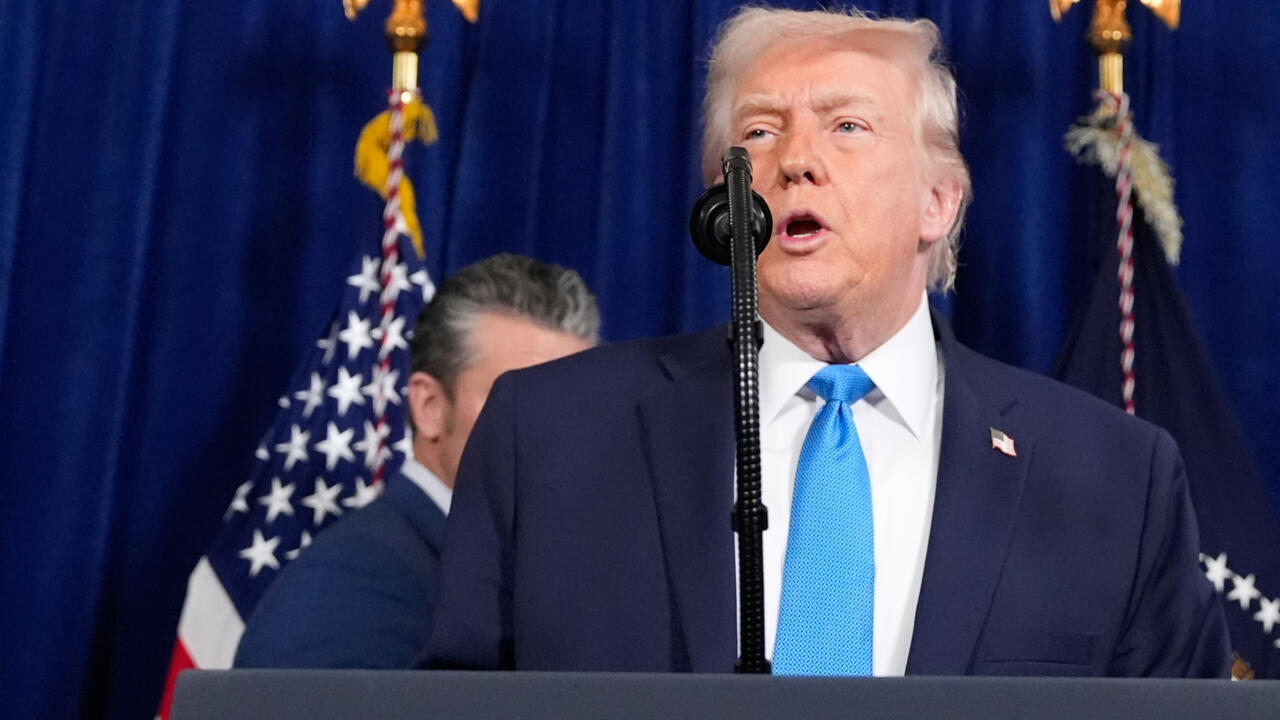
Speaking to reporters aboard Air Force One on Sunday, Trump struck an uncompromising tone, emphasizing that the United States retains both the capability and the willingness to escalate its involvement should conditions deteriorate.
“We’re prepared to do a second strike, if we need it. We’re totally prepared,” Trump said. “If they don’t behave, we will do a second strike.”
The comments come in the aftermath of a highly coordinated U.S. military operation carried out in the early hours of January 3, which U.S. officials have described as swift, decisive, and strategically precise. According to the administration, American forces conducted an in-and-out raid centered on Caracas that lasted less than 30 minutes and resulted in the capture of Maduro and his wife, Cilia Flores, without any U.S. casualties.
The operation reportedly began around 2 a.m. local time and involved a combination of aerial and special operations assets. In addition to securing Maduro and Flores, U.S. forces carried out targeted airstrikes against what officials described as “strategic infrastructure,” including ports, communications hubs, cell towers, and logistical facilities believed to be under the control of Maduro’s inner circle.
Pentagon officials have not released detailed operational footage, citing security concerns, but characterized the mission as a limited, high-impact action designed to neutralize the country’s leadership without engaging in prolonged combat or civilian disruption. U.S. authorities have emphasized that the strikes were narrowly focused and aimed at preventing coordinated resistance during the extraction.
Maduro, who had ruled Venezuela for more than a decade amid international sanctions, allegations of corruption, and accusations of election manipulation, was transported to the United States shortly after his capture. He is currently being held at the Metropolitan Detention Center in Brooklyn, New York, where he is awaiting formal court proceedings.
The U.S. Department of Justice has unsealed multiple criminal charges against the former Venezuelan leader, including narco-terrorism conspiracy, cocaine importation conspiracy, possession of machine guns and destructive devices, and conspiracy to possess machine guns and destructive devices against the United States. Prosecutors allege that Maduro used Venezuela’s state apparatus to facilitate large-scale drug trafficking operations and to support armed groups hostile to U.S. interests.
Maduro is expected to be arraigned in New York City on January 5, a proceeding that is likely to draw international attention and provoke strong reactions across Latin America and beyond.
In the immediate aftermath of the operation, the Trump administration announced that the United States would assume temporary management authority over Venezuela, citing the collapse of state institutions and the absence of a functioning government capable of maintaining order. Trump reiterated that position on Sunday, telling reporters bluntly, “We are in charge.”
According to Trump, stabilizing Venezuela’s shattered infrastructure and reviving its economy are now top priorities for the administration. He described the country as effectively nonfunctional after years of economic mismanagement, sanctions, and declining oil production.
“Venezuela right now is a dead country. We have to bring it back,” Trump said. “We’re gonna have to have big investments by the oil companies to bring back the infrastructure. They’re ready to go. They’re gonna go in. They’re gonna rebuild the infrastructure.”
Venezuela possesses the world’s largest proven oil reserves, yet years of underinvestment, corruption, and technical failures have left its energy sector in disarray. Trump suggested that U.S. and international energy firms are prepared to move quickly once security conditions are stabilized, potentially marking one of the largest reconstruction efforts in the region in decades.
While Trump emphasized economic recovery, he made clear that democratic processes would not resume immediately. Asked about elections, the president said they would take place “at the right time,” once the country’s basic systems are repaired and governance structures are restored.
“We’re going to run everything. We’re going to run it, fix it,” Trump said. “We’ll have elections at the right time. The main thing you have to fix. It’s a broken country. There’s no money.”
In the interim, Venezuela’s acting leader has been named as former Vice President Delcy Rodríguez. Rodríguez, a long-time Maduro ally, initially condemned the U.S. operation, calling the capture of Maduro and Flores illegal and demanding their immediate release.
However, her tone appears to have shifted in recent days. While still publicly denouncing the raid, Rodríguez has signaled a willingness to engage with Washington, suggesting that cooperation may be preferable to confrontation under the current circumstances.
“We invite the U.S. government to collaborate with us on an agenda of cooperation oriented towards shared development within the framework of international law to strengthen lasting community coexistence,” Rodríguez wrote on social media on January 4.
Her statement followed a sharp warning from Trump, who said Rodríguez could “pay a very big price” if she refused to work with the U.S.-led administration overseeing Venezuela’s transition.
Trump declined to give a definitive answer when asked whether American ground troops would remain in Venezuela, stating only that such decisions would depend on how the situation evolves.
“That depends on what happens,” he said, leaving open the possibility of an expanded military presence if security conditions worsen or if resistance emerges from loyalist factions.
International reaction to the events has been swift and deeply divided. Some U.S. allies have cautiously welcomed the removal of Maduro, whom they viewed as an authoritarian leader responsible for widespread human rights abuses. Others have expressed concern about the precedent set by a unilateral military intervention and the temporary assumption of governance by a foreign power.
Within Venezuela, information remains fragmented. Internet disruptions following the strikes have limited the flow of reliable news, though reports suggest a mixture of shock, uncertainty, and cautious optimism among the population. Many Venezuelans have endured years of shortages, inflation, and mass emigration, and it remains unclear how they will respond to the rapidly changing political landscape.
For Trump, the operation represents one of the most dramatic foreign policy moves of his presidency. By pairing a swift military action with a promise of economic reconstruction and eventual elections, the administration appears intent on reshaping Venezuela’s future while signaling to other adversarial regimes that U.S. warnings should be taken seriously.
Whether the threat of a second strike becomes reality may depend largely on how Venezuela’s interim leadership responds in the coming days—and on whether cooperation, rather than confrontation, takes hold in a country long defined by crisis and conflict.

Emily Johnson is a critically acclaimed essayist and novelist known for her thought-provoking works centered on feminism, women’s rights, and modern relationships. Born and raised in Portland, Oregon, Emily grew up with a deep love of books, often spending her afternoons at her local library. She went on to study literature and gender studies at UCLA, where she became deeply involved in activism and began publishing essays in campus journals. Her debut essay collection, Voices Unbound, struck a chord with readers nationwide for its fearless exploration of gender dynamics, identity, and the challenges faced by women in contemporary society. Emily later transitioned into fiction, writing novels that balance compelling storytelling with social commentary. Her protagonists are often strong, multidimensional women navigating love, ambition, and the struggles of everyday life, making her a favorite among readers who crave authentic, relatable narratives. Critics praise her ability to merge personal intimacy with universal themes. Off the page, Emily is an advocate for women in publishing, leading workshops that encourage young female writers to embrace their voices. She lives in Seattle with her partner and two rescue cats, where she continues to write, teach, and inspire a new generation of storytellers.