


The Stranger at the Bus Stop Who Changed Christmas Forever
Two days before Christmas, I ignored every warning I’d ever heard about strangers and took in a shivering mother and her baby from a freezing bus stop. I believed I was only offering them a warm place to sleep for one night—never imagining it would change all of our lives in ways I couldn’t have predicted.
I’m thirty-three years old, and I’m raising two little girls completely on my own. They’re five and seven years old, and they believe in Santa Claus with the kind of absolute, unwavering conviction that makes my heart ache with both joy and the weight of responsibility. They scribble letters to the North Pole full of backward S’s and lopsided hearts drawn with crayons that have seen better days. They debate seriously which cookies Santa prefers—chocolate chip or sugar cookies with sprinkles. They negotiate whether he’d like milk or hot chocolate. They take the entire mythology very, very seriously, and I work hard to keep that magic alive for them even when everything else feels impossibly difficult.
Their father left us three years ago. Not with a dramatic fight or a tearful goodbye or even an honest conversation about what was happening. Just a gradual, painful disappearance that felt like watching someone fade away in slow motion. First there were fewer text messages. Then there were more missed phone calls that went straight to voicemail. Then there were cancelled weekend visits with increasingly flimsy excuses. Until one day, I suddenly noticed with a sick feeling in my stomach that he hadn’t asked about the girls—hadn’t asked how they were doing, what they were learning, whether they missed him—in several weeks. And then it became months. And now it’s been so long that my younger daughter barely remembers him at all, and my older one has stopped asking when Daddy’s coming to visit.
So now it’s just the three of us, trying to build a life together from the pieces we have left.
I work at a hospital as a medical records coordinator. The hours are long, the pay is modest, and the work is repetitive, but it comes with health insurance that covers all three of us, and that alone makes it worth every exhausting shift. I plan grocery shopping trips like they’re high-stakes military missions, with lists organized by aisle and coupons clipped from the Sunday paper. I know exactly which store has the lowest prices on milk each week. I know which morning the bakery section marks down bread that’s approaching its sell-by date. I know how to stretch one pack of ground beef across three different dinners—tacos on Monday, spaghetti sauce on Wednesday, shepherd’s pie on Friday.
I’ve learned how to fix clogged drains using YouTube tutorials watched on my phone at midnight. I’ve learned how to flip circuit breakers back on when we overload the system running the space heater and the television at the same time. I’ve learned how to coax our ancient, temperamental furnace into working when it decides to quit on the coldest nights of winter. I’ve learned to be resourceful in ways I never imagined I’d need to be.
Some days, I genuinely feel strong and capable and proud of what we’re managing to build together. I feel like we’re not just surviving but actually thriving in our own modest way. Other days, it feels like if one more thing breaks, if one more bill arrives that I wasn’t expecting, if one more challenge appears that I have to solve alone, I might just sink down onto the kitchen floor and stay there, unable to get back up.
The only real financial cushion we have—the only thing standing between us and genuine crisis—is the house itself.
It belonged to my grandparents, who bought it in 1972 and lived there for forty-three years until they passed away within six months of each other. They left it to me in their will, paid off and clear. It’s small and creaky and honestly a bit drafty. The siding has definitely seen better decades, probably better centuries. The kitchen appliances are older than I am. The bathroom tile is an unfortunate shade of mint green that was apparently very popular in 1978. But it’s ours, completely and entirely, with no mortgage payment hanging over our heads every month.
That paid-off house is the only reason we’re still financially afloat. It’s the reason I can afford to feed my children and keep the heat on and occasionally, just occasionally, buy them something new instead of always relying on hand-me-downs and thrift stores.
Two nights before Christmas, I was driving home after working a late shift at the hospital. That bone-deep, soul-crushing exhaustion had settled into every part of my body—the kind where your eyes physically sting and burn, where everything feels slightly unreal and disconnected, where you’re operating on autopilot and muscle memory because actual conscious thought requires more energy than you have available.
It was already completely dark outside, that early winter darkness that arrives around four-thirty in the afternoon and makes the whole world feel smaller and colder. The roads glistened with a deceptively thin skin of ice that looked harmless but felt treacherous under my tires. I drove carefully, both hands on the wheel, hyper-aware of every small slide and correction.
Soft Christmas music hummed through my car radio—familiar carols that I barely registered consciously. Meanwhile, my exhausted brain was running through its never-ending checklist of responsibilities and obligations: Wrap the girls’ presents that are still sitting in shopping bags in my closet. Hide the stocking stuffers where curious little hands won’t find them during unauthorized exploration missions. Remember to move the damn Elf on the Shelf to a new location so the girls don’t lose faith in the magic.
My daughters were spending the night at my mother’s house, giving me a rare evening alone to catch up on all the tasks I couldn’t accomplish with them underfoot. I pictured them as I drove, seeing them in my mind’s eye: probably already asleep by now in their flannel pajamas, cheeks pink from the warmth of my mother’s house, mouths slack with the complete relaxation of childhood sleep. They’d had hot cocoa with marshmallows. They’d decorated sugar cookies with more frosting than any cookie reasonably needed. They’d watched too many holiday movies and gotten sugar-high and crashed hard.
Warm. Safe. Loved.
I felt a wave of gratitude wash over me—and then immediately the familiar anxious thought: I still have to wrap everything when I get home. At least two hours of work before I can sleep.
That’s when I saw her.
She was standing at a bus stop, half-sheltered under the small plastic awning that provided almost no real protection from the biting wind. A woman, probably in her mid-twenties, clutching a baby tightly against her chest with both arms wrapped around the small bundle.
She wasn’t pacing anxiously. She wasn’t checking her phone every few seconds like most people do while waiting. She wasn’t doing anything except standing there, perfectly still, like a statue that had been abandoned and forgotten.
The wind was absolutely vicious that night—the kind of cold that cuts straight through winter coats and sweaters and seems to find your bones no matter how many layers you’re wearing. The baby was bundled in what looked like a thin blanket, far too thin for weather this brutal. Even from my car, I could see the baby’s cheeks were bright red from the cold exposure. One tiny hand peeked out from the blanket, fingers looking stiff and curled against the freezing air.
My chest physically tightened with something between sympathy and alarm.
I drove past her.
For maybe five seconds, possibly less.
And then every warning bell that had been installed in my head over thirty-three years of life started going off simultaneously at maximum volume.
All the lectures from my mother about not talking to strangers. All the news stories about people with bad intentions who prey on kind-hearted women. All the reminders that I’m a mother now, that I have responsibilities, that I can’t afford to be reckless or naive or stupidly trusting because my daughters depend on me.
And yet, beneath all those loud warnings and legitimate fears, there was a quieter thought that wouldn’t stop repeating:
What if that were me standing there?
What if those were my children freezing at a bus stop with nowhere to go?
What if I were the one desperately hoping someone would stop?
I slowed down, my heart pounding so hard I could feel it in my throat.
I pulled over to the curb about twenty feet past the bus stop.
My hands were actually trembling as I reached over and lowered the passenger side window, letting the freezing air rush into my warm car.
“Hey,” I called out, trying to make my voice sound friendly rather than intrusive. “Are you okay over there?”
She flinched visibly, startled by being addressed, then took a few hesitant steps closer to my car. She moved carefully, like someone who’d learned to be cautious about unexpected interactions.
Up close, she looked exhausted in a way that went far beyond one sleepless night. Dark circles under her eyes that makeup couldn’t have concealed even if she’d been wearing any. Lips cracked and dry from the cold wind. Hair pulled back into a bun that had probably looked neat twelve hours ago but had long since given up and started falling apart. Her coat was clean but worn, the kind you’d find at a discount store, not warm enough for this kind of weather.
“I…” She started to speak, then paused, swallowing hard like the words were difficult to push out. “I missed the last bus.”
She tightened her grip protectively on the baby, who made a small sound against her chest.
“I don’t have anywhere to go tonight,” she continued, and her voice was remarkably calm considering what she was saying. She said it the way you’d announce the weather or read a grocery list—like someone who had already spent every available ounce of emotional energy coming to terms with their situation and had nothing left for panic or tears.
“Do you have anyone nearby who could help?” I asked, trying to understand her situation better. “Family? Friends you could call?”
“My sister,” she said, then glanced away, clearly embarrassed. “But she lives three hours away. My phone died about an hour ago, so I can’t call her to come get me. I thought there was one more bus coming at nine-thirty. I must have gotten the schedule times wrong somehow.”
The wind tore through the inadequate bus shelter behind her, and I watched her instinctively turn her body to shield the baby from the worst of it.
I glanced at the empty road stretching in both directions. I glanced at the slick, icy sidewalk where no one else was walking. I glanced at the baby’s flushed, cold-reddened cheeks.
My daughters were asleep in warm beds at my mother’s house, safe and comfortable with full stomachs and soft blankets.
This child was out here in the freezing cold with nowhere to go.
Before my fear and my caution and my legitimate concerns about safety had time to organize a convincing argument, the words came out of my mouth:
“Okay. Get in the car. You can stay at my place tonight.”
Her eyes flew wide open, shock replacing exhaustion for a moment.
“What? No—I can’t possibly. You don’t even know me. I could be anyone.”
“That’s absolutely true,” I acknowledged. “I don’t know you, and you could theoretically be dangerous. But I do know two things for certain: it’s below freezing tonight, and you’re standing here holding a baby. So please, just get in the car.”
She hesitated for maybe three seconds, clearly torn between desperate need and not wanting to impose on a complete stranger.
Then she opened the passenger door and climbed carefully into the car, still holding the baby tight against her chest like armor, like a shield, like the most precious thing in the entire world.
The moment the warm air from my car’s heater touched him, the baby gave a small, tired, miserable cry that broke my heart into pieces.
“What’s his name?” I asked gently as I pulled away from the curb and back onto the empty road.
“Oliver,” she said, and her entire face instantly softened when she said it, all the tension and stress momentarily replaced by pure maternal love. “He’s two months old. Eight weeks and three days, actually.”
She adjusted him gently in her arms, checking his hands and face for signs of cold damage.
“I’m Laura,” she added, her voice small and uncertain.
“I’m an exhausted single mom,” I replied with a tired smile. “That’s honestly about as much of a proper name as I can manage right now.”
She let out a quiet, surprised laugh—probably the first genuine laugh she’d had all day.
The entire drive to my house, which was only about twelve minutes but felt longer in the heavy silence, she kept apologizing.
“I’m really, really sorry about this.”
“I swear I’m not crazy or unstable or dangerous.”
“I’ll be gone first thing in the morning—you don’t need to feed me or anything.”
“I feel terrible imposing on you like this.”
“You’re fine,” I told her again and again, meaning it each time. “You’re not imposing. You’re not a burden. This was completely my choice. I saw you standing there and I chose to stop. That’s on me, and I’m genuinely glad I did it.”
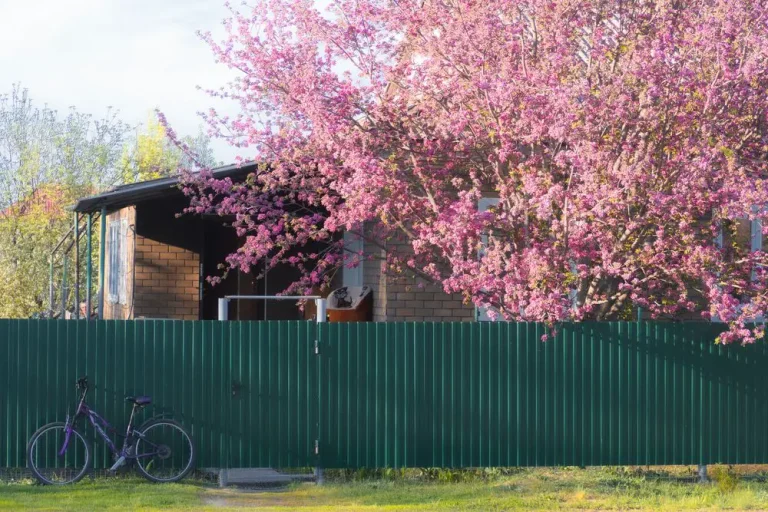
We turned into my driveway, and I suddenly saw my house through a stranger’s eyes: small, shabby, clearly old, with peeling paint visible even in the darkness. The porch light did its best to make everything look inviting, but there’s only so much a forty-watt bulb can accomplish.
“This is your house?” Laura asked softly, and I couldn’t quite read her tone.
“Yeah,” I said, trying not to sound defensive. “It belonged to my grandparents. They left it to me when they died.”
“It’s lovely,” she said, and I could hear in her voice that she genuinely meant it. She wasn’t being polite or patronizing—she actually thought my shabby little house was lovely.
Inside, the air smelled like laundry detergent and old wood and that particular scent that every house develops over decades. The Christmas tree lights blinked quietly in the corner of the living room, reflecting off the handful of ornaments my daughters had made at school—construction paper and glitter and more enthusiasm than artistic skill.
“Sorry about all the clutter,” I said automatically, gesturing at the scattered toys and the stack of unfolded laundry on the couch. “With two kids and working full time, I’m basically always behind on everything.”
“It’s beautiful,” Laura said again, looking around with what seemed like genuine appreciation. “It feels like a real home. Warm and lived-in and loved.”
I showed her to the small guest room that I rarely used except when my mother visited or when I needed a quiet space to wrap presents in secret. A twin bed with a frame that creaked. A faded quilt my grandmother had made sometime in the 1980s. A dresser that leaned slightly to one side and had to be propped up with folded cardboard.
But the sheets were clean. I’d washed them two weeks ago after my mother’s last visit.
“I’ll grab you some clean towels,” I said, already mentally cataloging where everything was. “The bathroom’s right across the hall. Are you hungry? When did you last eat?”
“You’ve already done so much,” Laura said, and her eyes were getting glassy with unshed tears. “I don’t want to take anything else from you.”
“You’re not taking anything,” I said gently but firmly. “I’m offering. There’s a difference. Let me make you something to eat. Please.”
Her shoulders, which had been rigidly tense since she got in my car, finally relaxed just a fraction.
“Okay,” she whispered. “Thank you.”
In the kitchen, I reheated leftover pasta with marinara sauce and some garlic bread that was only slightly stale. I added baby carrots to the plate, mostly to convince myself I was providing something vaguely balanced and nutritious rather than just carbs and more carbs.
When I returned to the guest room carrying the plate and a glass of water, Laura was perched carefully on the very edge of the bed, still wearing her thin coat, still holding Oliver, rocking him with that automatic soothing motion that every mother develops.
“I can hold him while you eat,” I offered, setting the food down on the dresser. “Give your arms a break.”
She stiffened immediately, instinctively pulling him closer.
“Oh—no, no thank you. I’ve got him. I’ll eat in a minute.”
She picked at the food with one hand, managed to get down maybe four or five bites, then turned all her attention back to Oliver, checking him over with anxious maternal care.
I heard her murmur into his downy hair, so quietly I almost didn’t catch the words:
“I’m sorry, sweetheart. Mommy’s trying her best. I’m so, so sorry you had to be cold.”
It hit me straight in the chest like a physical impact.
I’ve never said those exact words out loud to my own daughters—but I’ve thought them more times than I could possibly count. Every time we have to skip something they want because money’s too tight. Every time I have to say no to a field trip or a birthday party because I’m working. Every time they ask why Daddy doesn’t visit anymore and I don’t have a good answer.
I’m sorry. I’m trying. I’m doing my best.
That night, sleep came only in brief, restless fragments.
Every creak of the old house jolted me awake, my heart pounding. Every unfamiliar sound made me tense, listening hard in the darkness.
One voice in my head kept saying: You did the right thing. You helped someone who desperately needed help.
Another voice, quieter but more insistent, kept muttering: You let a complete stranger into your house where your children live. What if she robs you? What if she’s not who she says she is? What were you thinking?
At one point around two in the morning, I got up under the flimsy excuse of checking the thermostat and quietly peeked into the guest room.
Laura was still half-sitting, half-lying back against the wall, not fully horizontal. Oliver slept on her chest, rising and falling with her breathing. Her arms were wrapped around him like a seatbelt, like she couldn’t quite trust that he was safe enough to fully relax.
I understood that feeling completely.
In the morning, soft sounds of movement woke me earlier than my alarm. I stepped into the hallway, my heart immediately on alert.
The guest room door stood partially open.
Laura was inside, carefully making the bed with precise, neat movements. The blanket she’d used was folded with the kind of careful precision that spoke of military training or deep gratitude or both. The towels I’d given her were stacked in a tidy pile on the dresser.
Oliver was bundled against her chest again in what I now recognized as a well-worn baby carrier.
“You didn’t have to do that,” I said from the doorway, and she jumped slightly, startled.
She turned and gave me a nervous smile. “I didn’t want to leave a mess. You’ve already done so much for us. More than I had any right to expect from anyone.”
“Do you need a ride somewhere?” I asked. “To your sister’s place, or a bus station, or wherever you need to go?”
“If it’s not too much trouble,” she said carefully, like she was afraid of asking for one thing too many, “I can meet my sister near the downtown bus station once I charge my phone. She’ll come get me from there.”
“It’s not too much trouble at all,” I assured her. “Let me just put on real clothes instead of pajamas, and I’ll drive you.”
At the front door twenty minutes later, Laura turned and hugged me awkwardly with one arm, the other still supporting Oliver against her.
“Thank you,” she whispered, and her voice cracked with emotion. “If you hadn’t stopped last night—if you hadn’t pulled over and offered help—I honestly don’t know what would have happened to us. I don’t know where we would have gone or how cold it would have gotten before morning.”
I hugged her back, careful not to squeeze Oliver between us.
“I’m really glad I stopped,” I said, and meant it completely. “I’m glad you’re both okay.”
I watched her walk down the front path, snow crunching under her inadequate shoes, then I closed the door and genuinely thought that was the end of it. A brief intersection of two lives, a moment of kindness offered and received, and then we’d both move on and never see each other again.
I had absolutely no idea how wrong I was.
Fast-forward exactly two days.
Christmas morning.
My daughters were finally home after their sleepover at Grandma’s, and they were in their pajamas with their hair everywhere, practically vibrating with barely-contained excitement as they circled the Christmas tree like excited puppies.
“Can we open presents now? Pleeease?” my five-year-old begged, bouncing on her toes. “We’ve been waiting forever!”
“It’s been like five minutes since you woke up,” my seven-year-old pointed out with the superior wisdom of someone two years older.
“That IS forever,” the little one insisted.
I laughed. “Rock-paper-scissors to see who goes first. Those are the official rules. Winner picks first present.”
They played with intense concentration, and my younger daughter won, immediately launching into a victory dance that looked like some kind of interpretive martial arts routine.
She was reaching toward the first wrapped present with eager hands when the doorbell rang.
We all froze like deer hearing a sudden noise.
“Santa?” my five-year-old whispered, her eyes going huge.
My seven-year-old scoffed with the jaded wisdom of elementary school. “Santa doesn’t ring doorbells, silly. Use your brain. He comes down the chimney, which we don’t even have, and he definitely doesn’t come in the morning.”
“Maybe he forgot something and had to come back,” my younger daughter theorized, completely undeterred.
I laughed and stood up from the couch. “I’ll get the door. You two stay here and don’t touch anything until I get back.”
A delivery courier stood on the porch, his cheeks pink from the cold morning air, wearing a vest that identified him as working for a local courier service. He was holding a large box wrapped in glossy Christmas paper with a big red bow on top.
“Delivery for you,” he said cheerfully, tilting the box slightly so I could see the gift tag attached.
My name was written on it in neat, careful handwriting I didn’t recognize.
No sender name listed anywhere on the package.
I signed his electronic device, thanked him, wished him Merry Christmas, and carried the mysterious box into the kitchen, my heart pounding for reasons I couldn’t quite identify.
My daughters hovered in the kitchen doorway like curious little cats, trying to see what was happening without technically leaving the living room where I’d told them to stay.
“Is it for us?” my younger one asked hopefully.
“I’m not sure yet,” I said honestly. “Let me look first and see what it is.”
My hands were actually shaking slightly as I peeled off the glossy wrapping paper, and I couldn’t explain why I felt so nervous and anticipatory.
Underneath the festive paper was just a regular brown cardboard shipping box, the kind you could buy at any mailing store.
I carefully opened the flaps.
On top was a folded letter, the paper slightly textured like nice stationery.
The first line hit me like an emotional punch to the chest:
“Dear kind stranger who saved us—”
“Mommy?” my older daughter asked from the doorway, her voice uncertain. “Why are you making that face?”
I hadn’t realized my expression had changed so dramatically, hadn’t noticed that my eyes were already getting wet.
I swallowed hard and started to read the letter more carefully, my vision blurring.
It was from Laura—the woman from the bus stop, the mother I’d brought home two nights ago.
She wrote that after I dropped her off at the bus station downtown, someone working there had let her charge her phone at an outlet behind the service counter. She’d called her sister, who had immediately gotten in her car and driven the three hours to come get them.
Her sister had arrived crying and shouting and hugging Laura and Oliver all at once, overwhelming relief mixed with frustration at not being called sooner.
Laura and Oliver had made it home safely to her sister’s house that same night.
She told her entire family everything that had happened. About standing at the bus stop in the freezing cold, feeling more helpless and terrified than she’d ever felt in her life. About the stranger who’d pulled over when everyone else drove past. About being brought to my house and given warmth and food and safety. About the guest room and the clean sheets and the meal she could barely eat because exhaustion had stolen her appetite. About how I’d asked nothing in return and expected nothing and had simply helped because help was needed.
She said that her family didn’t have much money. Her parents lived on fixed incomes from Social Security and small pensions. Her sister worked two different jobs to support her own household. There was no way for them to repay me in any meaningful monetary way for what I’d done.
“But you gave us warmth and safety and kindness when you absolutely didn’t have to,” Laura had written in her careful handwriting. “You stopped when you could have kept driving. You opened your home when you could have just given me money for a phone call. You treated us like human beings who mattered when you could have seen us as a problem or a burden or a risk. If you hadn’t stopped that night, I genuinely don’t know what would have happened to me and Oliver. I don’t know how we would have survived until morning.”
She explained that her sister had teenage daughters—two girls, thirteen and fifteen years old. When they heard the story of what had happened, what this stranger had done for their aunt and baby cousin, they’d wanted to help somehow.
“My nieces went through all their clothes,” Laura wrote. “They picked out things they genuinely loved and wanted to share. They said they wanted your daughters to feel special this Christmas. They wanted you to know that kindness matters and that it comes back to you.”
My eyes were completely blurred now, tears running down my face.
I set the letter down with shaking hands and looked into the cardboard box.
Clothes.
So many clothes, all neatly folded with obvious care.
Soft sweaters in colors my daughters would love—pink and purple and teal and bright yellow. Dresses that looked almost brand new, barely worn, the kind of quality you find in the better stores. Jeans without holes in the knees. Leggings in fun patterns. Warm pajamas with cartoon characters my girls adored.
Several pairs of shoes in surprisingly good condition—sneakers and dress shoes and boots.
One pair of sparkly boots that made my seven-year-old, who had crept closer to investigate, actually gasp out loud.
“Mom,” she whispered, her voice full of awe. “These are amazing. These are the kind of boots I see in stores and you say they’re too expensive.”
My five-year-old had picked up a dress covered in stars, holding it up against herself.
“Is this really for me?” she asked, her voice small and hopeful. “Can I really keep it?”
“Yeah, sweetheart,” I managed to say, my voice cracking with emotion. “It’s really for you. All of this is for you and your sister.”
At the very bottom of the box, carefully wrapped in tissue paper, were what looked like dress-up costumes—the kind of thing kids use for imaginative play. A princess dress with a tulle skirt. A witch outfit complete with a hat. A superhero cape in bright red.
There was one more small note tucked into the tissue paper, this one in different handwriting—younger, rounder letters that belonged to a teenager.
“From our girls to yours,” it said simply, with a little heart drawn at the end. “We hope they have the best Christmas ever.”
That was when the tears really started in earnest, when I couldn’t hold them back anymore.
“Mommy?” my older daughter said softly, putting her small hand on my arm. “Why are you crying? Are you sad?”
I knelt down and pulled both my daughters into a tight hug, holding them close.
“I’m crying,” I said, trying to explain something important, “because sometimes people are really, really kind. And sometimes, when you do something good for someone else without expecting anything back, it comes back to you in ways you never imagined. That’s what happened here.”
“Like a boomerang,” my five-year-old said, pleased with herself for making the connection.
I laughed through my tears, hugging them tighter.
“Exactly like a boomerang, baby. Exactly like that.”
Those clothes meant more to me than I could ever fully explain to anyone who hadn’t lived in my financial situation. I’d been quietly delaying buying my daughters anything new for months, making do with hand-me-downs and thrift store finds and telling myself we’d manage somehow. I’d been wearing my own shoes well past the point where they should have been replaced. I’d been cutting corners everywhere I could think of, trying to stretch every dollar until it screamed.
That box of clothes felt like the universe itself gently saying: “It’s okay. You can take a breath now. You did something good, and someone noticed, and you deserve help too.”
Later that afternoon, after my daughters had tried on approximately half the contents of the box and were now spinning around the living room in their new outfits, putting on an elaborate fashion show for an audience of stuffed animals, I sat down at the kitchen table with my laptop and opened Facebook.
I wrote a post, being careful to keep it general and anonymous:
“Two days before Christmas, I saw a mother and her baby standing at a bus stop in freezing weather. I stopped and brought them to my house for the night. This morning, a box appeared on my porch—filled with clothes for my daughters and a letter that made me cry. Sometimes the world is kinder than it seems. Sometimes helping someone comes back to you in the most unexpected ways.”
I ended with: “Whoever you are, thank you. You reminded me why kindness matters.”
About an hour later, while I was cleaning up wrapping paper and my daughters were playing with their new clothes, I received a Facebook message request from someone I didn’t know.
I opened it cautiously.
It was from Laura.
“Is that post about me?” she’d written simply.
My heart skipped a beat. I hadn’t included any identifying details, but apparently I’d been specific enough that she recognized the story.
“Yes,” I replied honestly. “I kept it completely anonymous because I didn’t want to share anything that wasn’t mine to share. I hope that’s okay with you.”
“It’s more than okay,” she wrote back almost immediately. “I’ve been thinking about you constantly since that night. I wanted to reach out and thank you again, but I didn’t know how without it feeling weird or awkward. I didn’t want you to think I was some kind of stalker who tracked you down.”
We talked for a while, messages going back and forth, filling in details from the past two days.
She told me that Oliver was doing well, that he’d had no ill effects from the cold exposure, that her sister’s house was warm and safe.
She told me that her entire family had insisted on sending the box of clothes, even though money was incredibly tight for all of them. They’d wanted to do something, anything, to show their gratitude.
She told me that her teenage nieces had spent an entire afternoon going through their closets, debating over which items my daughters might like best, trying to pick things that were both practical and special.
I sent her photos of my daughters twirling in their new clothes, hair flying everywhere, faces absolutely glowing with joy.
“They look so happy,” Laura wrote. “You have beautiful daughters.”
“They are happy,” I replied. “You and your family helped make that happen. You gave them the kind of Christmas I was worried I couldn’t afford to give them this year.”
“You gave me and Oliver our lives,” Laura wrote back. “A box of clothes is nothing compared to that.”
We added each other as friends on Facebook that day.
Now we check in with each other sometimes—not constantly, not daily, but regularly enough that it feels like a real friendship rather than just a one-time interaction.
We share kid photos and funny stories about motherhood. We send “Good luck today” messages when one of us has a challenging day ahead. We make quiet admissions of “I’m exhausted too” when the single-parent life feels overwhelming.
Our friendship didn’t develop just because of the clothes, though those were wonderful and needed and deeply appreciated.
It didn’t develop only because of the box that appeared on Christmas morning, though that was magical and meaningful.
Our friendship developed because on one freezing night two days before Christmas, two mothers’ paths crossed at exactly the moment they both needed it.
One needed help desperately and had nowhere else to turn.
One was afraid and exhausted but stopped anyway when she could have kept driving.
And neither of us forgot what happened that night, or what it meant, or how it changed us both.
Sometimes I think about what would have happened if I’d driven past that bus stop without stopping. If I’d told myself it wasn’t my problem, that someone else would help, that I couldn’t risk it with two children depending on me at home.
Laura and Oliver would have somehow survived, probably. Someone else might have eventually stopped. The morning bus would have eventually come.
But I wouldn’t have received that box on Christmas morning. My daughters wouldn’t have those clothes that fit perfectly and make them feel special. I wouldn’t have a friend who understands what it’s like to be doing this hard work of single parenting mostly alone.
And most importantly, I wouldn’t have learned something crucial about kindness: that it’s not actually a transaction where you give something and expect something back.
Real kindness is stopping when you’re scared. It’s helping when it’s inconvenient. It’s opening your door when you don’t know what might happen next.
And sometimes—not always, but sometimes—that kindness does come back to you. Not because you earned it or because the universe owes you something, but because other people recognize it and want to pass it forward.
My daughters still talk about “the Christmas box” sometimes. They’ve outgrown some of the clothes now—kids grow so impossibly fast—but they remember. They remember the story of the mother and baby at the bus stop. They remember that Mommy stopped to help when someone needed it.
And I hope, more than anything, that they remember the lesson: that when you see someone who needs help, you stop. Even when you’re tired. Even when you’re scared. Even when it would be easier to keep driving.
Because you never know when you might be the one standing at the bus stop, hoping desperately that someone will stop.
And you never know when a simple act of kindness might change everything—for them, for you, for everyone involved.
Two days before Christmas, I brought home a stranger and her baby.
On Christmas morning, a box arrived that reminded me the world is kinder than we sometimes remember.
And now, whenever I drive past that bus stop, I smile and remember the night that taught me what kindness really means.

Emily Johnson is a critically acclaimed essayist and novelist known for her thought-provoking works centered on feminism, women’s rights, and modern relationships. Born and raised in Portland, Oregon, Emily grew up with a deep love of books, often spending her afternoons at her local library. She went on to study literature and gender studies at UCLA, where she became deeply involved in activism and began publishing essays in campus journals. Her debut essay collection, Voices Unbound, struck a chord with readers nationwide for its fearless exploration of gender dynamics, identity, and the challenges faced by women in contemporary society. Emily later transitioned into fiction, writing novels that balance compelling storytelling with social commentary. Her protagonists are often strong, multidimensional women navigating love, ambition, and the struggles of everyday life, making her a favorite among readers who crave authentic, relatable narratives. Critics praise her ability to merge personal intimacy with universal themes. Off the page, Emily is an advocate for women in publishing, leading workshops that encourage young female writers to embrace their voices. She lives in Seattle with her partner and two rescue cats, where she continues to write, teach, and inspire a new generation of storytellers.