President Donald Trump on Thursday warned that the United States could be “victimized” by other countries if the U.S. Supreme Court rules against his sweeping tariff policies, as the high court considers the legality of trade measures he imposed under emergency powers.
In a post on Truth Social dated Jan. 2, Trump defended the tariffs as a cornerstone of his economic and national security agenda, arguing that restricting the president’s authority to impose them would deal a serious blow to the country.
“Tariffs are an overwhelming benefit to our Nation, as they have been incredible for our National Security and Prosperity,” Trump wrote. “If we don’t have the ability to put tariffs on other countries who treat us unfairly, it would be a terrible blow to our Country.”
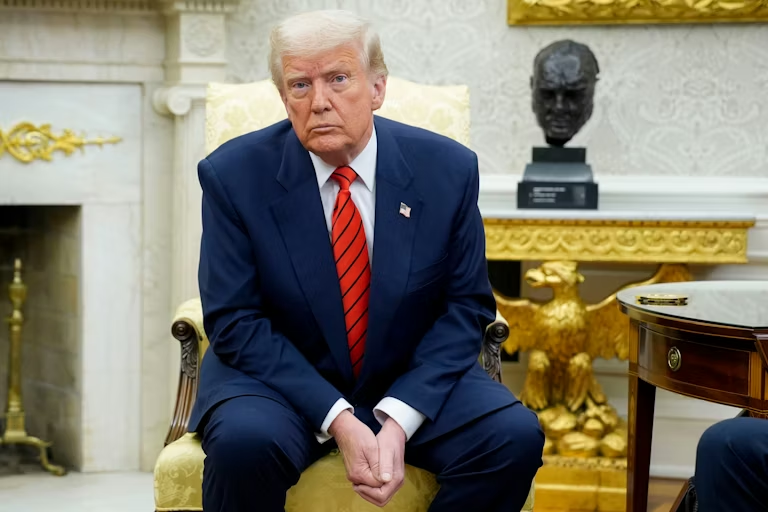
President Donald Trump speaks during a public appearance as trade policy returns to the national spotlight
Supreme Court Weighs Emergency Tariff Authority
The Supreme Court is currently hearing a case challenging several tariffs Trump imposed under the International Emergency Economic Powers Act (IEEPA). The 1977 law grants presidents broad authority to regulate international commerce during declared national emergencies.
In early 2025, Trump used that authority to impose broad tariffs on imports from most countries, citing persistent trade imbalances and threats to U.S. economic security. The move marked one of the most expansive uses of IEEPA in the law’s history.
Several lower courts have since ruled against the tariffs, concluding that the president exceeded his authority. However, those rulings left the tariffs in place while the Supreme Court considers the issue, allowing the administration to continue collecting duties in the interim.
Justices Signal Skepticism
During oral arguments in November, several Supreme Court justices appeared skeptical of the administration’s position, questioning whether Congress intended IEEPA to be used for broad, long-term trade policy rather than temporary emergency measures.
The U.S. Department of Justice, defending the tariffs on behalf of the administration, argued that Trump’s actions fall squarely within the president’s foreign affairs powers. Government attorneys told the court that trade penalties are a diplomatic tool and an area where courts should be reluctant to second-guess the executive branch.
The case has drawn significant attention from legal scholars, business groups, and lawmakers, who say the ruling could redefine the balance of power between Congress and the presidency on trade.
Trump Signals Other Options if Court Rules Against Him
Despite the legal uncertainty, Trump and Treasury Secretary Scott Bessent have said the administration has alternative legal pathways to impose tariffs if the Supreme Court strikes down the IEEPA-based measures.
However, Trump has cautioned that using other authorities would be slower and more cumbersome, potentially limiting the administration’s ability to respond quickly to what it views as unfair trade practices.
“The speed and strength of tariffs matter,” Trump has said previously, arguing that delays weaken U.S. leverage in negotiations with foreign governments.
The U.S. Supreme Court building in Washington, where the tariff case is under review
Tariffs as Leverage Beyond Trade
Even as the court weighs the issue, Trump has continued to use tariffs as a pressure tool in broader negotiations, including disputes involving market access, supply chains, and national security concerns.
Last November, Trump floated the idea of using tariff revenue to fund $2,000 dividend payments for low- and middle-income Americans beginning in 2026. Treasury officials later clarified that such a proposal would require congressional approval before it could be implemented.
Supporters of the plan argue it would allow Americans to directly benefit from trade enforcement, while critics say it highlights the unpredictable nature of tariff-based revenue.
December Proclamation Delays Tariff Increases
On Dec. 31, 2025, Trump signed a new proclamation delaying scheduled tariff increases on certain imported goods, including upholstered furniture, kitchen cabinets, and vanities, for one year.
The order keeps in place a 25 percent tariff imposed in September 2025 but postpones steeper increases that were set to take effect on Jan. 1. Those delayed increases include a 30 percent tariff on upholstered furniture and a 50 percent tariff on kitchen cabinets and vanities.
The White House said the delay was intended to allow additional time for ongoing trade talks with foreign partners.
Industry Impact and National Security Claims
Trump has repeatedly argued that furniture and home goods tariffs are necessary to protect American manufacturing and reduce reliance on foreign suppliers, particularly in sectors he says have national security implications.
“These tariffs bolster American industry and protect national security,” Trump said previously, framing the measures as part of a broader effort to rebuild domestic production capacity.
Industry groups, however, have warned that higher tariffs could increase costs for consumers and disrupt supply chains, particularly in housing and home renovation markets.
Selective Rollbacks to Ease Consumer Prices
In November, Trump also scrapped reciprocal tariffs on beef, coffee, tropical fruits, and other commodities, citing concerns about rising consumer prices. The move followed recommendations from administration officials who said certain import taxes were contributing to inflationary pressure.
In the executive order announcing the change, Trump said adjustments were needed to address trade imbalances while also protecting American consumers.
The partial rollback highlighted the administration’s willingness to modify tariffs selectively, even as it defends the broader strategy in court.
Shipping containers at a U.S. port as tariffs continue to reshape trade flows
Democrats Criticize Tariff Strategy
Democrats have sharply criticized Trump’s import taxes, arguing that they ultimately raise prices for American families and undermine his promises to control inflation.
“President Trump is finally admitting what we always knew: his tariffs are raising prices for the American people,” said Rep. Don Beyer of Virginia after the administration scrapped tariffs on grocery-related commodities.
Beyer added that the White House was attempting to reframe the move as a shift toward affordability after facing voter backlash over inflation in recent elections.
High Stakes for Trade Policy and Presidential Power
The Supreme Court’s decision, expected later this year, could have sweeping implications not only for Trump’s tariff agenda but also for future presidents’ ability to act unilaterally on trade during emergencies.
If the court limits the use of IEEPA, Congress may be forced to revisit the law or reclaim a greater role in shaping trade policy. If the administration prevails, the ruling could cement expansive presidential authority over international commerce.
For Trump, the issue is both legal and political. He has made tariffs a defining feature of his economic vision, portraying them as a shield against foreign exploitation and a tool to restore American leverage.
As the court deliberates, the president has made clear that he views the outcome as pivotal.
“If we lose that power,” Trump warned, “our country will be taken advantage of like never before.”