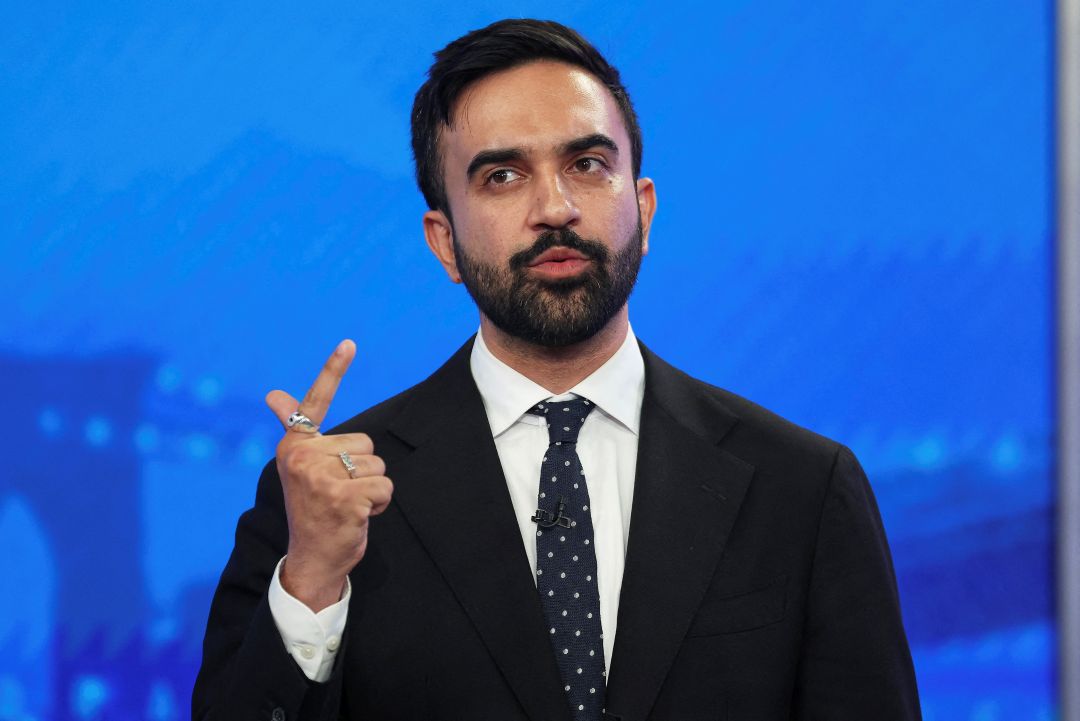
New York City’s newly sworn-in mayor Zohran Mamdani has moved swiftly to undo actions taken by his predecessor, signing a series of executive orders that roll back decisions made by former mayor Eric Adams following his federal indictment in 2024.
Among the most consequential actions announced this week is an order revoking all executive directives Adams signed after his September 2024 indictment on federal corruption charges. Mamdani’s office said the move is intended to restore public trust and provide a clean break from a period many New Yorkers viewed as politically destabilizing.
The decision marks one of Mamdani’s first major policy steps since taking office and signals a sharp shift in tone and governance at City Hall.
Mayor Zohran Mamdani speaks at City Hall following his swearing-in ceremony
A Rapid Reset at City Hall
Mamdani signed the orders shortly after assuming office, underscoring his intention to act quickly in redefining the city’s executive direction. Speaking at City Hall, he framed the revocations as a response to a loss of confidence that followed Adams’ indictment.
“That moment marked a point when many New Yorkers felt politics no longer worked for them,” Mamdani said, referring to the period after the former mayor was charged.
While Mamdani did not accuse Adams directly during his remarks, he made clear that executive actions taken under the cloud of a federal indictment warranted closer scrutiny.
Scope of the Revocation
The order does not erase Adams’ entire executive legacy. Instead, it specifically targets directives issued after September 2024, when Adams was indicted on federal corruption charges related to campaign finance and alleged misuse of influence.
According to Mamdani’s administration, the blanket revocation is meant to pause and reassess decisions made during that period rather than permanently discard them.
A spokesperson for the mayor said the administration will conduct a comprehensive review of the revoked orders and may reinstate some if they are deemed essential to city operations or public safety.
“This is about restoring legitimacy, not creating chaos,” the spokesperson said. “Where an executive order serves the public interest, it can and will be reconsidered.”
Adams’ Indictment and Its Aftermath
Eric Adams was indicted in September 2024, becoming the first sitting mayor of New York City to face federal corruption charges. He denied wrongdoing and remained in office while the case proceeded, a period marked by political turmoil and mounting public skepticism.
In the months following the indictment, Adams continued to issue executive orders addressing areas such as policing, housing enforcement, and city agency management. Critics at the time argued that the mayor’s authority was compromised, while supporters maintained that city business needed to continue.
Mamdani’s revocation order effectively draws a line under that chapter, signaling that his administration will not automatically stand by decisions made during that time.
City Hall in Lower Manhattan, where the new mayor announced the revocations
Balancing Accountability and Continuity
Legal experts note that a new mayor has broad authority to rescind executive orders issued by a predecessor, particularly when those orders are not codified into law. However, blanket revocations are relatively uncommon and can create uncertainty if not carefully managed.
Mamdani’s team appears aware of that risk. Officials emphasized that the review process will prioritize continuity of essential services, including public safety, sanitation, and emergency response.
Some agency heads have reportedly been instructed to prepare briefings outlining which revoked directives directly affect their operations and what the consequences would be if they are not reinstated.
Political Signal to Voters
The move also carries clear political symbolism. Mamdani campaigned on restoring integrity to city government and appealing to voters disillusioned by scandal and infighting. By tying the revocations directly to the timing of Adams’ indictment, he is reinforcing that message early in his tenure.
Supporters say the decision reflects accountability and transparency, while critics warn it could be perceived as overly punitive or politically motivated.
City Council members offered mixed reactions. Some praised the mayor for taking decisive action, while others urged caution to ensure that the revocations do not disrupt ongoing programs.
What Happens Next
Mamdani’s administration has not released a full list of the executive orders affected, though officials said that information will be made public as the review progresses. The mayor’s legal and policy teams are expected to evaluate each order individually.
If certain directives are reinstated, they may be reissued under Mamdani’s name, potentially with revisions to reflect the new administration’s priorities.
In the meantime, agencies are operating under pre-indictment executive guidance and existing city law.
A Defining Early Moment
For Mamdani, the revocation order represents a defining early moment in his mayoralty. It sets the tone for how he intends to govern and how he plans to address the legacy of a predecessor whose tenure ended under a cloud.
Whether the move ultimately strengthens public trust or fuels further debate will depend on how smoothly the transition unfolds and how transparently the administration handles the reinstatement process.
As New York City adjusts to new leadership, the coming weeks are likely to reveal how far Mamdani is willing to go in reshaping City Hall — and how much of the past he intends to leave behind.