For months, conservative insiders and commentators have suggested that the Department of Justice is quietly preparing an expansive investigation into figures viewed as adversaries of President Donald Trump. According to those claims, federal prosecutors were assembling evidence of a years-long conspiracy involving former intelligence, law enforcement, and government officials accused of undermining Trump’s political rise and presidency.
Until recently, those claims rested largely on speculation, anonymous sourcing, and partisan commentary. Now, remarks from the nation’s top law enforcement official suggest that such an investigation is not only real, but already well underway.
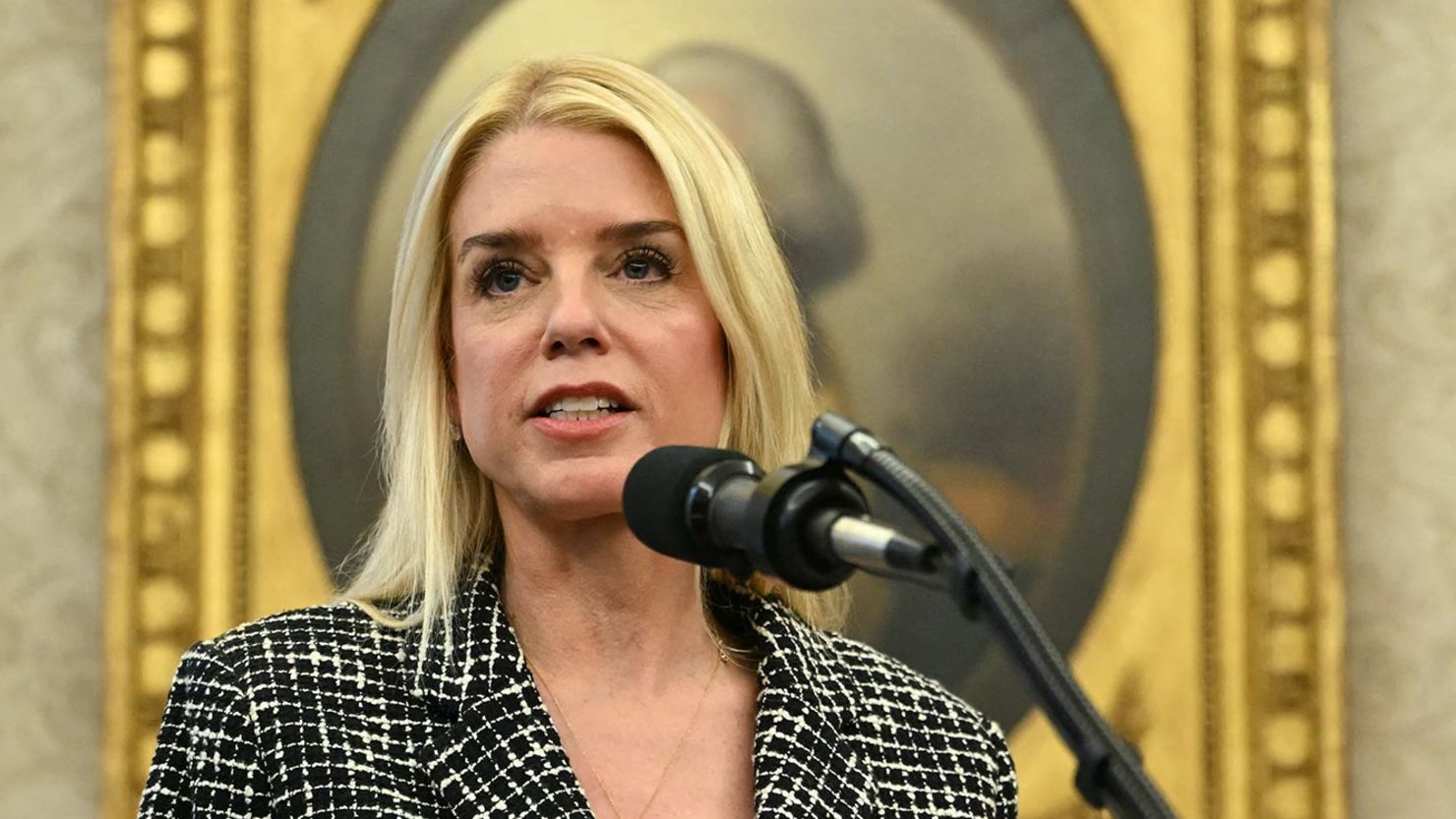
In comments delivered over the weekend to conservative media figures, the attorney general confirmed that federal prosecutors and agents have been directed to investigate what she described as a decade-long effort by senior officials from previous administrations to “weaponize” the federal government against conservatives. The probe, she indicated, is nationwide in scope and centers on alleged election interference and abuse of federal power.
The comments appear to mark a turning point, signaling a possible escalation in the administration’s broader effort to revisit—and potentially prosecute—actions taken during the Obama and Biden years.
A Probe Rooted in Longstanding Grievances
According to individuals familiar with the matter, a central focus of the investigation involves former intelligence and law enforcement officials who oversaw inquiries into Trump’s 2016 campaign, including scrutiny of alleged ties to Russia. The probe also reportedly extends to officials involved in prosecuting Trump for his post-2020 election conduct and the handling of classified documents found at his Mar-a-Lago residence.
Those investigations have long been portrayed by Trump and his allies as politically motivated efforts designed to delegitimize his presidency and derail his political future. The new inquiry appears to reframe those actions not as routine law enforcement decisions, but as part of an alleged coordinated conspiracy.
While the attorney general did not specify the jurisdictions overseeing the work, multiple sources told conservative outlets that a significant portion of the investigation is being handled in the Southern District of Florida—a jurisdiction widely regarded as favorable terrain for the former president.
Breaking With DOJ Norms
What has drawn particular attention is not just the existence of the probe, but the unusually candid way it has been discussed publicly.
Historically, the Department of Justice adheres to strict internal policies that discourage public commentary on ongoing investigations. Such disclosures, officials typically argue, can compromise evidence gathering, discourage witness cooperation, and risk prejudicing future prosecutions.
In this case, however, the attorney general departed sharply from those conventions. Speaking openly about the investigation, she accused unnamed former officials of shielding prominent Democrats from scrutiny while aggressively pursuing conservatives.
“This is a ten-year stain on the country committed by high-ranking officials against the American people,” she said, characterizing the alleged misconduct as systemic and deliberate.
Only midway through these remarks did the official at the center of the controversy fully emerge: Attorney General Pam Bondi, a longtime Trump ally whose leadership at the DOJ has increasingly blurred the line between institutional restraint and political messaging.
Brennan Emerges as a Central Figure
One of the most prominent individuals drawn into the probe is former CIA Director John Brennan, who has not been charged with any crime but has become a focal point of the investigation.
Brennan has been under scrutiny since at least mid-2025 for his role in overseeing the intelligence community’s 2017 assessment that Russia interfered in the 2016 election to benefit Trump—a conclusion later echoed by a Republican-led Senate Intelligence Committee.
Last week, Brennan’s legal team took the extraordinary step of asking the chief judge of the Southern District of Florida to intervene preemptively in the grand jury process. The filing sought to block U.S. District Judge Aileen Cannon from overseeing the investigation, alleging prosecutorial manipulation designed to place the case before a judge perceived as sympathetic to Trump.
Judge Cannon, a Trump appointee, previously drew national attention for rulings that favored Trump in the classified documents case brought by special counsel Jack Smith.
Brennan’s attorneys argued that steering the investigation toward Cannon constituted “judge shopping” and threatened the appearance of judicial impartiality.
Sharp Rebuke From DOJ Leadership
The response from Bondi was swift and unusually pointed. Referring to Brennan as a “bad actor,” she suggested that his legal maneuvering demonstrated fear of legal exposure.
“These bad actors are clearly concerned about their liability and want to preserve a two-tiered justice system—one for them and one for everyone else,” she said. “No more.”
Such language represents a striking departure from traditional DOJ restraint, where officials typically avoid public character judgments about individuals who have not been charged.
Legal analysts note that publicly labeling potential investigative targets risks undermining any eventual prosecution, providing defense attorneys with grounds to argue political bias or prosecutorial misconduct.
Legal Strategy and Statute of Limitations
According to conservative commentator John Solomon, who has reported extensively on the investigation, Bondi also suggested that evidence points to an “ongoing conspiracy” rather than isolated past actions.
That distinction could have significant legal implications. By framing the alleged misconduct as continuous, prosecutors may be able to sidestep statutes of limitations that would otherwise bar charges related to events dating back to the early Trump years.
This legal theory has drawn skepticism from some former federal prosecutors, who caution that conspiracy charges require clear evidence of coordination, continuity, and intent—standards that courts have historically enforced rigorously.
Fort Pierce and Judicial Control
The investigation is expected to take a significant step forward in mid-January, when a grand jury is scheduled to convene in Fort Pierce, Florida.
Notably, Fort Pierce currently has only one sitting federal judge: Aileen Cannon.
That reality has fueled further controversy, as critics argue that convening the grand jury there effectively guarantees judicial oversight by Cannon, raising questions about venue selection and procedural fairness.
MAGA-aligned figures have claimed that Jason Reding Quiñones, the U.S. attorney for the Southern District of Florida and a known Trump loyalist, is overseeing the probe.
Neither the DOJ nor the U.S. attorney’s office has publicly confirmed that detail.
A Test for DOJ Independence
As the investigation moves forward, it is likely to become one of the most consequential—and contentious—legal efforts of Trump’s second presidency.
Supporters view it as long-overdue accountability for officials they believe abused their power to target a political outsider. Critics see it as an unprecedented effort to weaponize the justice system against former government servants who carried out their duties under prior administrations.
What is clear is that the Department of Justice now finds itself at the center of a political storm, with its leadership openly embracing a narrative that challenges decades of institutional norms.
Whether the probe results in indictments or collapses under legal scrutiny, it is already reshaping public perceptions of the DOJ—and testing the boundaries between law enforcement and political retribution in modern American governance.

Emily Johnson is a critically acclaimed essayist and novelist known for her thought-provoking works centered on feminism, women’s rights, and modern relationships. Born and raised in Portland, Oregon, Emily grew up with a deep love of books, often spending her afternoons at her local library. She went on to study literature and gender studies at UCLA, where she became deeply involved in activism and began publishing essays in campus journals. Her debut essay collection, Voices Unbound, struck a chord with readers nationwide for its fearless exploration of gender dynamics, identity, and the challenges faced by women in contemporary society. Emily later transitioned into fiction, writing novels that balance compelling storytelling with social commentary. Her protagonists are often strong, multidimensional women navigating love, ambition, and the struggles of everyday life, making her a favorite among readers who crave authentic, relatable narratives. Critics praise her ability to merge personal intimacy with universal themes. Off the page, Emily is an advocate for women in publishing, leading workshops that encourage young female writers to embrace their voices. She lives in Seattle with her partner and two rescue cats, where she continues to write, teach, and inspire a new generation of storytellers.