Federal law enforcement has dramatically intensified its presence in Minnesota as investigators dig deeper into what officials describe as one of the most extensive fraud schemes involving federal programs in recent years. The expansion follows mounting evidence that hundreds of millions of dollars intended for public assistance were siphoned off through sham organizations, shell companies, and complex money-laundering networks.
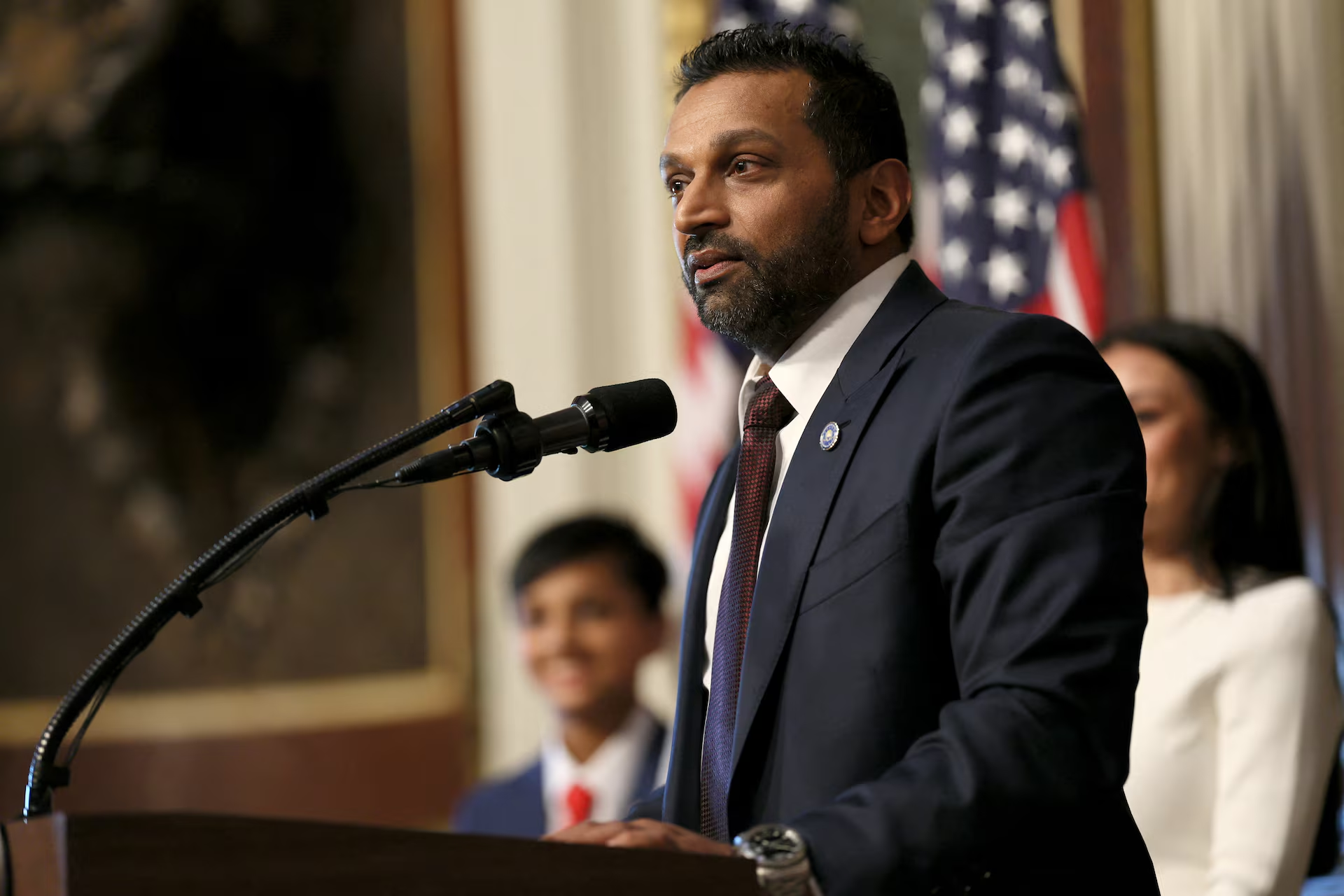
The development was confirmed publicly by Kash Patel, who said federal authorities had already deployed additional personnel and investigative resources to the state even before public scrutiny escalated online.
A Growing Federal Response
According to Patel, the decision to surge resources into Minnesota was not reactionary. Instead, it was part of an ongoing strategy to dismantle large-scale fraud operations exploiting federal aid programs.
“Fraud that steals from taxpayers and robs vulnerable children will remain a top FBI priority in Minnesota and nationwide,” Patel said in a public statement. He added that recent indictments and convictions represent only a small portion of a much broader investigation.
Federal prosecutors have so far charged dozens of individuals in connection with the scheme, which authorities say involved coordinated efforts to divert funds during the COVID-era expansion of government assistance programs.
Hundreds of Millions Allegedly Misused
At the center of the investigation is an alleged fraud network that prosecutors say exploited emergency food and nutrition programs designed to help children and families during the pandemic. Investigators claim the operation relied on falsified records, fake vendors, and layered financial transactions to conceal the movement of money.
Officials say approximately $250 million in federal funds were improperly obtained. Charges filed so far include wire fraud, conspiracy, and money laundering, with dozens of defendants either convicted or awaiting trial.
“This is just the tip of a very large iceberg,” Patel warned, signaling that additional arrests and charges are likely.
Focus on Child-Focused Programs
Authorities say the fraud targeted programs meant to support vulnerable children at a time of national crisis. According to federal filings, funds were allegedly diverted through a web of nonprofit organizations that existed largely on paper.
Prosecutors have emphasized that beyond financial crimes, the scheme had real-world consequences, depriving at-risk communities of essential resources during the height of the pandemic.


Bribery and Obstruction Allegations
Investigators say the alleged misconduct extended beyond financial fraud. In one case cited by federal officials, a defendant and associates were charged with attempting to bribe a juror with $120,000 in cash.
Those involved later pleaded guilty and received substantial prison sentences, including a decade-long term and tens of millions of dollars in restitution. Prosecutors argue these actions demonstrate an effort not only to steal public funds but also to undermine the justice system itself.
“These criminals didn’t just engage in historic fraud,” Patel said. “They tried to subvert justice as well.”
Immigration Consequences Loom
Federal officials also confirmed that some individuals implicated in the scheme have been referred to immigration authorities. In cases where legal criteria are met, denaturalization or deportation proceedings may follow criminal convictions.
The issue has drawn national attention after JD Vance characterized the case as emblematic of broader systemic failures.
In a social media post, Vance described the allegations as “a microcosm of the immigration fraud in our system,” arguing that financial exploitation and political incentives often intersect.
Political Fallout in Minnesota
The investigation has triggered sharp political debate within the state. Republican lawmakers, including Tom Emmer, have publicly urged closer scrutiny of how state agencies oversee federally funded programs.
Their calls intensified after a viral video surfaced showing a Minneapolis daycare that allegedly received millions in public funds despite appearing largely inactive.
Supporters of tougher oversight argue the case highlights longstanding weaknesses in accountability mechanisms at both state and federal levels.
State Officials Respond
Minnesota Gov. Tim Walz has acknowledged serious failures in program oversight while rejecting claims that his administration ignored warning signs.
In response to the investigation, Walz ordered a third-party audit and temporarily paused payments across multiple state-administered programs. One program implicated in the probe has since been shut down entirely.
The governor’s office says Minnesota has expanded fraud detection teams, increased interagency coordination, and appointed a statewide director of program integrity to prevent future abuse.


Disagreement Over Community Impact
The case has also stirred controversy over public statements linking the fraud to specific communities. Some federal officials, including President Donald Trump, have described Minnesota as a hub for large-scale money laundering, drawing criticism from state leaders.
Walz has pushed back against what he described as rhetoric that unfairly stigmatizes entire communities, arguing that criminal responsibility should rest solely with individuals proven to have broken the law.
Community leaders have echoed those concerns, warning that broad accusations risk undermining trust and cooperation with law enforcement.
Prosecutors Say the Problem Is Widespread
Joe Thompson, a senior federal prosecutor involved in the case, said earlier this month that fraud across Minnesota-administered programs may reach far beyond the current indictments.
He cited irregularities in services ranging from child nutrition and housing assistance to autism-related programs. The total value of funds under scrutiny could approach $18 billion, though officials caution that not all questioned spending is necessarily fraudulent.
“That’s the $18 billion question,” Thompson said, emphasizing the scale and complexity of the review.
What Comes Next
Federal authorities stress that the investigation remains active and far from complete. Additional indictments are expected as agents continue tracing financial transactions and interviewing witnesses.
For now, Minnesota remains under intense federal scrutiny as one of the most significant public fraud cases in recent U.S. history unfolds. Officials say the ultimate goal is not only accountability but restoring confidence in programs designed to protect society’s most vulnerable.
As Patel put it, “We will continue to follow the money, protect children, and ensure those responsible are held fully accountable.”

Emily Johnson is a critically acclaimed essayist and novelist known for her thought-provoking works centered on feminism, women’s rights, and modern relationships. Born and raised in Portland, Oregon, Emily grew up with a deep love of books, often spending her afternoons at her local library. She went on to study literature and gender studies at UCLA, where she became deeply involved in activism and began publishing essays in campus journals. Her debut essay collection, Voices Unbound, struck a chord with readers nationwide for its fearless exploration of gender dynamics, identity, and the challenges faced by women in contemporary society. Emily later transitioned into fiction, writing novels that balance compelling storytelling with social commentary. Her protagonists are often strong, multidimensional women navigating love, ambition, and the struggles of everyday life, making her a favorite among readers who crave authentic, relatable narratives. Critics praise her ability to merge personal intimacy with universal themes. Off the page, Emily is an advocate for women in publishing, leading workshops that encourage young female writers to embrace their voices. She lives in Seattle with her partner and two rescue cats, where she continues to write, teach, and inspire a new generation of storytellers.