




A pioneering guitarist whose work helped define the sound of late-1960s British rock has died, marking the quiet close of a chapter that shaped one of the most influential periods in modern music history. Revered by musicians for his technical skill and uncompromising musical vision, he played a formative role during the early years of a band that would later become a global institution.
Though his name was not always as widely recognized as some of his contemporaries, his influence was unmistakable. His guitar work carried a raw blues sensibility at a time when rock music was rapidly evolving, helping bridge traditional American blues with the emerging British rock movement. For many listeners, his playing provided the backbone of a sound that would soon reach far beyond clubs and small venues.
According to statements from those close to him, the musician passed away following a period of declining health. He was in his early eighties. No cause of death was immediately disclosed, but friends noted that he had faced several health challenges in recent years and had largely withdrawn from public life.
His death prompted tributes from across the music world, particularly from artists who came of age during the explosion of British rock in the late 1960s and early 1970s. Many described him as a musician’s musician — deeply respected, intensely principled, and unwavering in his devotion to the blues-based roots of rock.
A Sound Forged in a Transformative Era
Born in post-war Britain, he came of age at a time when American blues records were being rediscovered by young British musicians hungry for something raw and expressive. Like many of his peers, he was drawn to the works of Muddy Waters, Howlin’ Wolf, and B.B. King, artists whose influence would shape his approach to the guitar.
By the mid-1960s, he had become a fixture in local music circles, known for a playing style that emphasized feel over flash. That reputation led to an opportunity that would place him at the center of a band poised on the brink of success.
In 1967, he became one of the founding members of a new group that blended blues rock with emerging progressive elements. The band quickly distinguished itself from its peers, releasing a debut album the following year that climbed the charts and earned critical acclaim. His guitar work featured prominently on that record, grounding the music in a blues tradition even as the band experimented with new textures and ideas.
The album is now widely regarded as a cornerstone of British rock, frequently cited in retrospectives of the era. His contributions to it remain a point of fascination for fans and historians alike, particularly because his tenure with the group would prove brief.
Creative Differences and a Defining Departure
As the band gained momentum, creative tensions emerged. While other members were eager to move toward a more eclectic and experimental sound, he remained committed to a purer blues-rock direction. The disagreement was not personal, according to those familiar with the period, but philosophical.
Within a year of the album’s release, he made the difficult decision to leave the band. The split would shape the trajectory of both parties: the group went on to global fame with a dramatically expanded sound, while he pursued a different artistic path rooted firmly in blues and jazz influences.
It is at this point in the story that his identity becomes clear.
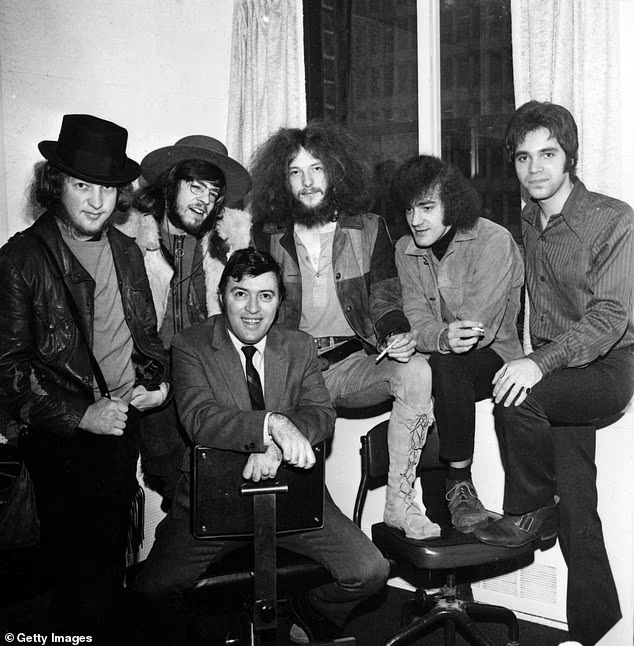
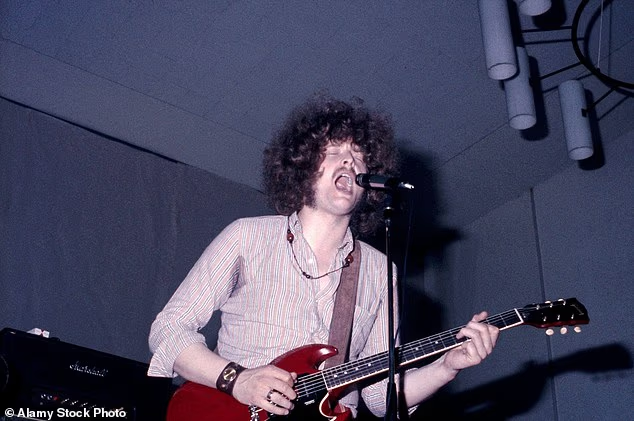
The musician was Mick Abrahams, original lead guitarist and founding member of Jethro Tull, and later the driving force behind the band Blodwyn Pig. He died on December 19, 2025, at the age of 82.
Life Beyond the Spotlight
After departing Jethro Tull, Abrahams wasted little time forming Blodwyn Pig, a group that allowed him greater creative freedom. The band quickly earned a reputation for its sophisticated blend of blues, jazz, and rock, releasing several well-received albums in the late 1960s and early 1970s.
Unlike many bands of the era, Blodwyn Pig avoided chasing commercial trends, focusing instead on musicianship and complex arrangements. Their work resonated strongly with dedicated listeners, and the group enjoyed chart success in the UK, even as they remained less visible to mainstream audiences.
Abrahams’ playing during this period was widely praised for its depth and maturity. Critics noted his ability to balance technical precision with emotional resonance, a combination that made his solos distinctive without being showy.
Although Blodwyn Pig eventually disbanded, Abrahams continued to work steadily, forming new projects, releasing solo material, and occasionally revisiting earlier collaborations. His career never followed a straight commercial arc, but it remained remarkably consistent in artistic intent.
A Respected Elder Statesman of Rock
In later decades, Abrahams became something of an elder statesman within the rock community. Younger musicians sought him out for advice, while longtime fans viewed him as a symbol of authenticity in an industry that had grown increasingly commercial.
Health issues, including a heart attack, eventually limited his ability to tour, but he remained engaged with music, recording when possible and maintaining close relationships with fellow artists. Though he lived largely out of the public eye, his influence continued to ripple outward through the musicians he inspired.
Tributes following his death highlighted not only his talent but also his character. Former bandmates described him as principled and generous, someone who valued the integrity of the music above all else.
Ian Anderson, frontman of Jethro Tull, acknowledged Abrahams’ foundational role in the band’s early development, noting that without his blues-driven guitar work, the group’s debut would have sounded very different. Martin Barre, who succeeded Abrahams as the band’s guitarist, also paid tribute, citing his influence on the band’s musical DNA.
A Legacy That Endures
While Abrahams never sought celebrity in the modern sense, his legacy is firmly embedded in rock history. His work on Jethro Tull’s debut album remains a touchstone for fans, while his later projects demonstrated an unwavering commitment to musical exploration.
For many listeners, his career serves as a reminder that influence is not always measured by fame alone. Sometimes it is found in the foundations laid, the standards upheld, and the paths opened for others to follow.
As the music world reflects on his passing, there is a renewed appreciation for the role he played during one of rock’s most creative periods. His guitar may no longer ring out from the stage, but its echoes remain — in the albums that endure, the musicians he inspired, and the genre he helped shape.
Mick Abrahams leaves behind a body of work defined by conviction, craftsmanship, and a deep respect for the roots of rock music. His passing closes the book on a remarkable life, but the music he helped create ensures his story will continue to be told.

Emily Johnson is a critically acclaimed essayist and novelist known for her thought-provoking works centered on feminism, women’s rights, and modern relationships. Born and raised in Portland, Oregon, Emily grew up with a deep love of books, often spending her afternoons at her local library. She went on to study literature and gender studies at UCLA, where she became deeply involved in activism and began publishing essays in campus journals. Her debut essay collection, Voices Unbound, struck a chord with readers nationwide for its fearless exploration of gender dynamics, identity, and the challenges faced by women in contemporary society. Emily later transitioned into fiction, writing novels that balance compelling storytelling with social commentary. Her protagonists are often strong, multidimensional women navigating love, ambition, and the struggles of everyday life, making her a favorite among readers who crave authentic, relatable narratives. Critics praise her ability to merge personal intimacy with universal themes. Off the page, Emily is an advocate for women in publishing, leading workshops that encourage young female writers to embrace their voices. She lives in Seattle with her partner and two rescue cats, where she continues to write, teach, and inspire a new generation of storytellers.